The champagne corks are probably still rolling around at Cerapedics HQ. In June 2025, the company secured FDA premarket approval for its PearlMatrix™ P-15 Peptide Enhanced Bone Graft — and now they’ve marked another milestone: the first U.S. patient treated post-approval.
Approved for single-level transforaminal lumbar interbody fusion (TLIF) in adults with degenerative disc disease, PearlMatrix isn’t just another bone graft — Cerapedics says it’s the first and only bone growth accelerator proven to speed lumbar fusion, showing statistically superior fusion rates in single-level TLIF procedures.
The debut case was performed by Sharad Rajpal, M.D., medical director of the Advanced Spine Program at AdventHealth Avista in Louisville, Colorado, on a patient with degenerative disc disease.
Why This Matters
“Fusion can take up to 12 months after TLIF, and that’s a long wait for patients — especially high-risk ones prone to complications,” said Michael Steinmetz, M.D., chairman of neurosurgery at Cleveland Clinic and investigator for the ASPIRE study. “Most studies exclude the messy reality of comorbidities, but ours embraced it — making the data far more relevant to daily practice.”
The ASPIRE study showed that PearlMatrix outpaced local autograft for fusion speed — and not just in “textbook” patients. Around 60% of study participants were high risk for non-union: Type 2 diabetes, BMI ≥ 30, and/or nicotine use. The result? More than double the six-month fusion rate compared to local autograft.
The Science Behind the Speed
At the heart of PearlMatrix is the P-15 Osteogenic Cell Binding Peptide — a 15 amino-acid sequence found naturally in Type 1 collagen, the protein backbone of bone. This peptide is a master key for bone regeneration, binding and activating osteogenic cells.
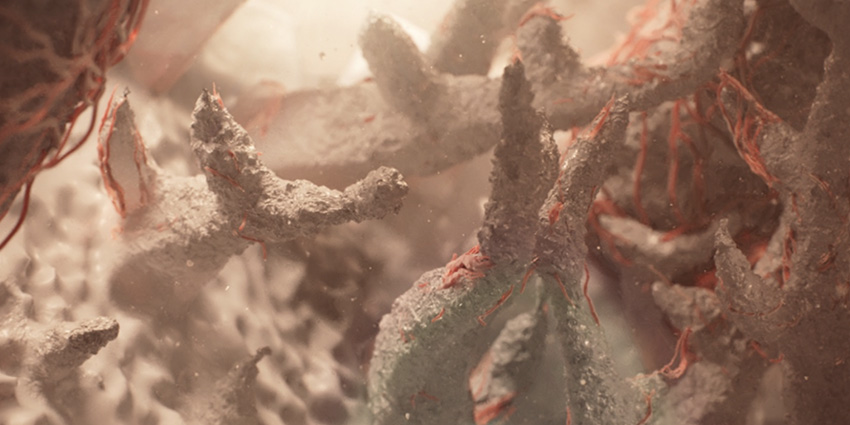
Cerapedics manufactures the P-15 peptide and binds it to calcium phosphate particles, creating a scaffold with an abundance of cell attachment sites. The attached cells kickstart signaling pathways, releasing growth factors and driving bone growth through natural cellular processes.
The Regulatory Edge
PearlMatrix didn’t just get a green light — it got the FDA’s toughest stamp of approval: Class III PMA clearance. Out of over 350 spinal bone grafts on the U.S. market, only three have this designation, and Cerapedics owns two of them (the other is i-FACTOR®).
The Bottom Line for Surgeons
Historically, TLIF fusion has been a 12-month patience game. For high-risk patients, it can feel like extra innings with no guarantee of a win. PearlMatrix offers the possibility of a faster, more reliable fusion — and if the ASPIRE study results hold up in broader practice, this could be a genuine shift in the bone graft playbook.
As Dr. Steinmetz put it: “This is the first and only bone growth accelerator proven to deliver faster lumbar fusion in both standard and high-risk populations. It’s a new tool we’ve needed for a long time.”

Discussion
Join the discussion
Sign in and subscribe to post comments.
No comments yet. Be the first to share your thoughts.