
The argument for primary total hip arthroplasty (THA) after a pertrochanteric fracture sounds appealing: bypass the threat of fixation failure, get an older patient walking immediately, and spare everyone a difficult salvage operation.
Nail or New Hip? A Randomized Trial Puts Replacement on the Clock
6 min read Premium comments
randomized controlled trialpertrochanteric fractureintramedullary nailingdual-mobility total hip arthroplastyHarris Hip Score
But what happens when the comparison nail also comes with permission to walk immediately?
In a randomized trial published in Bone & Joint Open, replacement did not deliver better function, less pain, greater autonomy, or longer survival.
It did deliver a substantially longer operation.
For selected older adults who walked outdoors before their fracture, the findings challenge the assumption that replacing more anatomy necessarily restores more independence.
A Fair Test of An Attractive Proposition
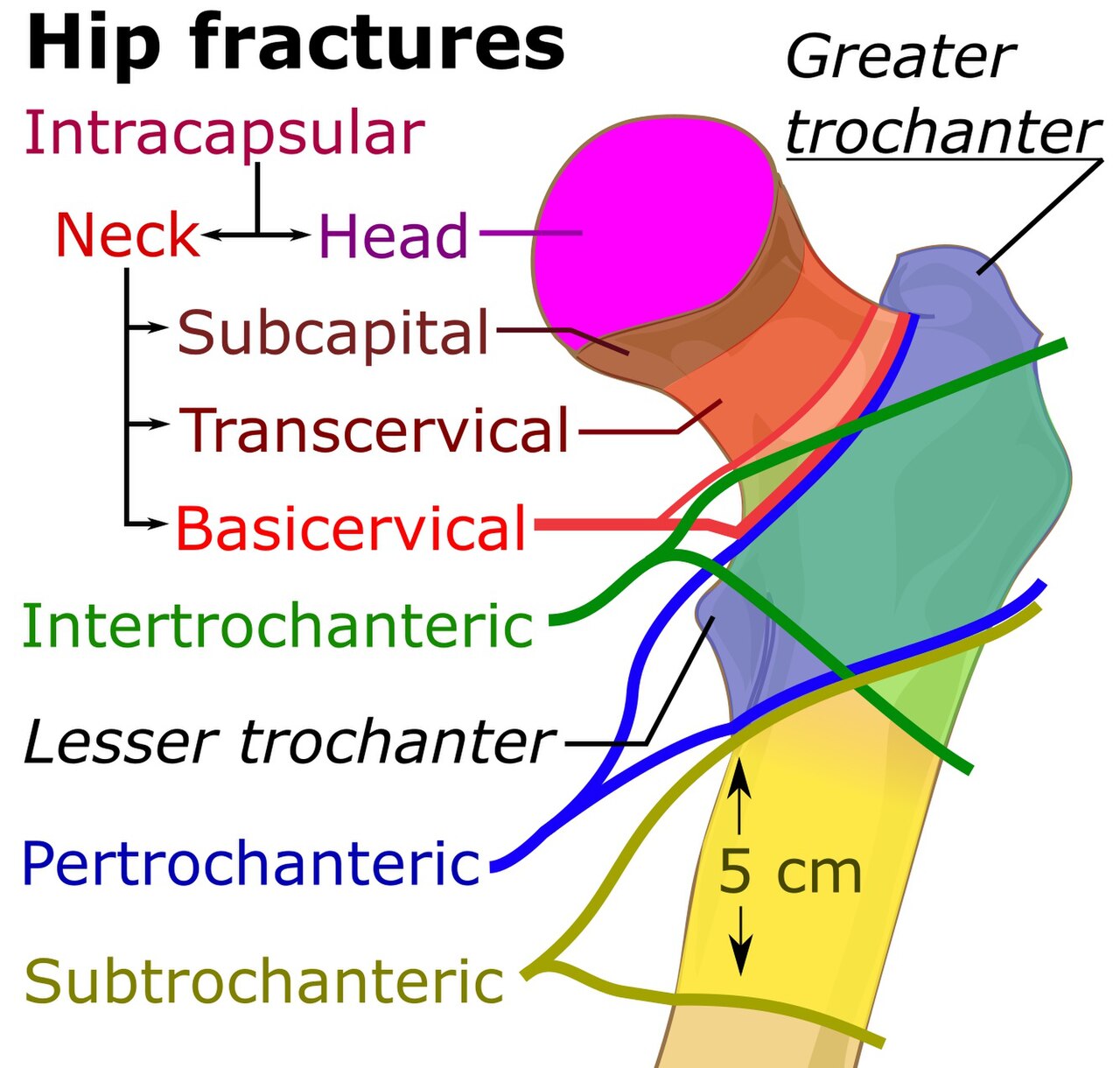
The investigators conducted a prospective, single-center, open-label randomized trial between January 2015 and October 2017. Eligible patients were at least 70 years old, had AO/OTA A1 or A2 pertrochanteric fractures, and had a pre-fracture Parker mobility score of at least five, indicating outdoor walking ability with or without an aid.
Patients with cognitive impairment were excluded. Enrollment excluded pathological fractures, further narrowing the circumstances in which these results can guide practice.
This was a selected population, not the entire hip-fracture service.
Of 460 patients presenting with trochanteric fractures, 70 entered the trial. One duplicate enrollment after a contralateral fracture was excluded, leaving 69 patients: 35 assigned to intramedullary nailing and 34 to THA.
Mean age was 84.7 years, 82.6% were women, and approximately two-thirds had unstable fractures. Independence before injury did not mean youth or simple fracture anatomy.
The fixation group underwent closed reduction and cephalomedullary nailing.
Arthroplasty involved a dual-mobility acetabular component, a long cementless femoral stem, and systematic trochanteric fixation with a cable-plate construct through an anterolateral approach.
This was not simply a routine elective replacement transplanted into the trauma schedule; the trochanteric reconstruction remained part of the job.
Crucially, both groups received immediate full weight bearing authorization and the same rehabilitation protocol.
Arthroplasty therefore had to outperform fixation itself, not a rehabilitation handicap imposed on fixation. That distinction matters when earlier mobilization is a principal argument for choosing replacement.
The Extra Operation Did Not Buy Extra Function
The primary endpoint was the Harris Hip Score at six months.
Mean scores were 85.7 after nailing and 82.5 after THA, with standard deviations of 11.2 and 10.7, respectively.
The 3.2-point difference numerically favored fixation but was not statistically significant: p = 0.291. The result was neither an arthroplasty victory nor proof that nailing produces superior function.
The authors had prospectively selected a five-point HHS difference as relevant.
The observed difference fell below that threshold. However, there is no established HHS minimal clinically important difference specifically for pertrochanteric fractures, and the authors appropriately caution against interpreting this study as formal evidence of equivalence. “No demonstrated benefit” is the defensible message; “identical treatments” is not.
The reported six-month treatment estimate for THA relative to nailing had a 95% confidence interval from 9.0 points worse to 2.8 points better.
That range does not suggest a large functional advantage for replacement, while leaving room for a potentially important disadvantage. It illustrates why a nonsignificant p-value is not a certificate of interchangeability.
Recovery followed similar trajectories. At six weeks, HHS values were approximately 70 in both groups; by one year, both averaged approximately 88.
Postel-Merle d’Aubigné scores also improved without a significant treatment difference. Time helped. Choosing a prosthesis rather than a nail did not measurably improve that trajectory.
Mobility offered a more sobering perspective.
Neither group fully regained its pre-fracture Parker score by 12 months, despite improvement between six and 12 months. Pain outcomes were also similar, with most patients reporting no pain or mild pain at six months. A satisfactory hip score, in other words, did not guarantee a complete return to the patient's previous life.
Where The Clock Did Separate the Groups
Median operating time was 30 minutes for nailing versus 94 minutes for THA, a statistically significant difference.
That is an additional 64 minutes between group medians, and more than three times the operating duration. The prosthesis arrived with a larger surgical commitment, without a corresponding improvement in the measured recovery outcomes.
The operator mix also differed.
Junior surgeons performed 82.9% of nail procedures, compared with 35.3% of arthroplasties. These were supervised operations in an academic environment, not a randomized comparison of surgeon experience.
The finding should not become a claim that complex fracture arthroplasty carries the same risks regardless of setting or expertise.
Nor does a longer operation automatically establish worse safety or poor economic value. The trial did not demonstrate a significant complication disadvantage for THA and did not include a formal economic evaluation. Its narrower finding is still useful: greater operative time was documented; an offsetting functional benefit was not.
The Salvage Operation That Never Materialized
One early mechanical failure occurred after nailing. In the arthroplasty group, one patient sustained both a dislocation and a deep infection requiring reoperation.
Postoperative transfusion counts were four in each group, and medical complication rates were similar.
Perhaps the most provocative finding was what did not happen: no patient underwent secondary conversion from fixation to arthroplasty.
The investigators argue that this weakens a central rationale for routine primary replacement: performing a larger operation now to avoid a presumed salvage procedure later.
Their interpretation emphasizes sound fixation principles, including appropriate tip–apex distance. It does not establish that a nail cannot fail, or that salvage arthroplasty is never necessary. With only 35 patients assigned to nailing, absence of conversion is encouraging evidence from this cohort, not a universal guarantee.
No additional hip-related surgical complications or reoperations were observed beyond the first postoperative year. Importantly, extended follow-up assessed survival and major hip events retrospectively; it did not repeat functional assessments. The study therefore cannot establish that the groups maintained equivalent long-term mobility.
Mortality Changes the Stakes, Not the Duty to Treat
By one year, 15 of 69 patients had died, an overall mortality of 21.7%, without a significant difference between treatments. Long-term survival curves likewise showed no significant separation, with a log-rank p-value of 0.953.
The authors reported approximately 80% mortality during extended observation, with median follow-up of 4.1 years. That is not an estimate that 80% died by 4.1 years. The long-term section also uses the original 70 enrollees, rather than the 69-patient analysis cohort, as its denominator.
These findings argue for proportional treatment, not therapeutic pessimism. Limited remaining lifespan makes meaningful recovery more valuable, not less.
But an operation justified by future benefits should demonstrate those benefits within the time patients actually have.
Here, THA did not establish either a survival advantage or better measured recovery.
A Useful Answer With Clear Boundaries
This trial has strengths: prospective randomization, concealed allocation, standardized treatment pathways, and repeated functional measurement. Its limitations are equally consequential. Six-month functional data were available for 30 nail recipients and 26 THA recipients, with missing observations primarily related to deaths. Recovery scores therefore describe those available for assessment, not every randomized patient's outcome.
The small sample limited subgroup analysis. Treating surgeons performed postoperative assessments, creating potential observer bias. The planned EQ-5D assessment was omitted, leaving a gap in broader quality-of-life measurement. Exclusion of dementia and low baseline autonomy limits application to the frailest patients. Furthermore, the arthroplasty findings concern a specific cementless strategy used in 2015–2017, not every possible replacement construct.
There is another statistical caution: the original sample-size calculation assumed an HHS standard deviation of five points, whereas the observed six-month standard deviations exceeded ten. Outcomes varied more than anticipated. Together with the modest numbers and mortality-related missing assessments, that variability reinforces the need to resist turning a useful negative trial into a sweeping declaration about every patient, surgeon, or implant.
For orthopedic trauma surgeons, the practical conclusion is focused: in selected, previously ambulatory older adults with these pertrochanteric fractures, routine primary THA did not demonstrate a benefit sufficient to justify its greater operative burden. The findings support technically sound intramedullary fixation with the immediate weightbearing pathway tested here. They do not eliminate individualized judgment or establish a preferred procedure for populations the trial excluded.
A bigger operation needs more than an attractive rationale. In this trial, replacement had the extra hour. It did not have the extra recovery.
Original study: “Intramedullary nailing compared with primary total hip arthroplasty for pertrochanteric fractures in autonomous elderly patients: a prospective randomized study”
Authors: Antoine Piercecchi, Alice Bordet, Ludovic Labattut, Alexandre Maczynski, Emmanuel Baulot, and Pierre Martz.
Publication: Bone & Joint Open. 2026;7(9):1178–1186.
Author
Why This Matters
Two Perspectives
MBA Lens: Economic and industry impact
A randomized trial challenges the value proposition of primary total hip arthroplasty (THA) over intramedullary nailing (IMN) for pertrochanteric fractures in selected older adults. Despite a substantially longer operating time for THA, no superior functional outcomes were demonstrated. This finding could impact market adoption, reimbursement strategies, and competitive dynamics for orthopedic device manufacturers, particularly for high-cost THA implants versus less invasive fixation.
- The study found THA required over three times the operating time compared to IMN without delivering better function or survival.
- The absence of secondary conversions to THA weakens a key rationale for primary replacement, potentially shifting procedure volumes.
PhD Lens: Clinical and outcomes impact
A randomized controlled trial comparing primary dual-mobility total hip arthroplasty (THA) with intramedullary nailing (IMN) for AO/OTA A1/A2 pertrochanteric fractures in selected older adults found no significant difference in Harris Hip Scores at six months. Both groups achieved similar functional recovery and pain outcomes, despite THA requiring a significantly longer operative duration.
- THA did not demonstrate superior function, pain reduction, autonomy, or survival compared to IMN, despite a 64-minute longer median operative time.
- Study limitations include a small sample size, high mortality impacting follow-up, and potential observer bias in functional assessments.
React:
Discussion
This is a fascinating development. In my practice we've seen similar outcomes with the revised protocol. The key differentiator seems to be patient selection criteria. Has anyone else noticed the correlation with BMI thresholds?
Great point. I'd push back slightly on the conclusion, the sample size in the cited study is too small to draw population-level inferences. That said, the directional signal is compelling and worth a larger RCT.
We implemented a similar approach last year. Early results are promising but we're still gathering 12-month follow-up data. Happy to share our protocol if anyone is interested.
Join the conversation
Orthopedic professionals are discussing this. Sign in and upgrade to read every comment and add your voice.