Orthopedic surgeons usually picture their workplace as the operating room, clinic, or trauma bay. But some of the most important advances in musculoskeletal trauma care have emerged from a far less predictable setting: the battlefield.
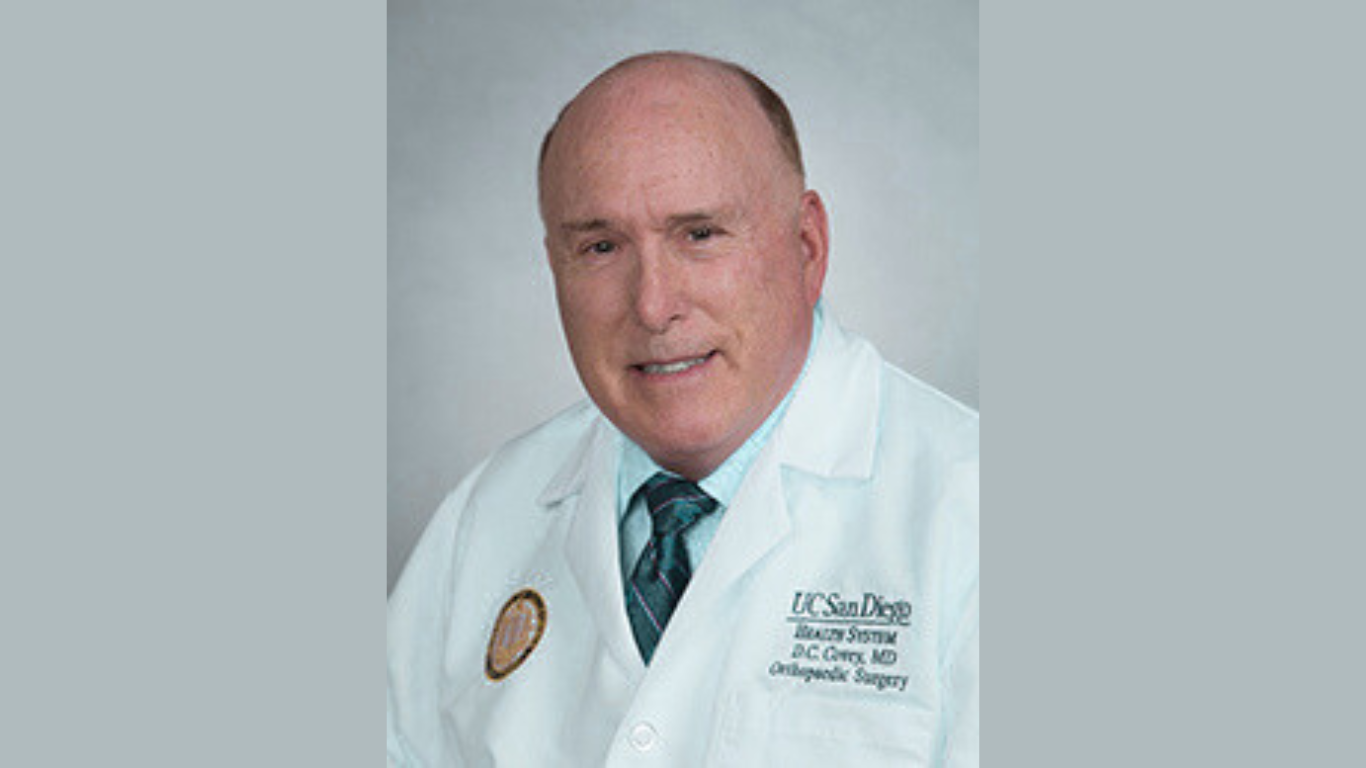
Dana C. Covey, M.D., M.Sc., FAAOS, FAOA, Captain in the United States Navy Medical Corps (Ret.), received the 2026 Orthopaedic Research and Education Foundation Clinical Research Award for documenting innovations that improved survival and outcomes for injured service members.
His work highlights how observation, data, and collaboration can turn chaotic environments into engines of medical progress.
“We’ve made significant developments in the last several decades to help lower the rate of fatalities from combat injuries,” said Dr. Covey, clinical professor of orthopaedic surgery at University of California San Diego, and also a surgeon at VA San Diego Healthcare System. “I spent 40 years in the Navy and have been through various conflicts, documenting lessons from each that could be applied to battlefield care. We have endeavored to implement orthopaedic recommendations to evolve treatments, leading to increased survivability and improved musculoskeletal outcomes.”
Combat trauma is largely an orthopedic problem. More than 52,000 service members were wounded in Iraq and Afghanistan, and orthopedic injuries accounted for the majority of those cases.
Surgeons treated blast injuries, fractures, amputations, and massive soft-tissue damage. Mortality from battlefield trauma dropped by roughly 44% compared with previous wars, thanks to improvements in equipment, surgical strategies, evacuation systems, and prehospital care.
Some of the most effective improvements came from engineering. During conflicts in the Balkans in the 1990s, physicians noticed a pattern of lumbar burst fractures in soldiers struck by antitank mines.
Flat-bottomed vehicles transmitted blast energy straight upward, injuring passengers. Engineers redesigned vehicle hulls with V-shaped undersides to deflect energy, reducing fatalities and severe orthopedic injuries. Collaboration between surgeons and engineers proved critical.
Protective gear also evolved rapidly. Earlier body armor stopped fragments and some gunshots, but newer systems offered stronger ballistic protection and expanded coverage.
In 2011, the military introduced the Pelvic Protection System to shield the pelvis and perineum from blast injuries. Soldiers who suffered above-knee amputations while wearing the system had fewer associated junctional injuries, preserving survivable anatomy.
Tourniquets became a life-saving standard. Once cautiously used due to ischemia concerns, early battlefield tourniquet use proved critical.
During the Iraq War, survival rates rose dramatically for patients with severe extremity hemorrhage. Tourniquets reduced transfusion requirements and maintained blood pressure. Today, every soldier carries a one-handed Combat Application Tourniquet, a vital tool for orthopedic surgeons treating limb trauma.
Damage control orthopedics also reshaped fracture care. Instead of performing lengthy reconstructions immediately, surgeons stabilize patients first, performing definitive reconstruction later. Temporary external fixation, rapid hemorrhage control, and physiologic resuscitation reduce complications like multisystem organ failure and acute respiratory distress syndrome. This strategy, honed in wartime, is now standard in civilian trauma care.
Operating in a combat zone requires preparation. Limited equipment, high patient volumes, and austere conditions demand flexibility. Military surgical teams train in simulated field hospitals to practice workflows and surgical strategies before deployment. The result is a workforce ready to deliver high-level trauma care in the most challenging environments.
Saving a life on the battlefield is only the beginning. Many wounded service members face years of reconstruction, rehabilitation, and recovery.
Advances in limb salvage, amputation care, and treatment of complex injuries such as brachial plexus trauma continue to evolve. Rehabilitation programs and peer support networks are essential in helping veterans rebuild their lives.
Although wartime innovation comes from tragic circumstances, the lessons learned benefit patients worldwide. Research during military conflicts has reshaped trauma care in civilian hospitals, improving survival for severely injured patients. For orthopaedic surgeons, battlefield medicine reminds us that some of the most valuable advances in trauma care emerge from the most challenging environments.