Dr. Tim Hebert, along with engineer William E. Fisher, developed a unique headless, variable pitch and cannulated compression screw for internal fixation of scaphoid bone fractures, wrist nonunions, fractures of the radial head, capitellum of the humerus, metacarpals, metatarsals, phalanges, and patella. It has also been used to stabilize loose joint cartilage fragments (osteochondritis dissecans) and to fuse small joints together.
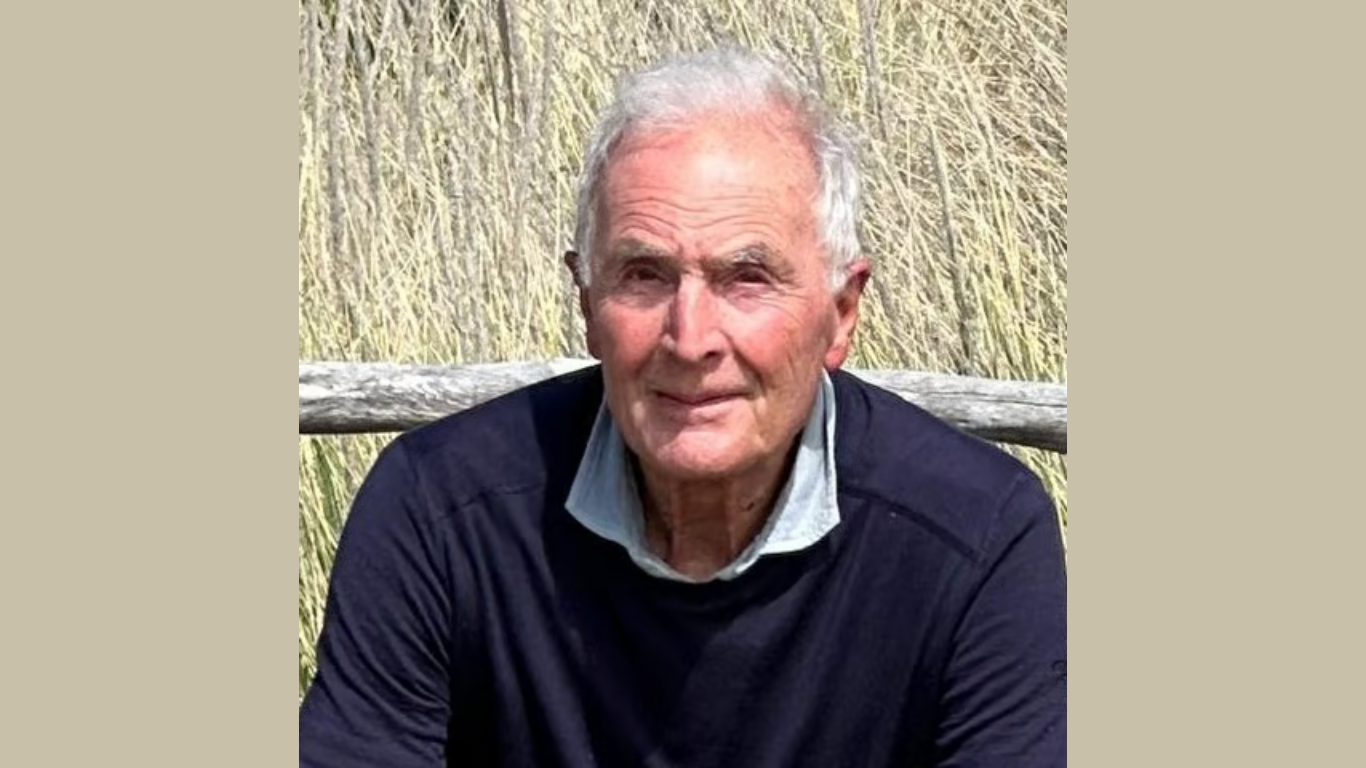
Dr. Tim Herbert, Herbert Screw Inventor, Dies Age 85
3 min read Premium comments
hand surgery#obituaryTimothy James HerbertHerbert screwscaphoid fractureheadless compression screw
That screw would carry his name and, now, his legacy.
Dr. Hebert and Fisher began by making his screws from old Steinmann pins. The engineering was elegant. Threads of different pitches at opposite ends allowed the screw to draw fracture fragments together. Its headless design permitted burial within the bone, addressing the difficulty of providing fixation without leaving a prominent screw head near an articular surface.
Herbert’s overarching objective was to create a secure fixation that could reduce reliance on prolonged immobilization and allow patients to return to useful activity faster. Hebert’s endpoint was not the radiograph, it was a hand and wrist returned to the person who needed them.
For Hebert and thousands of orthopedic surgeons that stand on his broad shoulders, the message was that the implant is a means, not the outcome.
An Idea Shared, Studied, and Refined
In January 1984, Herbert and Fisher published “Management of the fractured scaphoid using a new bone screw” in The Journal of Bone and Joint Surgery’s British volume. Their prospective series described 158 operations performed between 1977 and 1981, encompassing acute unstable fractures, delayed healing, and established nonunion. The paper also proposed a classification of scaphoid fractures.
The authors reported union in all acute fractures in their series and an overall union rate of 83%. These were results from a particular clinical investigation, not a promise for every patient. Nevertheless, the paper supplied something essential to surgical innovation: an explanation of the method, a defined clinical experience, and outcomes that other surgeons could examine.
That effort continued. In 1996, S. L. Filan and Herbert reported a review of 431 patients treated by Herbert over 13 years. They examined healing, wrist function, and return to work, while acknowledging the technical demands of the procedure. The larger experience extended the discussion beyond the initial design and into the practical consequences of its use.
There is a lesson in that progression worth retaining alongside the eponym. An invention begins with an idea; its value in medicine must be investigated in patients. Publishing results makes the work available for scrutiny, adaptation, and improvement. It turns an individual solution into a professional conversation.
Herbert’s career also included institutional leadership. He served as founding chair of the hand surgery department at St. Luke’s Hospital in Sydney from 1990 until his retirement in 1996, and as president of the Hand Surgery Society of New South Wales. His writing included the book The Fractured Scaphoid.
The screw may be the most immediately recognizable part of that record, but it was not the whole of his contribution.
“Tim Papa”
To orthopedic surgeons, the name Herbert belongs to a small implant. To five grandchildren, it belonged to “Tim Papa.” Those two identities — one familiar throughout a profession, the other cherished within a family — offer a fitting way to remember Dr. Timothy James “Tim” Herbert.
Dr. Herbert died peacefully on October 3, 2026, aged 85, surrounded by loving family.
Born in Sheffield, England, on July 11, 1941, Herbert grew up with medicine close at hand: his father was a general practitioner and his mother had been a nurse. A published biographical account also records interests in sport and prizes in music and poetry — a reminder that the future surgeon’s curiosity extended beyond anatomy.
He studied medicine at St. Bartholomew’s Hospital Medical School in London and completed his orthopedic training at St. George’s Hospital. His early career included service in the Royal Navy, before a move to Sydney in 1975 opened a new chapter in his work.
The Man His Family Remembers
Dr. Hebert was Heidi’s beloved husband, described as her “heart and love”; an inspirational father to Natasha, Nicola, and Alexander; and a generous, kind father-in-law to Kris and Orlando.
To Cosmo, Oscar, Zephyr, Gilligan, and Obi, he was their fun-loving “Tim Papa.”
Those descriptions are not footnotes to an accomplished career, but a different account of what made his life important. The qualities his family chose to emphasize — love, inspiration, generosity, kindness, and fun — speak to relationships that no publication list can describe.
A life can leave its mark through an idea that travels far beyond its origin, and through the affection of people who knew its author simply as husband, father, or grandfather.
For the orthopedic community, remembering Tim Herbert means preserving both perspectives: the surgeon whose work helped advance scaphoid fixation, and the man whose family remembers kindness, inspiration, and joy.
His name has a lasting place in surgical practice. His family’s tribute reminds us that it also has a deeply loved place at home.
Author
Why This Matters
Two Perspectives
MBA Lens: Economic and industry impact
Dr. Timothy Herbert, inventor of the Herbert screw, significantly impacted the orthopedic market by developing a unique headless compression screw. This innovation addressed critical clinical needs for scaphoid fractures and other small bone fixations, enabling reduced immobilization and faster patient recovery. Its elegant design and documented clinical efficacy facilitated widespread adoption, establishing a lasting legacy in surgical practice and influencing competitive product development in internal fixation.
- The Herbert screw's design, with variable pitch and headless profile, offered a superior solution for internal fixation, driving market adoption by improving patient outcomes and reducing recovery times.
- Early publication of clinical results in 1984, detailing 158 operations and an 83% overall union rate, was crucial for professional scrutiny and widespread integration into surgical practice.
PhD Lens: Clinical and outcomes impact
Dr. Timothy Herbert's eponymous screw, co-developed with William E. Fisher, provided a novel internal fixation mechanism for scaphoid and other small bone fractures. Its headless, variable pitch, and cannulated design allowed for fragment compression and burial within bone, minimizing articular surface prominence. Early clinical investigations, including a 1984 prospective series of 158 operations, demonstrated union in all acute fractures and an 83% overall union rate, supporting its efficacy.
- The screw's mechanism relies on differential thread pitches at opposite ends to achieve compression, while its headless design allows for complete intramedullary burial, preventing soft tissue irritation.
- Initial prospective clinical data from 1977-1981, published in 1984, reported an 83% overall union rate across acute unstable fractures, delayed healing, and established nonunion, providing foundational evidence for its clinical utility.
React:
Discussion
This is a fascinating development. In my practice we've seen similar outcomes with the revised protocol. The key differentiator seems to be patient selection criteria. Has anyone else noticed the correlation with BMI thresholds?
Great point. I'd push back slightly on the conclusion, the sample size in the cited study is too small to draw population-level inferences. That said, the directional signal is compelling and worth a larger RCT.
We implemented a similar approach last year. Early results are promising but we're still gathering 12-month follow-up data. Happy to share our protocol if anyone is interested.
Join the conversation
Orthopedic professionals are discussing this. Sign in and upgrade to read every comment and add your voice.