
NovApproach Spine, LLC, the team you see lying on the floor at NASS (supine), is dedicated to making the anterior approach as reliable and consistently excellent as any other approach. In many ways, NovApproach is riding a long-term trend toward the anterior approach.
Supine Is What They Do
4 min read Premium comments
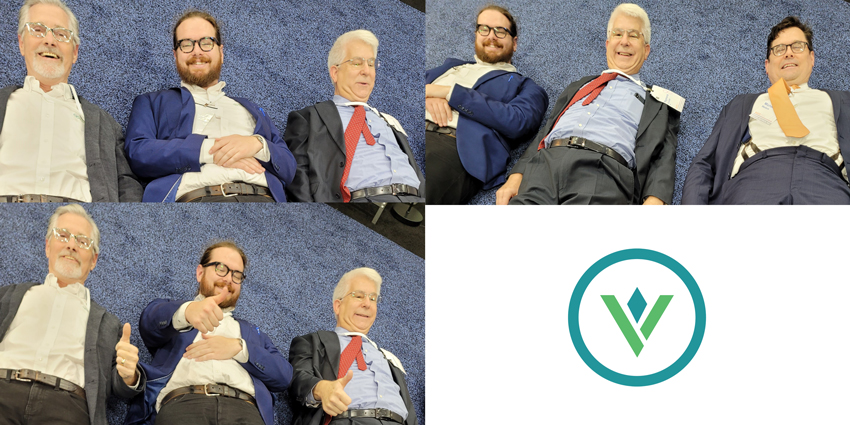
#novapproachspine#anteriorApproach#supinespinesurgery
As the NASS survey made clear, surgeons want to do more anterior/supine surgery—especially when the patients present with pathology at L4-S1, L4-L5 or L5-S1.
The survey of NASS members (March 10, 2022, by Brian Kuhn, M.D., Associate Program Director Vascular Surgery Residency and Fellowship TriHealth/Good Samaritan Hospital Cincinnati, Ohio—53.4% response rate: 62 responses), revealed the following issues associated with the anterior approach:
- Lack of an approach surgeon
- Lack of training in the anterior approach
- Time required for an approach surgeon:
- More than 30 minutes for L5-S1
- Almost an hour (50 minutes) for L4-S1
- More than an hour for L3-S1
- 44% of surgeons choosing the anterior approach have to abort 1x-5x per year.
The NovApproach, Approach
NovApproach relied heavily on approach surgeons to inform its implant and instrument designs. Their advice and ideas resulted in a first-of-its-kind set of implants and instruments.
Founded in 2019 by Raymond Cloutier, former Exactech, Inc. vice president of engineering and development (26 years) and former Zimmer product development engineer (8 years), NovApproach is focused on making anterior surgery safer, more efficient, less complication prone and, ultimately, simpler to perform for surgeons.
If companies are defined by the problems they solve (as opposed to the products they make), then Cloutier’s decision to focus on the anterior approach and the more complication prone L4-5, L5-S1 cases, in retrospect, looks prescient.
Here’s what NovApproach has developed so far.
A Multiple Angled Implant
NovApproach designed an implant that can be placed anteriorly in more than one angle—giving surgeons more ways to avoid the vasculature. The following images illustrate the point

An Implant With More Fixation and Trajectory Options
NovApproach’s engineers, working with spine and access surgeons, created the OneLIF™ cage with multiple apertures and angles.

Notice the variety of angles and screw placement options?
According to NovApproach, these allow surgeons to tailor the approach when confronted with anatomic challenges and differences between patients and differences that exist at each spinal level.
The OneLIF cage’s corridor-matched screw trajectories provide reliable opportunities for four points of fixation. This, along with the SupineATP® approach, significantly reduces OR time for multi-level (L2-S1) cases because the OneLIF cage can be implanted at all the levels in the supine position vs. having to reposition the patient three times (i.e., supine for lower level ALIF’s followed by lateral position for upper levels and then prone for posterior instrumentation).
Case Reports and Image

Less Time, Improved Sagittal Correction, Better Efficiencies
Dr. Berven, who reported that the NovApproach implants have been used in about 40 cases and 80 levels, explains why he finds the OneLIF so attractive: “What is special about this implant is the ability (for) the implant to match multiple different trajectories. Whether you are coming from direct anterior, or obliquely or laterally, we’ve got the ability to actually put the implant in, using either an oblique insertion point or an anterior insertion point, AND to put all the screws in reliably. Reliably with 4 points of fixation.”
“My rule of thumb is that I like to have a minimum of 7 mm—more often 8 mm—of posterior height, added Berven, “And the OneLIF cage’s sizing enables surgeons to use both traditional anterior sizing or posterior sizing. I will actually work on my release of the interbody space until I am able to get that posterior base distraction—often times taking down the PLL (posterior longitudinal ligament). What I like is that I can dial in the exact amount of distraction and lordosis to simultaneously facilitate indirect decompression and sagittal plane alignment.”
Reducing the Need for Re-positioning
Dr. Payam Moazzaz, Tri-City Medical Center, Oceanside, California, pointed out that “No other device supports this kind of intra-operative decision making.” He said that he, “can place the interbody through the direct anterior route or the ATP oblique route and still maintain four-screw fixation along with safety features to prevent screw back-out.”
Dr. Erich Richter, Covenant Health, Saginaw, Michigan, reported that “certain levels of the spine can be challenging, based on the patient’s anatomy but the OneLIF cage’s multi-hole design addresses that issue.” He added that NovApproach’s “SupineATP® approach allows my access surgeon to expose multiple levels of the spine without needing to reposition the patient.”—a major time-saver.
Time and Access
In a recent NASS talk, Vascular surgeon, Thomas T. Terramani, M.D. of Vascular Associates of San Diego, (title: High-Volume Approach Surgeons Prospective Date Collection – What we have Learned Symposium – Anterior Lumbar Spine Surgery: How Do we Optimize & Improve Outcomes?) reviewed data from three approach surgeons and their accumulated 1,691 patient cases.
Among his insights was that the anterior approach was most often employed in three types of cases:
- L5-S1 level
- L4-5, L5-S1
- L4-5
Of the 1,691 cases he reviewed, these three types of surgeries represented 81% (1,374) of all anterior approach cases—the second two (i.e., L4-5, L5-S1 and L4-5) had the highest rates of complications—notably deep vein thrombotic events, wound infections, and fluid collection.
Dr. Terramani concluded that surgeons performing an anterior approach require:
- Improved exposure safety
- Improved efficiency of exposure—ideally under 25 minutes
- Lower complication rates
- Better complication management
In short, there’s a massive opportunity for a company like NovApproach.
Conclusion
At this year’s North American Spine Society annual meeting, there were many important innovations on display and among them was NovApproach. We were able to spend a fair amount of time with the NovApproach team and it was obvious that the company and its philosophy of making the supine/anterior approach more routinely safe and effective was gaining traction.
Finally, the intelligence with which this team has re-thought the market basket of issues with anterior spine surgery, created clear points of differentiation and, as Drs. Berven, Moazzaz and Richter explained so eloquently, implant and instrument superiority for single or multi-level anterior spine surgery cases.
For more information: https://novapproachspine.com/
Author
React:
Discussion
This is a fascinating development. In my practice we've seen similar outcomes with the revised protocol. The key differentiator seems to be patient selection criteria. Has anyone else noticed the correlation with BMI thresholds?
Great point. I'd push back slightly on the conclusion, the sample size in the cited study is too small to draw population-level inferences. That said, the directional signal is compelling and worth a larger RCT.
We implemented a similar approach last year. Early results are promising but we're still gathering 12-month follow-up data. Happy to share our protocol if anyone is interested.
Join the conversation
Orthopedic professionals are discussing this. Sign in and upgrade to read every comment and add your voice.