
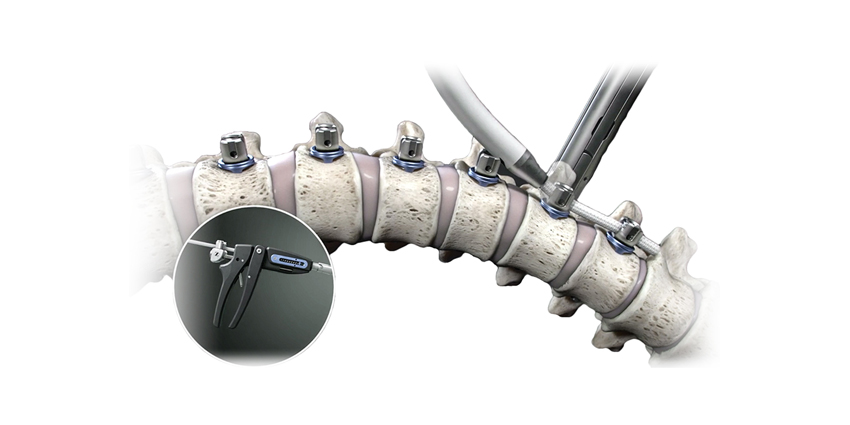
A major milestone was reached in mid-October 2023 when the 2000th adolescent idiopathic scoliosis patient was treated with the increasingly popular non-fusion system—ZimVie’s The Tether™ Vertebral Body Tethering System.
2000th Scoliosis Patient Treated With The Tether Non-Fusion System
3 min read Premium comments
#adolescentidiopathicscoliosisSecondary#zimvie
In 2019, the Food and Drug Administration approved The Tether as a Humanitarian Device Exemption on the basis of more than seven years of clinical data.
To date, more than 80 surgeons have performed Vertebral body tethering (VBT) using the market-leading Tether system to treat patients diagnosed with adolescent idiopathic scoliosis.
Dr. Baron Lonner, Chief of Minimally Invasive Scoliosis Surgery and Pediatric Spine at Mount Sinai Hospital and Professor of Orthopaedic Surgery at Icahn School of Medicine in New York, described his experience with The Tether non-fusion system: “I have been in practice dedicating my career to the treatment of patients with scoliosis for 28 years. The Tether has been an amazing advance that has allowed my patients to have correction of their scoliosis while avoiding a fusion, with a faster return to sports and other activities. It has been a game changer.”
“Having brought this technology to over 2,000 children is a milestone that serves as a reminder of our commitment to put patients first, especially those for whom our products can have such profound and prolonged impact,” added Rebecca Whitney, Global President of ZimVie Spine.
“The Tether is an important and inspirational part of our motion preservation portfolio. We remain dedicated to developing the market for vertebral body tethering and restoring daily life for this special group of patients.”
What Is “The Tether™” and What Is the Clinical Data?
Manufactured by Colorado-based ZimVie, The Tether is indicated for skeletally immature patients that require surgical treatment to obtain and maintain correction of progressive idiopathic scoliosis, with a major Cobb angle of 30 to 65 degrees whose osseous structure is dimensionally adequate to accommodate screw fixation, as determined by radiographic imaging.
These are patients who have failed bracing and/or intolerant to brace wear.
In a 57-patient, multi-center study of children with idiopathic scoliosis who were treated with anterior vertebral body tethering, (published in the Bone and Joint Journal), researchers found that tethering delivered satisfactory correction of deformity with an “acceptable” rate of complications.
The study, which was a longitudinal, multi-center, prospective analysis of a database of cases between 2013-2016 (earlier versions of a tethering technology), included two years of follow-up data. The team defined clinical success as a major coronal Cobb angle of <35° at the most recent follow-up.
Study citation: Miyanji F, Pawelek J, Nasto LA, Simmonds A, Parent S. Safety and efficacy of anterior vertebral body tethering in the treatment of idiopathic scoliosis. Bone Joint J. 2020;102-B(12):1703-1708. doi:10.1302/0301-620X.102B12.BJJ-2020-0426.R1
Full contraindication and risk information can be found at myscoliosis.com.
About ZimVie
ZimVie is a global life sciences leader in the dental and spine markets that develops, manufactures, and delivers a comprehensive portfolio of products and solutions designed to treat a wide range of spine pathologies and support dental tooth replacement and restoration procedures. The company was founded in March 2022 as an independent, publicly traded spin-off of the Dental and Spine business units of Zimmer Biomet to breathe new life, dedicated energy, and strategic focus to its portfolio of trusted brands and products. From its headquarters in Westminster, Colorado, and additional facilities around the globe, the company serves customers in over 70 countries worldwide with a robust offering of dental and spine solutions including differentiated product platforms supported by extensive clinical evidence. For more information about ZimVie, please visit us at www.ZimVie.com. Follow @ZimVie on Twitter, Facebook, LinkedIn, or Instagram.
Author
React:
Discussion
This is a fascinating development. In my practice we've seen similar outcomes with the revised protocol. The key differentiator seems to be patient selection criteria. Has anyone else noticed the correlation with BMI thresholds?
Great point. I'd push back slightly on the conclusion, the sample size in the cited study is too small to draw population-level inferences. That said, the directional signal is compelling and worth a larger RCT.
We implemented a similar approach last year. Early results are promising but we're still gathering 12-month follow-up data. Happy to share our protocol if anyone is interested.
Join the conversation
Orthopedic professionals are discussing this. Sign in and upgrade to read every comment and add your voice.