
George Washington Carver, who was born a slave in 1864, and became one of the most prolific and consequential scientists of all time, invented more than 300 products from the “lowly” peanut and, in the process, transformed the economy of the deep American south. From the peanut, he created dyes, paints and stains, plastics, washing powder, more than 20 cosmetics, 10 medicines, 12 new beverages and more than 100 new foods including peanut butter, coffee, chili sauce, and mayonnaise.
Bone Fiber Implant Awarded New Patent
2 min read Premium comments
#tetrous#rotatorcuffrepairSecondary#istobiologics#theracell
I’m reminded of the great Dr. Carver when I see how innovatively scientists are using bone fibers—the latest significant innovation in allograft tissue forms.
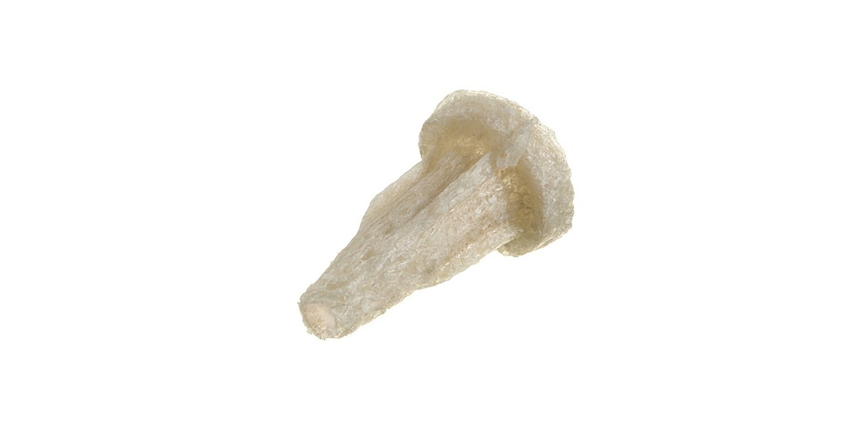
The scientists at Tetrous, Inc., the Los Angeles-based regenerative medicine company, have just received patent number 11,759,548 for turning demineralized cortical bone fibers into an osteoinductive and osteoconductive implant for sports medicine indications—notably, in this first iteration, rotator cuff repair.
EnFix RC™
Tetrous has brand named their invention EnFix RC™. According to the company, this is the first of several additional procedure-specific bone fiber implants for sports medicine indications.
EnFix RC is currently available in the United States and Australia. The company hopes that it will change the paradigm in rotator cuff surgery by enhancing healing at the tendon to bone interface, i.e., at the enthesis, where failure often occurs.
EnFix RC is 100% demineralized bone fiber (DBF). It has the ability to be an osteoinductive and osteoconductive graft. The implant’s shape is the result of FormLok™ technology which helps the implant retain its shape, even when immersed in liquid, as is typical in arthroscopic surgery.
According to Tetrous, improving the biologic repair at the interface between tendon and bone is a significant advancement.
Importantly, the company notes, these features, which are inherent in the implant, don’t change how surgeons perform their intervention. EnFix RC, in other words, can fit seamlessly into existing procedures.
The newly issued patent, titled “Demineralized Bone Fiber Implant Compositions and Methods for Rotator Cuff and ACL Repair,” is the latest in Tetrous’s growing family of intellectual property covering demineralized cortical bone fiber implants, bone healing, and enhancement of tendon to bone repair.
“We are pleased that the U.S. Patent Office has yet again recognized the uniqueness of our technology and has granted this additional patent,” said Andy Carter, Ph.D., Tetrous’ co-founder, director and co-inventor on the issued patent. “Our growing intellectual property portfolio provides Tetrous a sustainable competitive advantage in the next generation enthesis repair market.”
Finally, the demineralized bone fiber technology used in Tetrous products is licensed exclusively for use in sports medicine from TheraCell, Inc.
EnFix™ and EnFix RC™ are trademarks of Tetrous, Inc. FormLok™ is a trademark of TheraCell, Inc., an Isto Biologics company.
Author
React:
Discussion
This is a fascinating development. In my practice we've seen similar outcomes with the revised protocol. The key differentiator seems to be patient selection criteria. Has anyone else noticed the correlation with BMI thresholds?
Great point. I'd push back slightly on the conclusion, the sample size in the cited study is too small to draw population-level inferences. That said, the directional signal is compelling and worth a larger RCT.
We implemented a similar approach last year. Early results are promising but we're still gathering 12-month follow-up data. Happy to share our protocol if anyone is interested.
Join the conversation
Orthopedic professionals are discussing this. Sign in and upgrade to read every comment and add your voice.