
Another one bites the dust.
Stryker to Buy Wright Medical for $5.4 Billion
9 min read Premium comments
#stryker#wrightmedical
In this age of orthopedic industry consolidation, another of the pioneering orthopedic suppliers, 69-year old Wright Medical Group, N.V., has agreed to be subsumed into Kalamazoo, Michigan-based Stryker Corporation for $5.4 billion—a 52% premium to the pre-offering stock price.
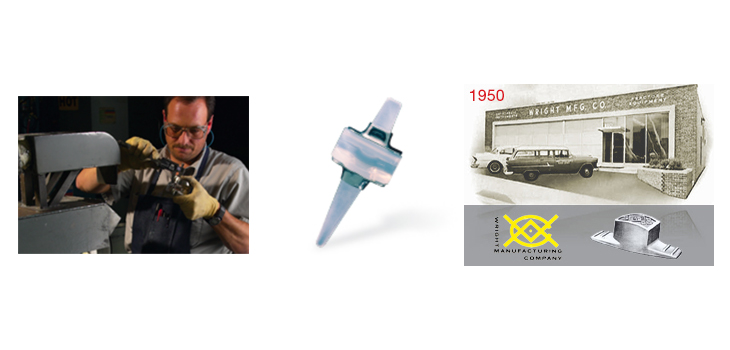
For Wright Medical, this news is the capstone of a remarkable 69-year history that started with rubber tips for leg casts, evolved into breast implants and then, skirting bankruptcy, finding new life and success as a leading supplier of implants, instruments and biologics for extremity cases.
Stryker Is Buying Shoulder and Lower Extremity Market Share
Wright Medical, which merged with French shoulder implant supplier Tornier, N.V. in a $3.3 billion deal in 2014, is a market leader in both upper and lower extremity markets. As the Wall Street analysts at Wells Fargo, Needham, and Cantor Fitzgerald noted, this purchase effectively makes Stryker the category leader in shoulders and such other extremity markets as foot and ankle and hand and wrist.
Quoting from the Wells Fargo research note, “SYK [Stryker] noted at its analyst day in November 2018 that it had plans to bring a stemless shoulder to market after 2019 and had recently begun a multi-year development process for MAKO shoulders. WMGI [Wright Medical], on the other hand, has the best-in-class portfolio of upper extremities products with its SIMPLICITI shoulder, PERFORM reversed glenoid, REVIVE shoulder revision system and BLUEPRINT planning software that offers the foundation for a digital ecosystem.” Bottom line, says the Wells Fargo team, this purchase could well push Stryker’s shoulder market share from under 10% to about 30%.
One possible fly in the ointment is the conflict between Wright’s TARS ankle system and Stryker’s STAR ankle system. Regulators who will be reviewing this deal for any anti-trust issues may ask Stryker to divest itself of one or the other, though most likely STAR.
Mike Mattson, Needham’s top analyst, thought that this was a particularly strategic move by Stryker. He said in his note to investors that Wright Medical could be, “complementary to SYK’s Trauma & Extremities business particularly in shoulders where SYK’s share is very low.”
And, Mattson noted, Stryker is still digesting K2M, Inc. so Wright Medical could be a distraction.
Wright Medical shareholders, however, are no doubt thrilled with a prospective 52% increase in their stock’s value and, if all goes according to plan, the deal should close sometime in the first half of 2020.
Wright Manufacturing’s Long Strange Trip
Stryker’s bid to acquire Wright got us thinking about the importance of Wright Medical and all the products and people who have made Wright such an important part of the history of orthopedics.
For those readers who don’t know the story, here is a quick summary of Wright Manufacturing’s long, strange but very important trip.
Frank O. Wright founded Wright Manufacturing in 1950 to supply rubber heeled leg casts. Working as a salesman for an orthopedic leg cast supplier, he discovered that the hard steel heel in the foot of those casts was creating back pain. Wright’s soft “street heel,” which eased patient discomfort, was a hit.
Over the next quarter century, Wright steadily expanded into medical soft goods, surgical instruments, and hip and knee implants.
In 1970, Wright gave the market the finger—the Swanson finger. Invented by Dr. Alfred Swanson, former President of the American Society for Surgery of the Hand and Internationally Federation of Societies for Surgery of the Hand and author of more than 300 publications, his one-piece silicone rubber finger implant with a flexible hinge, became the best-selling finger implant in the world capturing, eventually, 75% market share.
By the time Frank Wright died in 1975, the company that bore his name was the world leader in small joint orthopedics.
The company drifted without Frank and in 1977 Dow Corning bought the company, changing its name to Dow Corning Wright. In 1986 Dow’s managers had the bright idea to use Wright to manufacture silicone breast implants. It almost destroyed the company. Silicone breast implants, in the late ‘70s became the subject of numerous liability lawsuits and an eventual FDA ban. Wright’s breast implant production stopped in 1992.
Wright’s management did do one very smart thing during this period and that was to enter into a product development alliance with the Hospital for Special Surgery and a remarkable surgeon named Leo Whiteside.
In 1990, Wright introduced the now famous Whiteside Modular Knee. It provided surgeons with a system of replaceable parts that let surgeons construct a knee implant individualized to each patient. Whiteside’s Modular Knee was a big success. In 1991, Wright launched a modular hip system, Infinity hip implant.
While those two products kept Wright solvent during the breast implant firestorm, it did not save Wright from being sold again. In 1993, a group of private equity investors led by Herbert W. Korthoff bought Wright for $70.5 million and renamed it Wright Medical Technology.
At the time of Korthoff’s purchase, Wright Medical held 85% of the world market for small joint orthopedic implants and was one of the leading manufacturers of total hip and knee joint replacement.
The Korthoff Years
Under Korthoff, Wright Medical began a major product line and international distribution expansion.
Korthoff signed deals in Japan, bought Orthotechnique in Paris and reached an agreement with BioMed to get distribution rights for an MIS [minimally invasive surgery] spine discectomy system. Korthoff led Wright into trauma products, spinal fixation devices and arthroscopic imaging products.
One of the most durable and, in retrospect, best licensing agreements Wright negotiated during this period was with U.S. Gypsum for a moldable bone void filler and drug delivery system called calcium sulfate hemihydrated.
That agreement laid the foundation for Wright’s growing orthobiologics product line.
In 1994, Korthoff merged Wright with Orthomet, Inc., a designer, manufacturer, and marketer of orthopedic products and reconstructive implants. One year later Wright posted up a net loss of $49.3 million, due to write-offs related to acquisitions.
In 1995, Richard D. Nikolaev, formerly president of Orthomet, became CEO. In 1996 the FDA cleared for sale Wright’s OsteoSet Bone Graft Substitute for use in bone voids and gaps in the extremities. The resorbable calcium sulfate product proved to be popular with surgeons and the company continued to build on that success with subsequent variations of the OsteoSet theme.
By 1997, it was clear that Korthoff’s broad-based strategy of product development was not working. Wright Medical reported $122 million in sales that year and more losses. The company was again, teetering on the edge of bankruptcy.
Tom Patton Cleans House
The board of directors asked Thomas Patton, a member of Wright’s board and an attorney, to take over as CEO. He restructured the company, eliminating some executive positions and cutting 150 jobs as the company sold the spinal and trauma product businesses. Under his leadership, the company stabilized and kept its focus on small joints and its successful bio-orthopedics products OsteoSet and OsteoSet-T.
Patton’s success in settling Wright down and regaining a focus on its core strengths attracted, in September 1999, two of the leading healthcare private equity firms in the country, Warburg Pincus Equity Partners L.P. and the Vertical Group, Inc. They liked what they saw and bought a majority interest in Wright Medical Technology. Coincident with the investment, Warburg and Vertical merged Wright with Cremascoli Ortho Group, of Toulon, France.
Combined, these two companies brought to market not only a wide range of reconstructive joint devices, including Cremascoli’s important products in hip reconstruction but proven distribution on both sides of the Atlantic. Now Wright had effective distribution in Europe for its extremity products and Cremascoli had distribution in the United States and Japan.
Barry Bays Takes Over
As part of the Warburg Pincus investment in Wright, Barry Bays from Medtronic’s Xomed (a company he’d helped to start) was tapped as Wright’s new CEO. Building on Tom Patton’s work, he upgraded distribution, increased funding for research and development, and improved the company’s sales force, including moving to a direct sales model in Japan.
Among the innovative new products that Wright launched during the Bays’ years was the Conserve-Plus metal-on-metal hip prosthesis intended for younger patients, in their 40s.
Bays also kept the focus on bio-orthopedic bone grafting substitutes and in 1999 introduced AlloMatrix Injectable Putty, a bone graft substitute composed of medical grade calcium sulfate, demineralized bone matrix (DBM) growth factors, and a biocompatible plasticizing agent. That was followed by AlloMatrix C Bone Putty, composed of DBM and cancellous bone chips carried by calcium sulfate. Then OsteoSet BVF (Bone Void Filler Kit) and the MIIG 115 Minimally Invasive Injectable Graft provided OsteoSet in powdered form.
Wright Medical went public in 2001, raising $84.8 million.
In 2002, Wright reported $25 million in net profits on $200 million in sales.
In 2003, Wright received FDA clearance to market a ceramic-on-ceramic bearing joint arthroplasty system, one of only two on the market at that time.
In 2008, Wright bought INBONE Technologies and their INBONE™ Total Ankle System. Later that same year, Wright bought a line of endoscopic soft tissue products for foot and ankle surgeons from A.M. Surgical.
Under Bays, and later Gary Henley (who took over as CEO when Bays became executive chairman), Wright peaked at $487 million in sales and a market capitalization of $700 million in 2009.
The Deferred Prosecution Wave Sweeps Over Wright
Between 1995 and 2000, the U.S. government, notably the U.S. Attorney based in New Jersey—Chris Christie—accused major orthopedic companies and the entire industry of engaging in a system of surgeon consulting payments that, in Christie’s terms, qualified as a form of kickback.
Every major orthopedic company was hit, including Wright. Eventually all the companies affected (Zimmer, Biomet, DePuy, Smith & Nephew, etc.) settled with the U.S. government, entered into Deferred Prosecution Agreements, paid fines and agreed to significantly strengthen internal compliance rules and staff.
For Wright, that wave resulted in a clean sweep at the executive level and, after the dust had settled in 2011, the company had a new CEO by the name of Robert J. Palmisano.
Palmisano Transforms Wright
Palmisano came to Wright from ev3 Inc., where he was CEO. He had just sold ev3 to Covidien for $2.3 billion when he agreed to join Wright Medical. Before ev3m he was CEO at IntraLase and before that, MacroChem. Because Palmisano had sold a number of the companies he led, most Wall Street analysts thought he would just spruce up Wright for a reasonably quick sale.
It didn’t turn out that way.
In fact, under Palmisano, Wright Medical executed several strategic moves which fundamentally transformed the company.
First, in 2011, Wright bought the CCI® Evolution Mobile Bearing Total Ankle Replacement system of Van Straten Medical B.V. for approximately $7.0 million.
In 2012, Palmisano added the very innovative regenerative medicine products company, BioMimetic to Wright. Biomimetic had developed Augment® Bone Graft, an autologous bone graft with recombinant human platelet derived growth factor BB for foot and ankle fusions. It had not been approved by the FDA yet, but it was showing great promise as a biologically active bone graft implant. It was ultimately approved for sale in 2015.
Also, in 2012, Wright converted most of its U.S. foot and ankle distributor territories to direct sales representation.
In 2013, Wright bought UK extremities company, WG Healthcare Limited for about $7.6 million. Then it bought the French extremities company Biotech International for about $80 million.
In 2014, Wright bolted on two more extremities companies—Solana Surgical, LLC and OrthoPro, LLC.
Finally, in 2015, Palmisano put together one of the most impactful mergers in orthopedics—the combination of Wright Medical with the leading shoulder implant company, Tornier N.V., in a complex $3.4 billion transaction.
When Palmisano joined Wright, he was 67 years old. When the proposed transaction with Stryker closes, he will be in his late 70s. He didn’t, as many analysts thought he would, simply dress Wright Medical up for a sale. He took the long view and built a high growth, market leading extremities company with a solid pipeline of technology.
Which, at the end of the day, will make Stryker Corporation one of the leading, if not the leading, extremity implant and instrument supplier in the world.
And the credit goes to….
Wright Manufacturing’s journey is a singular story and one that has had important ramifications to the industry, physicians but most importantly, millions of patients around the world.
Thousands of professionals made Wright the success it became—George Griffin, Jack Parr, Ph.D., John Bakewell, Jim Treace, Dick Emmitt, Jim Treace, Jr., Jim Jacoby, Bes Weatherman, Barry Bays, Tom Patton—to name a very few.
But many more deserve kudos for jobs well done. If you have a story about Wright Medical’s history or people who made it all happen, please feel free to add your recollections to the comments section after this article.
Author
React:
Discussion
This is a fascinating development. In my practice we've seen similar outcomes with the revised protocol. The key differentiator seems to be patient selection criteria. Has anyone else noticed the correlation with BMI thresholds?
Great point. I'd push back slightly on the conclusion, the sample size in the cited study is too small to draw population-level inferences. That said, the directional signal is compelling and worth a larger RCT.
We implemented a similar approach last year. Early results are promising but we're still gathering 12-month follow-up data. Happy to share our protocol if anyone is interested.
Join the conversation
Orthopedic professionals are discussing this. Sign in and upgrade to read every comment and add your voice.