
Over its 70+ year history, two-thirds of Medtronic’s CEOs were Minnesotans. The non-Minnesotans were Art Collins from Ohio, Bill Hawkins from North Carolina and Syed Omar Ishrak from Bangladesh.
Medtronic After Omar Ishrak
5 min read Premium comments
#medtronic#geoffmartha#omarishrak
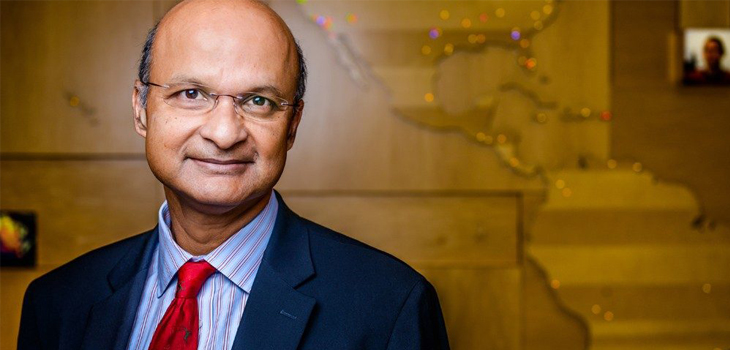
This past week, after nine years as CEO, Omar Ishrak announced that he will retire in 2020.
Aside from, perhaps, Earl Bakken or Art Collins, Omar Ishrak will be remembered as the most transformative leader in Medtronic’s history.
Before Ishrak, Medtronic was a Minnesota-based medical device company with global scope.
Under Ishrak, Medtronic became a fully global company where diversity and cross-fertilization between technologies, business units and, indeed, cultures made Medtronic more competitive, dramatically more valuable and decidedly more effective at bringing medical tools and instruments to every healthcare provider everywhere.
By the Numbers
When Ishrak joined Medtronic, he staked out three core strategies to revive Medtronic’s sales, earnings, value and market share—Innovate Therapies, Build Economic Value and Increase Globalization.
At the time, it was no secret that U.S. growth had slowed. Medtronic needed to get its mojo back.
By the numbers, how did he do?
- Sales increased from $15.9 billion in 2011 to $30.6 billion in 2019 – up 92%
- Earnings increased from $3.1 billion in 2011 to $4.7 billion in 2019 – up 50%
- Investors increased Medtronic’s P/E from 14.53x in 2011 to 31.2x in 2019 – up 114%
- Investors increased Medtronic’s Price-to-Sales from 2.82x in 2011 to 4.75x in 2019 – up 68%
- Medtronic’s market value increased from $45 billion in 2011 to $145 billion in 2019 – up 222%
Beyond the Numbers
Three transactions highlight Ishrak’s tenure to date at Medtronic.
The 2012 acquisition of China’s medical device company Kanghui Holdings for $816 million, the 2015 purchase of Covidien for $50 billion and the 2018 purchase of Mazor Robotics for $1.7 billion.
With the Kanghui acquisition, Ishrak made China an integral part of Medtronic’s global footprint.
Ishrak, in fact, came to Medtronic with a long history of opening up the emerging markets for his previous employer, General Electric (GE). One way he did that was to champion the concept of “frugal innovation.” Frugal innovation refers to adapting advanced technologies like miniaturization, mobile communications and/or advanced materials to build cheaper, high performance devices.
His poster child for this at GE was Brivo, a line of MRI and CT scanners developed in India which used the same digital technology found in higher-end systems but without expensive automation features and then miniaturized and packaged into a smaller box.
One year before joining Medtronic, Ishrak launched Brivo in China.
And one year after joining Medtronic, Ishrak bought one of China’s largest medical device suppliers, Kanghui.
Covidien
In the words of former Medtronic CEO Bill George, Medtronic’s combination with Covidien was a “near-perfect strategic fit.”
Bill George, who is a senior fellow at Harvard Business School, said that the deal accelerated Omar Ishrak’s commitment to make Medtronic a major player in emerging markets. Specifically, Covidien brought more than $5 billion in international sales to Medtronic, much of it from emerging markets.
He also noted that Covidien gave Medtronic the #1 market share in gastrointestinal, respiratory and advanced surgery for a number of chronic disease including multiple types of cancer. It also, said George, expanded Medtronic’s R&D investments by more than $2 billion per year.
Lastly, he explained, the deal was financially attractive (60% stock, 40% cash), accretive to earnings in its first full year and allowed Medtronic to redeploy $13 billion in cash trapped overseas.
Looking back, it is clear that buying Covidien turned Medtronic into an international cash machine with an estimated free cash flow of $7 billion per year.
Mazor Robotics
This tiny Israeli company, founded in 2001 by Professor Moshe Shoham and Eli Zehavi, was the first company to successfully tackle the complex problem of building a spine and neurosurgery robot.
Medtronic spine, in 1995, was the first company to successfully develop a navigation system for spine and neurosurgery.
Combined, Mazor’s robots and Medtronic’s StealthStation navigation create a powerful intelligent system that reduces surgical error rates, speeds up surgery and improves surgeon precision.
Based on the experience in surgery so far, it is no exaggeration to say that robotics plus navigation should eventually replace most free-hand surgery.
Furthermore, these systems are software driven platforms. Change the instructions, and they improve, cut costs and speed up surgeries for Medtronic’s other business units.
The cost of robotics plus navigation is high. The average user pays about $1 million per system.
But for Ishrak, a veteran of GE’s MRI and CT scanning capital equipment businesses, this is not a new problem. As he demonstrated with the frugally innovated Brivo, costs will come down.
Approximately 8% of U.S. spine centers have bought robotics plus navigation—whether the Medtronic or other systems.
Given the way in which these systems have driven market share gains for Medtronic, Stryker and Globus Medical, the incentives are locked in to make Medtronic’s robotics systems a near universal offering in the other business units.
Ishrak’s Guy, Geoff Martha

Moving into the CEO position following Ishrak’s retirement will be Geoff Martha, currently executive vice president of Medtronic’s $8 billion Restorative Therapies Group, which includes devices used in the brain, nervous system, spine and elsewhere.
Medtronic’s board of directors appointed Martha, 49, to a newly created role of president, leading the company’s operating groups and regions and taking a seat on the board, effective November 1, 2019.
On April 27, the start of Medtronic’s 2021 fiscal year, Martha will become CEO while Ishrak will take on the job of executive chairman.
Like Ishrak, Martha has background with General Electric.
A Pittsburgh native, Martha graduated from Penn State in 1992 and went to work at General Electric, where he stayed for 19 years, including 15 years in GE’s financial-services division before becoming a managing director in GE Healthcare.
Ishrak was CEO of GE Healthcare Systems at the time, and when Ishrak came to Medtronic in June 2011, Martha followed him two months later.
What’s Next?
It is said he had one of the most difficult roles at Medtronic plc as the head of integration and global strategic planning. Martha led the January 2015 acquisition of Covidien, which was at the time the largest med-tech deal in the industry, after becoming chief integration officer for Medtronic in July 2014.
Most Wall Street’s analyst expect a smooth transition and no material change from Ishrak’s vision and direction. We agree.
One major strategic initiative still waits for Medtronic—pharmaceuticals.
We note that Syed Omar Ishrak, at the ripe old age of 65, will be staying at Medtronic as its new executive chairman.
The dynamic duo of Ishrak and Martha, it seems to us, will remain at Medtronic’s helm for years to come.
Author
React:
Discussion
This is a fascinating development. In my practice we've seen similar outcomes with the revised protocol. The key differentiator seems to be patient selection criteria. Has anyone else noticed the correlation with BMI thresholds?
Great point. I'd push back slightly on the conclusion, the sample size in the cited study is too small to draw population-level inferences. That said, the directional signal is compelling and worth a larger RCT.
We implemented a similar approach last year. Early results are promising but we're still gathering 12-month follow-up data. Happy to share our protocol if anyone is interested.
Join the conversation
Orthopedic professionals are discussing this. Sign in and upgrade to read every comment and add your voice.