
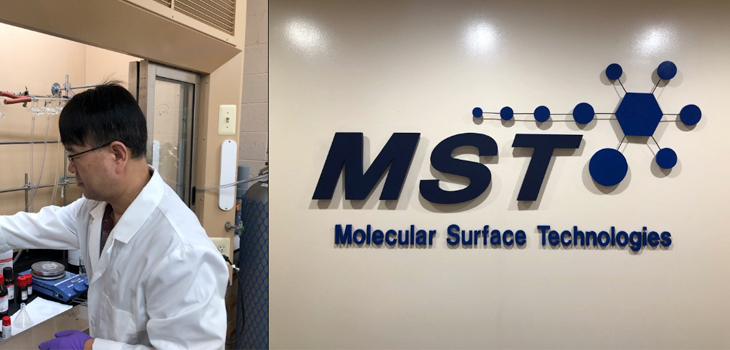
A new company, Molecular Surface Technologies (MST), has been formed to develop and commercialize a novel series of technologies for reducing periprosthetic infections…and much more.
New Company Launched to Tackle Periprosthetic Infections and More
2 min read Premium comments
Secondary#periprostheticinfection#molecularsurfacetechnologies
The new company is based in New Brunswick, New Jersey, and was founded by Gordon D. Donald, M.D., an orthopedic spine specialist with the New Jersey Ortho Group in Red Bank, New Jersey, and a well-known medical device industry entrepreneur and biomechanical engineer.
The company’s technology platform is a novel approach to attack and significantly reduce the scourge of orthopedic and spine surgical implant infections. MST’s technologies are based on covalently bonding molecules to implant surfaces so as to elicit antimicrobial functions, bioactivity, direct bone growth, and/or lubricity.
By treating existing implants with these molecular modifications, MST increases each implant’s anti-infection and other biologic properties thereby significantly improving differentiation. Furthermore, these technologies offer significant opportunities for additional implant innovation.
MST’s CEO Marc Burel, a veteran executive of multiple orthopedic device and surface modification companies, said, “It is now coming to light that infections start with bacterial colonization of the implant immediately following implantation. Preventing this colonization and biofilm formation is the key to decreasing implant related infections.”
“MST has developed several proprietary treatment processes that work with most medical grade metals and polymers. These treatments are efficient and economical from a manufacturing point of view, and they assure consistent quality.”
“Significantly, the MST treatment does not elute from the implant surface thus eliminating concern about drug resistance and systemic toxicity offering a unique regulatory strategy.”
Randy Clevenger, Ph.D., who has extensive experience in the surface chemistry of biomaterials and their modification, is MST’s Chief Scientific Officer. His focus is on developing antimicrobial treatments for surgical and orthopedic implants. Dr. Clevenger notes, “We are excited to have developed a modified molecule that responds very favorably when covalently attached and has shown greater than 4-5 logs of killing with almost all applicable bacteria while remaining very cell friendly.”
Renowned pediatric spine surgeon Randall Betz, M.D., with the Institute for Spine and Scoliosis in Lawrenceville, New Jersey, and former Chief of Staff at Shriners Hospital in Philadelphia, is also part of MST’s team and states, “MST’s technology offers physicians added protection from infection, without modifying or adding any steps to the surgical technique. Treating implants makes no changes to the mechanical characteristics or performance but enhances their biologic function within the patient.”
In addition to antimicrobial solutions for surgical implants, MST is also investigating covalently bound molecular surface modifications that enhance bioactivity and lubricity and is pursuing applications in both the medical and nonmedical fields.
For more information about MST, contact Marc Burel at marcb@mosutech.com.
Author
React:
Discussion
This is a fascinating development. In my practice we've seen similar outcomes with the revised protocol. The key differentiator seems to be patient selection criteria. Has anyone else noticed the correlation with BMI thresholds?
Great point. I'd push back slightly on the conclusion, the sample size in the cited study is too small to draw population-level inferences. That said, the directional signal is compelling and worth a larger RCT.
We implemented a similar approach last year. Early results are promising but we're still gathering 12-month follow-up data. Happy to share our protocol if anyone is interested.
Join the conversation
Orthopedic professionals are discussing this. Sign in and upgrade to read every comment and add your voice.