
While the general public is not aware of CartiHeal, Inc.’s technology, a string of top venture capital and corporate investors (Johnson & Johnson, Bioventus, Elron, Accelmed, Access Medical Ventures, aMoon and Peregrine Ventures) have seen the data.
The Cartilage Repair Solution, Finally?
6 min read Premium comments
#cartilagerepair#knee#arthritis
Their reaction was to open their check books to the tune of about $55 million.
We decided to follow the money.
Here’s what we learned.
An Israeli Spin-Off
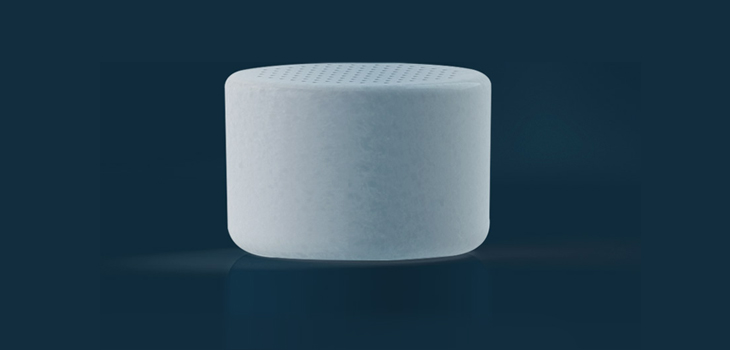
Five years ago, a spin off from the Department of Biotechnology Engineering at Ben-Gurion University announced that it had raised $10 million to convert a lab discovery into an acellular, single step and off-the-shelf technology that regenerates damaged cartilage and its underlying subchondral bone.
The implant, which was named Agili-C, had demonstrated, in both animal and human studies, an ability to regenerate true hyaline cartilage—confirmed by the presence of Type II collagen and proteoglycans, and the absence of Type I collagen—without relying on growth factors, stem cells or cell expansion techniques.
An independent research laboratory, NAMSA (North American Science Associates, Inc.), confirmed the claims made by these Ben-Gurion University scientists.
CartiHeal’s lead scientist, Founder and CEO Nir Altschuler said at the time: “Biopsies and MRIs show the regeneration of hyaline cartilage as early as 6-12 months following implantation. This is nothing short of a technological breakthrough.”
Coral-Based Technology
Corals, which are living marine organisms of the class Anthozoa of phylum Cnidaria, secrete exoskeleton, which is composed of calcium carbonate. That CaCo3 is in the crystalline form of aragonite (or calcite) and is the basic building material for coral’s massive underwater colonies and structures.
It is also a basic building block of human bone.
Because of the way that coral is built, it has a natural three-dimensional (3D) porous structure.
To understand how unique a coral scaffold is, here are eight scanning electron microscopy images.

CartiHeal developed a process that modifies the aragonite structure, improves it in such a way that it can induce repair cells (for example mesenchymal stem cells), blood vessels and other elements necessary to regenerate hyaline cartilage.
The CartiHeal Invention
CartiHeal has currently over 40 granted patents, in multiple families, around the world, including granted patents in the United States, Europe, Japan, China, Australia, Canada and Israel.
The patents describe various aspects of the company’s technology, including coral-based implants for implantation into osteochondral tissue, and uses and other applications/tools for use with the implants.
To be sure, scaffolds which purport to grow bone or cartilage are nothing new.
Surgeons have used the patient’s own bone and bone marrow as osteoinductive scaffolds for various defects for decades. Allograft bone or cartilage are also routinely used as scaffolds. Synthetic scaffolds like hydrogels made from poly (ethylene glycol) diacrylate (PEGDA), collagen, fibrin, agarose, synthetic peptides, polyglycolic acid, polylactic acid or polyurethane have also had their day as tissue forming scaffolds.
Of all of these, 3D scaffolds are most appealing since they create a kind of inter-porosity, cell friendly structure which maximizes cell contact, promoting matrix deposition while also preventing de-differentiation of autologous chondrocytes even after long periods of time. 3D scaffolds can promote the expression of chondrocyte-specific markers.
CartiHeal’s patents describe a unique kind of bioactive 3D scaffold which consists of two structurally distinct phases—a solid coral bio-lattice phase which can optionally be enriched for other osteoinductive agents and solid bio-lattice phase containing a series of hollows along a longitudinal axis in the implant.
Depending on the intended clinical outcome, CartiHeal’s scaffolds can be modified in terms of the diameter and pore volume of each phase in order to increase (or decrease) bioactivity.
CartiHeal also modifies its coral with a calcium chelator and acid and scaffolds subsequently washed and dried are subjected to negative pressure. These kind of modifications, the company claims, enhances implant bioactivity in a clinically significant way.
Finally, the scientists at CartiHeal trail blazed the concept of using a wide range of corals—the entire gamut of which is covered by their patents—which further expanded the combinations of three-dimensional bioactive scaffold designs.
All patentable.
All manufacture-able.
The Clinical Data
CartiHeal launched a series of clinical studies.
The first initiated in 2011, was a prospective, multicenter, open-label, randomized, and controlled trial of Agili-C versus microfracture to repair joint surface lesions.
The trial enrolled 65 patients, 18 years to 55 years in age, who had symptomatic single, focal, full or near full-thickness (ICRS [International Cartilage Repair Society] cartilage defects description grades 3 and 4) chondral or osteochondral isolated lesions of the femoral condyle, trochlea or the tibial plateau. The defect areas were less than 2cm² after debridement and were completely surrounded on all sides by healthy cartilage.
Participating physicians implanted Agili-C by way of a mini-arthrotomy.
The study’s end date is this coming December 2018 and we would expect to see data in early 2019.
The study’s primary outcome measure is a change in baseline KOOS [Knee Injury and Osteoarthritis Outcome Score] pain subscales after 24 months. The study also had the following secondary outcome measures:
- Change from baseline to 3, 6, 9, 12, 18 and 24 month visits as measured by the KOOS total score and subscales.
- Change from baseline to 18 and 24 month visits in IKDC [International Knee Documentation Committee] current health assessment.
- Change from baseline to 3, 6, 12, 18 and 24 month visits in Lysholm with Tegner knee score.
- Change from baseline to 3, 6, 12, 18 and 24 month visits in IKDC knee examination form 2000.
- Change from baseline to 3, 6, 12, 18 and 24 month visits in IKDC subjective knee evaluation.
- Change in MOCART [magnetic resonance observation of cartilage repair tissue] scoring as measured at 3, 6, 12, 18 and 24 month visits.
The study also tracked complications and adverse events, whether device-related or not.
Another study, with broader indication, already enrolled over 140 suffering from a wide range of cartilage lesions and osteoarthritis (OA).
Moreover, the company completed enrollment of a 20-patients study with OA of the great toe.
IDE Study
The Pivotal IDE [investigational device exemption] study, which commenced this September 2017 will enroll a minimum of 250 patients in a prospective, multi-center open-labeled randomized controlled study of Agili-C versus surgical standard of care for treating wide range of lesions of the knee joint.
The study is not expected to end before January 1, 2022 although, as of this past October, investigators had already enrolled 32 patients at 6 European centers.
The trial’s objective is to demonstrate superiority of the Agili-C implant over microfracture and debridement for treating pain due to cartilage or osteochondral defects in both osteoarthritic knees and knees without degenerative changes.
CartiHeal’s Altschuler says: “This study was designed to include patients with a broad range of cartilage lesions, as orthopedic surgeons often see in their clinics.”
“Agili-C has been implanted in over 300 patients to date.”
Recently a few physicians tested Agili-C in other diseased joints. Eventually the company hopes to treat ankles, big toes and other cases of moderate joint osteoarthritis.
Bioventus Jumps on the Band Wagon
Bioventus, which has 700 employees and generates $300 million in annual sales, is one of the largest orthobiologics companies in the world. Its lead products include hyaluronic injectable products for the knee (Supartz FX or Gelsyn3), bone fracture healing products (Exogen) and, finally, bone graft products (OsteoAMP and Signafuse).
On January 31, 2018 Bioventus announced that it had made a $2.5 million investment into CartiHeal. Said Bioventus CEO Tony Bihl at the time, “Agili-C shows great promise to relieve osteoarthritis pain for a large patient population and we look forward following the pivotal trial to a successful culmination.”
OTW followed up and asked Tony Bihl several questions about this highly strategic investment.
OTW: Why did Bioventus make this investment?
Bihl: CartiHeal is a company we have been looking at very closely as we identify opportunities to grow our orthobiologics portfolio. We have been impressed with the results of initial trials showing that Agili-C has provided positive patient outcomes over the short term.
OTW: Will the return on investment be in the form of distribution rights for CartiHeal?
Bihl: The investment in the current trial, known as the Agili-C™ IDE study, allows us to have a Board Observational Seat so we can see the data from this longer-term trial. This could lead to developing a deeper relationship.
OTW: How does CartiHeal fit into the overall product line and strategic direction of Bioventus?
Bihl: This offering has great potential and makes sense for us as we are actively looking to bring more osteoarthritis solutions to market and become a global leader in the treatment of OA.
OTW: Tony, what is your best guess as to the year of commercialization?
Bihl: It does have a CE mark but is not currently available in OUS markets. We expect the trial will conclude in the next four to five years, which could lead to approval in the U.S.
Bottom Line
Some of the smartest companies in orthopedics have made some serious bets on this former spin-off from Ben-Gurion University in Israel. They’ve seen more data than is publicly available and they are voting with their wallets.
Stay tuned, for sure.
Author
React:
Discussion
This is a fascinating development. In my practice we've seen similar outcomes with the revised protocol. The key differentiator seems to be patient selection criteria. Has anyone else noticed the correlation with BMI thresholds?
Great point. I'd push back slightly on the conclusion, the sample size in the cited study is too small to draw population-level inferences. That said, the directional signal is compelling and worth a larger RCT.
We implemented a similar approach last year. Early results are promising but we're still gathering 12-month follow-up data. Happy to share our protocol if anyone is interested.
Join the conversation
Orthopedic professionals are discussing this. Sign in and upgrade to read every comment and add your voice.