
Office desktop printers are revolutionizing orthopedic implant manufacturing.
FDA Steps Up AND INTO the 3D Printing Revolution
6 min read Premium comments
#fda#3dprinting#additivemanufacturing
Most surprising is how this change in process has fueled creative and increasingly sophisticated implant designs.
Desktop production machines are spitting out complex geometric structures with porous surfaces, tortuous internal channels and internal support structures that are impossible to fabricate using traditional manufacturing.
Oh yes, and they are linking up with digital imaging data to build patient-specific, customized implants.
3D printing is a brave new world for companies, physicians and patients.
It is also, however, a potentially lucrative opportunity for plaintiffs’ lawyers.
Enter, the Food and Drug Administration.
New FDA Guidance Document
On December 5, 2017 the FDA released its most recent version of the May 10, 2016 guidance document for companies (or clinics, for that matter) that wish to use 3D printing—also known as additive manufacturing (AM)—to create medical devices.
Their guidance is “leapfrog guidance,” meaning that it represents the agency’s initial thoughts and may change as more information comes available.
The document “Technical Considerations for Additive Manufactured Medical Devices—Guidance for Industry and Food and Drug Administration Staff” is available here.
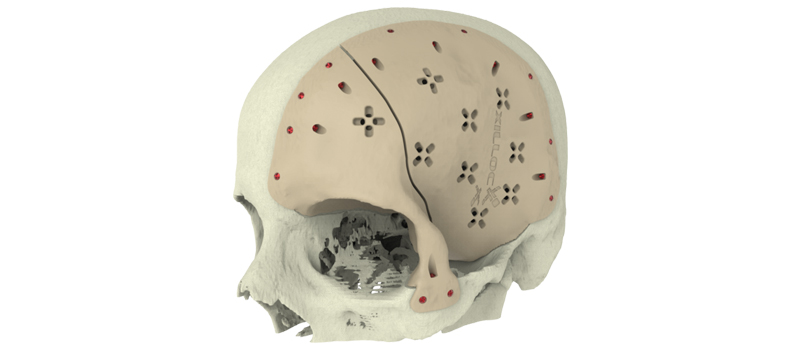
More than 100 3D printed medical devices have made it through the FDA gauntlet for commercialization. Among these are patient-matched devices, knee replacements and cranial implants.
The FDA even approved the first drug produced on a 3D printer.
But, as the authors of the report state, these submissions are “likely just the tip of the iceberg given the exponential growth of innovative research in this field.”
On the horizon are 3D printed skin cells for burn patients or even 3D printed replacement tissues, bone and organs.
The Liability Issues
Richard Rubenstein, partner and nationally recognized product liability attorney with the Wilson Elser Moskowitz Edelman & Dicker Law Firm in New York City, raised several concerns in his December 19, 2017 National Law Review blog on the FDA’s role in regulating 3D printed medical devices, drugs or biologics.
As Rubenstein noted, FDA oversight of traditional manufacturing and testing of medical devices gives companies important protections. “Compliance with FDA regulations offers tremendous protection to the manufacturers against product liability claims.”
Indeed, said Rubenstein, “The FDA’s approval preempts any state law claims for design and warning defects, to the extent that the state law claims attempt to impose duties in addition to, or different from, those under the federal law.”
The FDA’s approval, clearance or license gauntlet is, in terms of product liability risk, a blessing for manufacturers and their hospital, clinic and physician customers.
But 3D printing introduces a whole new set of variables into the manufacturing, testing and validation process. As a result, new product liability risks may not be covered by an FDA safety blanket.
Again, referring to Rubenstein’s analysis, here are three new risks that come with the 3D revolution:
- Who regulates the computer-aided-designer (CAD) or the 3D printer? If a software glitch, an internet hiccup or a big truck rumbling down the street shakes the 3D printer and alters an implant, will FDA compliance still protect the manufacturer? “Or, to take it one step further, should the FDA extend its regulation to the CAD designers and the 3D printers?” said Rubenstein in his blog.
- Since designs are CAD-based and, potentially, infinitely variable since they can be derived from each patient’s unique anatomy, will the present case law based proposition that strict liability design defects are barred as a matter of law still stand?
- And finally, where’s the Instructions for Use (IFU) for the software, 3D printer, imaging device or raw material?
Indeed, using a 3D printing system to create an implant even challenges some of the FDA’s traditional classification systems. Where, for example, is the predicate device?
To contact Mr. Rubenstein directly: richard.rubenstein@wilsonelser.com
Five Takeaways From the FDA 3D Printing Guidance Document
- FDA wants to work with Industry and build off of the existing medical implant approval/clearance/license processes.
So many new issues are raised by 3D printing that the FDA wants industry to be an active collaborator in developing guidelines—BUT—the FDA would like to follow the same regulatory requirements and submission classification and regulation guidelines for additive manufactured devices as for traditionally manufactured devices.
The FDA strongly encourages manufacturers to engage CDRH (Center for Devices and Radiological Health) or CBER (Center for Biologics Evaluation and Research) through the Pre-Submission process for any 3D printed device or drug.
Class II and Class III 3D devices and some Class I 3D devices must still meet 21 CFR 820.30 Design Controls to ensure that the 3D printed devices perform as intended.
- Patient matched 3D implants are a whole new kettle of fish.
After reading the FDA document, the real question is: What can’t go wrong?
The new risk variable list goes like this:
- Anatomic features that are not accurately imaged or are not consistent over time may result in a 3D fabricated implant that does not fit well in the patient.
- Small changes in size or geometry are hard to spot during visual inspection or through patient imaging so mismatched implants could sneak past quality control (QC).
- Devices intended to fit to or match soft tissues and non-rigid structures may be affected by deformation at the target implant location.
- Anatomy changes over time (e.g., with disease progression) and that may affect a patient-matched implant. Need an expiration date? Or explant date?
- Devices that follow patient anatomy precisely are vulnerable to software errors in file conversion. There are NO straight lines in human anatomy—which means that the software algorithms which convert anatomic curves into geometric designs are mathematically complex—and, therefore, vulnerable.
The FDA is urging suppliers to really nail down their clinically relevant design parameters, pre-determine a min/max range for these parameters and highlight which of those parameters get modified for patient-matching.
The FDA is also serious about expiration dates on patient matched implants.
- FDA approved software?
3D printing is an idiosyncratic, software based technology. Idiosyncratic means that typical 3D additive manufacturing systems rely on different software programs, from multiple vendors and have an absolute requirement that they all talk to each other.
We’ve seen this movie before.
Patient imaging software, design manipulation software, digital point clouds and meshes, machine-readable files—different standards, coordinates and parameters.
So, what happens when there are the inevitable file conversion errors?
The FDA’s answer is to ask manufacturers to verify the final 3D product critical attributes and performance criteria as part of the software validation process.
And, any software changes anywhere in the process flow would require revalidation.
The FDA is also asking companies to archive and maintain final printing device files and store all 3D printing/AM-specific information so that the information can be retrieved in case…
- Validating a moving target.
The FDA is asking 3D device producers to validate their device geometry, dimensions, material characteristics, mechanical properties AND how the 3D/additive manufacturing process affects them.
The FDA is also asking suppliers to validate parameters, process steps, and raw material properties—which is like non-3D production requirements.
One major difference will be when there are process parameters which are specific to 3D additive manufacturing trigger a need for revalidation—like software updates or changes.
Other triggers include: changes in material (e.g., supplier, incoming material specification, reused powder, new formulation), material handling, device spacing or orientation changes, changes to the software workflow or physically moving the machine to a new location. With traditional manufacturing machines, moving to a new location is a huge effort. With desktop printing, it’s an event that could occur almost routinely.
- Labeling “Henry’s Implant”.
Does Mother Nature need a label? Allograft implants, for example, are “labeled” for what they are. Bone is bone and is intended to be used as a structural implant and bone void fill. Logically simple and obvious.
With regards to patient-specific and anatomically matched 3D implants, the FDA is asking suppliers to create a patient-specific label.
Labeling, suggests the FDA, should have a patient identifier, intended use (e.g., left distal femoral surgical guide), and some descriptor of the final design iteration or version used to produce the device.
In addition, the FDA is suggesting an expiration date for a patient-matched device label. That expiration date, says the FDA, can be driven by the patient imaging date or the design finalization date—since, of course, tissues change over time.
Or patients may experience events between the time of imaging and surgery (e.g., additional trauma) which would affect the ability of the implant to match and perform as intended.
Therefore, the FDA is recommending that 3D suppliers add a precaution to the device label which says that the patient should be surveyed (by the physician? Clinic? Hospital?) for potential anatomical changes prior to the procedure.
Bottom Line
The FDA is making a strong effort to create a set of regulatory parameters which can corral the risks associated with 3D/additive manufacturing processes. The agency is asking for industry collaboration and, with this guidance document, has made excellent progress in identifying risks and possible solutions.
This is a work-in-progress, but it is moving in the right general direction.
And, the orthopedic community—broadly defined—needs this to work well.
Author
React:
Discussion
This is a fascinating development. In my practice we've seen similar outcomes with the revised protocol. The key differentiator seems to be patient selection criteria. Has anyone else noticed the correlation with BMI thresholds?
Great point. I'd push back slightly on the conclusion, the sample size in the cited study is too small to draw population-level inferences. That said, the directional signal is compelling and worth a larger RCT.
We implemented a similar approach last year. Early results are promising but we're still gathering 12-month follow-up data. Happy to share our protocol if anyone is interested.
Join the conversation
Orthopedic professionals are discussing this. Sign in and upgrade to read every comment and add your voice.