
You may not be able to define it, but most people know it when they see it.
TranS1 Wins Innovation Award
3 min read Premium comments
Innovation.
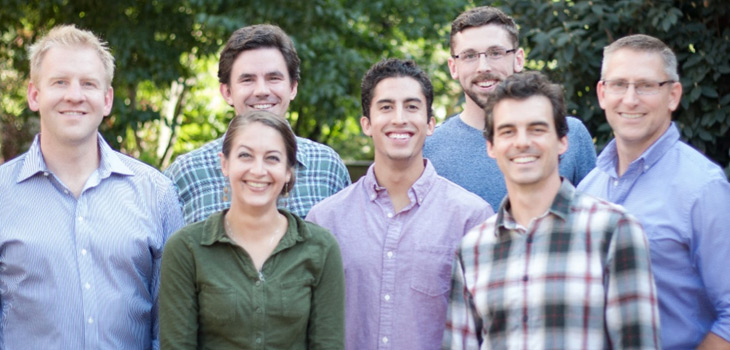
TranS1, the company which had stared corporate death in the face but found new life as part of Jeff Schell’s family of companies in Denver, Colorado, has just been awarded an award for being one of the most innovative companies to work for in the tech heavy Front Range.
The Denver Post, which sponsors the annual award, made the announcement on August 18, 2016 as part of its annual Millennial Week event.
The Post recognized innovation in nine categories:
- Best Company for Millennial Employees
- Most Innovative Workplace
- Tech Startup of the Year
- Small Business of the Year
- Innovator of the Year
- Lifestyle & Culture
- Denver Trailblazer
- Denver Changemaker
TranS1 won for being the most innovative workplace for millennials.
What Makes TranS1 Different
Peter Drucker, legendary business consultant, famously wrote that there are four opportunities for innovation within every company—unexpected occurrences, incongruities, process needs, and industry and market changes.
What Drucker did not mention, is that a company’s culture must be able to learn from unexpected occurrences, incongruities, etc. And most company cultures can’t, don’t or won’t.
For example: in the early 1950s, all computers were designed for advanced scientific work but business unexpectedly showed an interest in computers for payroll. Univac, which had the most advanced machine, ignored business applications. But IBM didn’t and when they redesigned what was basically Univac’s machine for such mundane applications as payroll, they became the leader in the computer industry.
IBM was open to the unexpected, Univac was not.
In describing why his company won this award, TranS1 CEO Jeff Schell pointed at several reasons that make his company different and open for the incongruous and unexpected.
“We are different and innovative. But we’re also hyper-collaborative. We overlap traditional business roles on purpose; marketing has business development responsibilities, general counsel helps lead strategy, and our finance lead is involved in everything (and not just from a numbers standpoint). This overlap creates more collaboration, and we believe that quality collaboration results in the best ideas.”
When OTW visited TranS1 headquarters in Denver, we found it on the second floor of one of the hottest new sections of Denver—the Denver Highlands.
“Our office setup—a historic mansion in Denver Highlands with a game room, large kitchen and various common spaces—further enhances this collaboration. We don’t have many meetings, but when we do, we pull in as many team members as possible and expect everyone to contribute.”
Think Different
As one might expect from a company that approaches spine fusion from the bottom up, literally, the team at TranS1 thinks different…ly.
Says CEO Schell: “We also look at problems differently, because we have diverse backgrounds. Our team has deep medical device expertise, but many of our employees also have experience in different industries, including software, insurance, investment banking, academia, litigation, and intellectual property.”
CEO Schell
Jeff Schell, who led the acquisition of TranS1’s patents from Baxano in 2014, is also the founder and CEO of Rocky Mountain Patent, one of the few U.S. patent firms with expertise in medical data informatics. His Master’s degree in medical informatics is from Northwestern, his law degree is from DePaul and his post-grad studies were at Harvard University, University College in Dublin and Beijing Foreign Studies University.
Not bad for a kid from Bay City, Michigan.
And his personality is a big part of the TranS1 culture.
One of his employees said this about Schell: “When he’s doing business outside of the company, he picks up the phone and calls people directly. He doesn’t wait for meetings to be set up, or engage in protracted email exchanges. Jeff inspires the team to be proactive, to not wait to be told to do something, and to address barriers head on.”
That also seems to define the types of employees he recruits.
“We look for people who are interested in a diverse scope of work and who are willing to raise their hand to come up with solutions. The majority of our Denver employees have advanced degrees, and all of our employees bring a unique background and perspective that creates value for our business.”
Product Innovations in the Pipeline
As CEO Schell described to OTW earlier this year: “We’re not in the me-too game. By that I mean we’re looking at ways to minimize the tissue trauma associated with access to the intervertebral space. Also looking at things like lateral mask fusion. We’re looking at radically different ways to do the lateral surgery. Employ an oblique lateral approach. We’re also trying to create ways for physicians to use the infrastructure that we’ve built and develop new technologies with that infrastructure even to the point of creating a joint venture.”
So congrats to the TranS1 team and we all look forward to seeing what emerges in the coming quarters and years.
Author
React:
Discussion
This is a fascinating development. In my practice we've seen similar outcomes with the revised protocol. The key differentiator seems to be patient selection criteria. Has anyone else noticed the correlation with BMI thresholds?
Great point. I'd push back slightly on the conclusion, the sample size in the cited study is too small to draw population-level inferences. That said, the directional signal is compelling and worth a larger RCT.
We implemented a similar approach last year. Early results are promising but we're still gathering 12-month follow-up data. Happy to share our protocol if anyone is interested.
Join the conversation
Orthopedic professionals are discussing this. Sign in and upgrade to read every comment and add your voice.