
With all due respect to the American Academy of Neurologic Surgeons (AANS), who characterized the Prestige® LP™ Cervical Disc 7-year study results as a “Late-Breaking Study”—there is really no such thing.
Longest Patient Follow-Up EVER for 2-Level Disc Arthroplasty
7 min read Premium comments
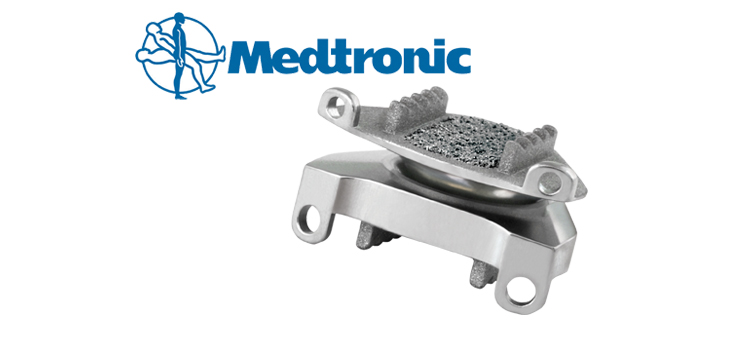
Yes, 7-year Prestige LP follow-up data was released late in the session at the 2016 American Association of Neurological Surgeons annual meeting, but it was a long time in the making.
Seven years to follow up. Three years before that for planning, enrolling, negotiating with the FDA. Before that product and instrument development, mechanical studies, animal studies and meetings.
Late breaking? No. More like 20 years of slogging it out in the trenches with thousands of people and millions of dollars.
That which took 20 years to create, took maybe 20 minutes to deliver.
It should have taken longer. Stories should have been told about recalcitrant patients, demanding statisticians, FDA staff turnover and investigator twists and turns.
The Prestige® LP™ Cervical Disc
The Prestige is a motion preserving spine disc implant. Think of two dime-sized plates with shark fins balanced on a ball and socket which fits neatly between two vertebral discs in the human neck. Here are a couple enlarged images of the Prestige LP and an X-ray showing the Prestige LP implanted at 2 levels.

On May 3, 2016, Medtronic announced seven years of follow up data for 2-level Prestige LP implants. The Prestige LP was originally approved by the FDA as a single level implant. Whether 1-level or 2-level, the Prestige LP is indicated for cervical disc disease causing nerve or spinal cord compression from C3-C7. The FDA is now evaluating the Prestige LP for 2 levels.
Todd Lanman, M.D., a Cedar-Sinai Institute neurosurgeon was tapped to deliver the numbers. He started with a simple conclusion: “At 84 months, patients treated with the 2-level Prestige LP Disc demonstrated greater rates of overall success compared to patients treated with 2-level anterior cervical disc fusion (ACDF).”
Sound familiar? In the last 12 months, 13 clinical studies representing more than 2, 000 patients and more than 8, 000 aggregate patient-years of follow up were released and they all came to the same conclusion.
For overall patient success, disc arthroplasty beats fusion. (See table at the end of this article.)
Prospective or retrospective. Randomized or not. Level one, level two, level three studies. Lumbar or cervical. U.S. or O.U.S. East Coast, West Coast, North, South. Small clinics and major academic institutions. Didn’t matter. The studies all come to the same conclusion.
For overall patient success, disc arthroplasty beats fusion.
Seven Years
There is a popular marathon t-shirt which reads: “every damn mile.” It’s the same for clinical studies. Every damn year, patients need to be contacted and scheduled to return for follow-up, then paperwork, then statisticians, then meetings, and more meetings.
Two years is difficult. Five years is a marathon. Seven years is an ultra-marathon.
And most of that commitment falls on the shoulders of the 30+ investigators and their staffs. Here are the names of the investigators/authors who made the seven-year commitment and more:
- Todd Lanman, M.D. — Cedars-Sinai Medical Center – Staff Neurosurgeon- Clinical Chief of Neurosurgery UCLA Medical Center – Assistant Clinical Professor Saint John’s Health Center – Staff Neurosurgeon Century City Doctors Hospital – Former Chief of Neurosurgery; Director of Spine Surgery
- Ken Burkus, M.D. — The Hughston Clinic, Columbus, Georgia. Burkus was one of three spine surgeons in the United States selected by the Scoliosis Research Society to be one of their first traveling fellows and is one of the most published and important authors in spine.
- Randall Dryer, M.D. – Central Texas Spine Institute, Austin, Texas. Dr. Dryer is an investigator in numerous FDA-approved clinical trials and routinely rated one of the top spine surgeons in the United States by numerous publications.
- Matthew Gornet, M.D. – The Orthopedic Center of St. Louis. Dr. Gornet, who received his medical degree and completed both his general surgery residence and his orthopedic residence there, is a national leader in the development of advance spine surgery technologies including non-fusion technologies.
- Jeffrey McConnell, M.D. – OAA Orthopedic Specialties, Allentown, Pennsylvania. Formerly co-director of the Division of Spine Surgery at the Naval Regional Medical Center, Portsmouth and faculty member at two medical schools, Dr. McConnell has been lead investigator for several major FDA-approved clinical studies for spinal implant technologies.
- Scott D. Hodges, M.D. – Center for Sports Medicine and Orthopaedics, Chattanooga, Tennessee. Dr. Hodges is one of the top spine surgeons in the United States and has authored numerous articles for publication, and participated in leading research projects.
The Early Prestige® Studies
“Science operates as a procedure of uncertainty reduction. The goal is to get less wrong over time.” – Brian Nosek, co-founder and executive director of the Center for Open Science.
Every clinical study has in it a temporary truth which itself is built on earlier research. Science is an iterative process and stands on the shoulders of those who came before.
The first published long term Prestige study came in 2009 when a team led by Ken Burkus presented a paper at the Joint Spine Section Meeting (and published in 2010 in the Journal of Neurosurgery: Spine) which reported that patients receiving the Prestige for SINGLE LEVEL disease recorded a significant improvement in their Neck Disability Index (NDI) scores, the Physical Component Summary score of the 36-Item Short-Form Health Survey and neck and arm pain scores.
These early studies were based on the Prestige ST™ disc, which is different from the Prestige LP, the subject of the current seven-year follow up, 2-level study. Both the LP and ST have the same articulation ability. But the Prestige LP is made from a titanium ceramic alloy while the ST is stainless steel. One other key difference, the Prestige LP is fixed with rails while the ST is fixed with screws.
That first study was a prospective, non-blinded study of 541 patients at 32 investigational sites. The investigators found that the differences in NDI between the Prestige® patients and the fusion patients was significant at both 36 and 60 months (p = 0.008 and 0.022, respectively).
Wrote the researchers in 2009: “The overall rates of maintenance or improvement in neurological status in the investigational group were 91.6%, 92.8%, and 95.0%, respectively, at 24, 36, and 60 months compared with 83.6%, 83.2%, and 88.9% in the control group (p = 0.006, 0.004, and 0.051, respectively).”
Furthermore, Prestige patients maintained angular motion, averaging more than 7.3° at 36 months and 6.5° at 60 months after surgery and they observed no implant migration.
The first Prestige LP (as opposed to the Prestige ST) results came six years later in a 2015 paper published in the July 31 issue of the Journal Neurosurgery: Spine. Led by Matt Gornet, the team of investigators reported that patients receiving the Prestige LP cervical disc recorded significantly improved clinical outcomes compared with baseline which were at least non-inferior to ACDF, up to 24 months after surgery.
Specifically:
“The mean SF-36 PCS scores improved by 14.3 points in the investigational group and by 11.9 points in the control group from baseline to 24 months postoperatively. Neurological success at 24 months was 93.5% in the investigational group and 83.5% in the control group (probability of superiority ~ 1.00).”
“The median return-to-work time for the investigational group was 40 days compared with 60 days for the control group (p = 0.020 after adjusting for preoperative work status and propensity score).”
The Seven Year Follow-Up Detail
Standing on the shoulders of the earlier studies, this was a randomized controlled investigational device exemption (IDE) trial which had enrolled 397 study subjects (209 receiving Prestige at 2-levels and 188 receiving fusion surgery) and compared results up to seven years.
Here is a summary of the results:
- Prestige LP patients exhibited greater rates in overall success (78.6%) compared to the patients treated with 2-level ACDF (62.7%) (by using Bayesian statistics, probability of superiority = 99.8%).
- Prestige LP patients exhibited greater rates in neurological success (91.6%) compared to the patients treated with 2-level ACDF (82.1%) (probability of superiority= 99.0%).
- Prestige LP patients exhibited greater success rates in patient-reported outcomes, including Neck Disability Index (87.0%), compared to the patients treated with 2-level ACDF (75.6%) (probability of superiority = 99.3%).
- Prestige LP patients exhibited lower rates of second surgeries (4.2%) at the index levels compared to the patients treated with 2-level ACDF (14.7%).
- Both Prestige LP and ACDF patients reported similar adverse event profiles.
The researchers noted that the Prestige LP disc had a number of clinical risks including (but not limited to): bone formation (including heterotopic ossification) that may reduce spinal motion or result in a fusion, either at the treated or at adjacent levels.
Tommy Carls, vice president of Medtronic’s spine division said: “This is the longest follow-up data available on clinical study patients treated with 2-level cervical arthroplasty in the United States. We`re committed to developing meaningful innovations—like the Prestige LP Disc—that fundamentally change patients’ lives. That’s why it’s exciting to see that the patients treated with the Prestige LP Disc maintain their outcomes for seven years.”
Standing on the Shoulders of Giants
As we detail in the table at the end of this article, the past 12 months have been a notably rich period for clinical trial data regarding cervical disc arthroplasty. Including the Prestige study, there have been five prospective, randomized, multi-center, FDA IDE studies with an ACDF control arm released this past year.
There have also been three major meta-analysis studies encompassing up to 19 prospective randomized clinical trials and more than 6, 000 patients. Finally, there have also been three retrospective analysis studies conducted.
These studies were published in such peer review journals as SPINE, the Journal of Neurosurgery: Spine, The Spine Journal, The Journal of Bone and Joint Surgery, the European Spine Journal and Orthopedics and Traumatology Surgery and Research.
The conclusions, across the board, are the same. Overall, when compared to fusion, patients who receive disc arthroplasty tend to have less pain, more motion and return to work faster.
If the goal is smarter spine care, then at least in terms of rigorous, long term, cervical disc arthroplasty information, spine surgeons should be ready for MENSA.
And payers, well, should have all the rationale they need bridge the chasm between cervical disc arthroplasty outcomes and reimbursement coverage.

Author
React:
Discussion
This is a fascinating development. In my practice we've seen similar outcomes with the revised protocol. The key differentiator seems to be patient selection criteria. Has anyone else noticed the correlation with BMI thresholds?
Great point. I'd push back slightly on the conclusion, the sample size in the cited study is too small to draw population-level inferences. That said, the directional signal is compelling and worth a larger RCT.
We implemented a similar approach last year. Early results are promising but we're still gathering 12-month follow-up data. Happy to share our protocol if anyone is interested.
Join the conversation
Orthopedic professionals are discussing this. Sign in and upgrade to read every comment and add your voice.