
Scalia—what does his absence mean for healthcare?
Washington Update: February
7 min read Premium comments
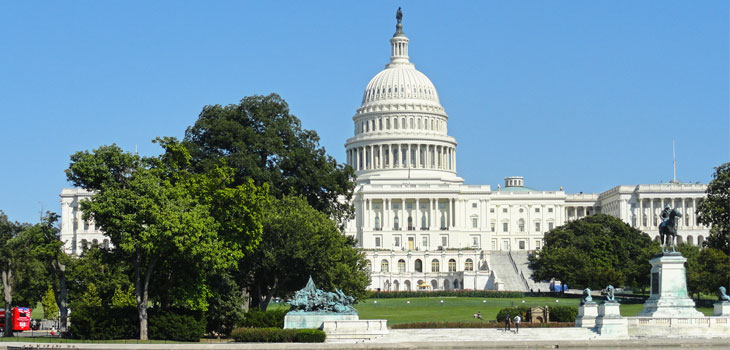
Is the President’s new budget dead on arrival? What key funding proposals for the FDA and CMS are embodied in this possibly futile exercise?
Finally, opioids—new initiatives this month from both the FDA and Congress.
Scalia: like Elvis, is more popular in memoriam.
In death, accolades are falling on Justice Scalia like snowflakes in a blizzard.
In life, Justice Scalia defined aggressive, smart conservative jurisprudence—and gleefully served as the conservative movement’s judicial lightning rod.
Unique among his Supreme colleagues, Scalia employed steel trap rhetoric and sardonic logic to measure today’s problems against an 18th century document—the U.S. constitution.
Here are a few of his most memorable phrases.
- “It’s not up to the courts to invent new minorities that get special protections.”
- “God assumed from the beginning that the wise of the world would view Christians as fools…and he has not been disappointed.”
- “In a big family the first child is kind of like the first pancake. If it’s not perfect, that’s OK, there are a lot more coming along.”
- “I even accept for the sake of argument that sexual orgies eliminate social tensions and ought to be encouraged.”
- “Is it really so easy to determine that smacking someone in the face to determine where he has hidden the bomb that is about to blow up Los Angeles is prohibited in the Constitution? It would be absurd to say you couldn’t do that. And once you acknowledge that, we’re into a different game.”
- “I don’t talk about internal court proceedings. A reporter who reports that is either a) lying, which can be done with impunity…or b) had the information from someone who was breaking the oath of confidentiality, which means that’s an unreliable person.”
- “It’s a form of argument that I thought you would have known, which is called the ‘reduction to the absurd.’ If we cannot have moral feelings against homosexuality, can we have it against murder? Can we have it against other things?”
In terms of healthcare reform, Justice Scalia did not oppose it per se. He did, however, oppose the manner in which the Affordable Care Act (ACA) sought to deliver healthcare services. In his view, the Supreme Court erroneously re-wrote law in order to uphold ACA’s key provisions. Here is an excerpt from Scalia’s dissent to the latest Supreme Court ACA decision:
“This case requires us to decide whether someone who buys insurance on an Exchange established by the Secretary [of Health and Human Services] gets tax credits. You would think the answer would be obvious—so obvious there would hardly be a need for the Supreme Court to hear a case about it. In order to receive any money under statute 36B, an individual must enroll in an insurance plan through an ‘Exchange established by the State.’ The Secretary of Health and Human Services is not a State. So an Exchange established by the State—which means people who buy health insurance through such an Exchange get no money under statute 36B.
Words no longer have meaning if an Exchange that is NOT established by a State is ‘established by the State.’ It is hard to come up with a clearer way to limit tax credits to State Exchanges than to use the words ‘established by the State.’ And it is hard to come up with a reason to include the words ‘by the State’ other than the purpose of limited credits to State Exchanges. The plain, obvious, and rational meaning of the statute is always to be preferred to any curious, narrow, hidden sense that nothing by the exigency of a hard case and the ingenuity and study of an acute and powerful “intellect would discover.”
Only one healthcare case is working its way up to the Supreme Court at present. It’s about using the Affordable Care Act to pay for contraception. While houses of worship, including churches, temples and mosques, are automatically exempt from the ACA’s contraception requirement, nonprofit groups like schools and hospitals that are affiliated with religious organizations are not.
The Obama administration has allowed such nonprofit groups to forgo paying for coverage and avoid fines if they inform their insurers, plan administrators or the government that they seek an exemption.
Seven federal appeals courts reviewed the provisions and decided in favor of the ACA’s modified approach. But last September a three-judge panel of the Eighth Circuit in St. Louis went the opposite direction. They said that the fines faced by faith-based challengers of the contraception rules represented a “substantial burden.”
To resolve the apparent 7 to 1 disagreement, the Obama administration asked the Supreme Court to hear an appeal and resolve the contradictory rulings and sustain what it called “a vital component of Congress’s effort to ensure that all Americans have full and equal access to preventive health services.” The Eighth Circuit, the administration said, had made “a sweeping and erroneous interpretation.”
The Supreme Court granted seven separate petitions in this case and it will be argued this winter or spring and most likely decided by June before a Scalia-less court.
If, as is likely, the Supreme vote splits 4-4, then the lower court’s ruling will stand. The only question is which one or will seven appeals court rulings prevail over one?
Obama’s Dead Budget Walking
President Obama’s eighth and final budget proposes to spend a record $4.1 trillion for the budget year beginning October 1, 2016—just 3½ months before he leaves office. The Republican leadership of the Republican Congressional majority has declared the budget proposal dead on arrival. Among their complaints, the new budget would increase taxes by $2.6 trillion over the coming decade, nearly double the $1.4 trillion in new taxes Obama sought and failed to achieve in last year’s budget.
Within this proposal are the following FDA, CMS and Obamacare spending plans.
FDA
 8% increase to further address drug compounders, device submissions and supply chain security
Overall, a net increase of $14.6 million in 2017 budget authority and $268.7 million in 2017 user fees for tasks such as improving medical product safety and quality, and implementing the FDA Food Safety Modernization Act (FMSA)
$2.8 billion in FY 2017 for FDA’s Medical Product Safety and Availability programs—up $116.2 million from the FY 2016 enacted level
Establish the National Medical Device Evaluation System (NES) to identify patients who benefit from specific types of devices
Continue to invest in precisionFDA—a crowdsourced, cloud-based platform to advance regulatory science around NGS-based analytical tools and datasets.
Speed up medical device application review
CMS
$400 billion in health savings, including from Medicare and Medicaid reductions to providers
Reduce funding for Medicare’s GME Indirect Medical Education (IME) program, reducing funding to teaching hospitals by $117.8 billion nationwide over the next ten years
Reduce Medicare support and tighten qualifying criteria for the CAH program
Cut budgets for post-acute care providers
Give states that expand Medicaid programs three years of full federal support, regardless of when the state chooses to expand
Expand Medicare Advantage plans’ ability to deliver services via telehealth and enable rural health clinics and federally qualified health centers to qualify as originating telehealth sites under Medicare
Make the Cadillac tax easier for employers offering flexible spending arrangements to calculate the tax; and requiring the Government Accountability Office to conduct a study of the potential effects of the tax on firms with unusually sick employees
Require high-income Medicare beneficiaries to pay more for coverage
Finally, Coming out of the Stupor in Congress and FDA
On February 2 and as part of the new federal budget proposal, President Obama proposes to spend $1.1 billion to hit at the exploding opioid and heroin abuse in the United States.
New data from the Centers for Disease Control and Prevention (CDC) show that opioids—prescription pain medications and heroin—were involved in 28, 648 deaths in 2014. In particular, CDC found a continued sharp increase in heroin-involved deaths and an emerging increase in deaths involving synthetic opioids, such as fentanyl.
The new FY 2017 budget proposes to spend $1 billion over two years to expand access to treatment for prescription drug abuse and heroin use.
The budget also proposes to increase by $90 million the half a billion dollar budget for the Departments of Justice (DOJ) and Health and Human Services (HHS) to expand state-level prescription drug overdose prevention strategies, increase the availability of medication-assisted treatment programs, improve access to the overdose-reversal drug naloxone, and support targeted enforcement activities. A portion of this funding is directed specifically to rural areas, where rates of overdose and opioid use are particularly high. To help further expand access to treatment, the budget includes an HHS pilot project for nurse practitioners and physician assistants to prescribe buprenorphine for opioid use disorder treatment, where allowed by state law.
Then on February 4, the FDA announced that it would do the following to address opioid addiction.
The FDA will:
Re-examine the risk-benefit paradigm for opioids
Convene an expert advisory committee before approving any new drug application for an opioid that does not have abuse-deterrent properties
Change pediatric opioid labeling before any new labeling is approved
Change immediate-release opioid labeling. Add warnings and safety information
Update Risk Evaluation and Mitigation Strategy requirements for opioids
Expand access to, and encourage the development of, abuse-deterrent formulations of opioid products
Support better pain management options, including alternative treatments.
Author
React:
Discussion
This is a fascinating development. In my practice we've seen similar outcomes with the revised protocol. The key differentiator seems to be patient selection criteria. Has anyone else noticed the correlation with BMI thresholds?
Great point. I'd push back slightly on the conclusion, the sample size in the cited study is too small to draw population-level inferences. That said, the directional signal is compelling and worth a larger RCT.
We implemented a similar approach last year. Early results are promising but we're still gathering 12-month follow-up data. Happy to share our protocol if anyone is interested.
Join the conversation
Orthopedic professionals are discussing this. Sign in and upgrade to read every comment and add your voice.