
Spreadsheets are dangerous. In the wrong hands, they can become runaway trains—careening along a single trajectory to ridiculous heights or ignominious bottoms. And the more complex the calculations, the more reasonable the direction appears. As if complexity improved the probability of success or reduced the presence of risk.
The Myth of the $87 Billion Knee Replacement Market
7 min read Premium comments
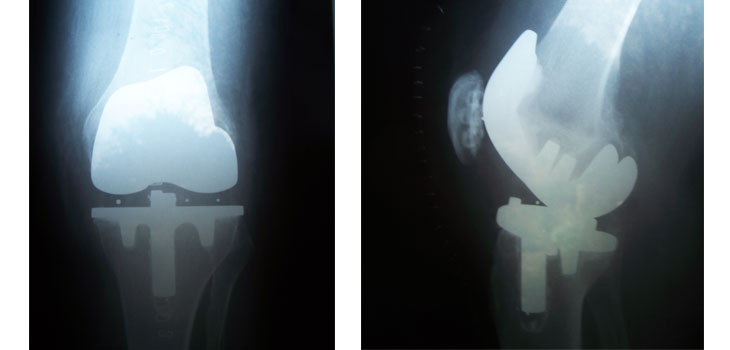
Yes, spreadsheets can be downright diabolical.
Case in point. Journal of Bone and Joint Surgery (JBJS). April, 2007. Authors Kurtz S, Ong K, Lau E, Mowat F and Halpern M. Title: Projections of primary and revision hip and knee arthroplasty in the United States from 2005 to 2030.
According to the authors, by 2015 there should be approximately 1 million knee arthroplasties worldwide. And by 2030, that number—moving along a Poisson regression track—should reach 3.48 million. Assuming approximately $25, 000 per knee replacement, that is an $87 billion market.
Here’s the chart of those projections. Isn’t that a smooth line? So clear. So direct.

What could possibly put wiggle into those projections?
Alternatives to Total Knee Replacement
For both primary care physicians and orthopedic surgeons American Academy of Orthopaedic Surgeons (AAOS) has guidelines for how to treat patients with knee osteoarthritis (OA).
Those guidelines recommend four treatments for knee OA.
- Lose weight
- Low-impact aerobic exercise
- Intra-articular corticosteroids (for short-term relief)
- Non-steroidal anti-inflammatory drugs (NSAIDs – like 3, 000 mg of acetaminophen each day)
But not these 5 treatments:
- Intra-articular hyaluronic acid (HA) injections
- Custom made lateral wedge insoles
- Glucosamine and/or chondroitin sulfate or hydrochloride
- Needle lavage
- Acupuncture
Three treatments were neither recommended for or against:
- Bracing
- Growth factor injections
- Platelet rich plasma (PRP)
OK. So, lose weight, exercise, have a steroid and a non-steroid anti-inflammatory like acetaminophen. And maybe try bracing, growth factors or PRP.
Then…total knee surgery?
The Catch 22
But life in a busy clinic doesn’t always fit neatly into such guidelines. Here’s the view from one busy orthopedist, Vinod Dasa, M.D., associate professor of Clinical Orthopaedics at LSU; “Most patients, by the time they see the orthopedic surgeon, have already tried weight loss, exercise, and NSAIDs/pain medications. Oftentimes patients say they can’t exercise in order to lose the weight. From the physician’s perspective reconciling what the patient is capable of doing with the AAOS guidelines only leaves us with NSAIDs and pain medications.”
Like intra-articular corticosteroid injections?
Says Dr. Dasa: “Steroid injections (per the AAOS recommendations) are considered to be inconclusive which is somewhat confusing because this is one of the main treatments for rheumatology, primary care, and orthopedics for knee OA. Essentially when a patient comes to see me they’ve exhausted the first line treatments recommended by the AAOS.”
OK. So the patient already tried to lose weight, is taking NSAIDs and can’t exercise.
Then…total knee surgery?
The Role of Injections for Knee OA
Injections cost anywhere from $100 to $2, 000 depending on whether the injectate is a corticosteroid, hyaluronic acid (HA), the patient’s own platelet rich plasma (PRP), growth factors and whether it is performed outpatient or inpatient.
Last year, tens of thousands of physicians (or their staff) performed tens of millions of injections into OA knees in the fervent hope of relieving each patient’s pain and stiffness—and delaying, perhaps, the vastly more expensive ($20-60k) and traumatic knee surgery.
Every candidate for knee surgery has, we’d be so bold as to say, had one or more knee injections.
But not every recipient of a knee injection goes on to have total knee surgery.
Checking the PearlDiver Technologies, Inc. (PD) data base (www.pearldiverinc.com), we find that of 198, 391 Medicare patients who’d had a diagnosis of OA of the knee, 1 out of 12 (8.1%) returned to have a total knee replacement within 24 months. The following table gives the results of the PearlDiver analysis.

Again, Dr. Dasa: “As far as hyaluronic acid injections, I think most physicians will tell you their experience is quite different from what the AAOS guidelines recommend. In my opinion, these injections do work and work very well in the appropriate patient population i.e. isolated mild/moderate knee OA.”
The Acid Test – What Do Payers Think?
CMS’ (Centers for Medicare and Medicaid Services) partner agency, the Agency for Healthcare Research and Quality (AHRQ) Technology Assessment (TA) program, issued an assessment report of HA in late December 2014 where they reviewed 141 peer reviewed studies regarding HA and concluded:
- There is not enough evidence that HA can or cannot reduce the rate of knee replacement surgery
- The strength of evidence that HA improved knee function was low
- The evidence showed that HA relieved knee pain but that it was of minimal clinical importance
- The evidence that HA improves a patient’s quality of life was insufficient
When added to AAOS’ comment from June 2013: “We cannot recommend using hyaluronic acid (HA) for patients with symptomatic OA of the knee, ”—a conclusion that came with a “Strong” rating because the evidence supporting that clinical guidance came from 3 high-quality and 11 moderate-quality research studies that met AAOS’s inclusion criteria—the natural question is, what do payers think?
That is the acid test.
And so far, it appears, payers are for the most part paying for HA injections. UnitedHealthcare. Medicare Advantage. Aetna. And so forth.
The physicians who use HA, as Dr. Dasa pointed out, in the appropriate patient populations—i.e., mild/moderate knee OA—want to keep it as part of their treatment plans.
And they are making their voices heard at the payers.
The Role of Injections for Knee OA
While exact numbers may be difficult to come by, using Medicare and Healthcare Cost and Utilization Project (HCUP) data, PearlDiver analysts estimated some time back that there were about 35 million injections performed annually in orthopedics.

According to PearlDiver’s data, injections into the knee comprised 23% of the orthopedic specialty total. Spine, at 32%, used the most injections of all orthopedic specialties.
Injections are motherhood and apple pie for physicians treating orthopedic pain problems.
Checking with WebMD, one of the largest patient reference sites on the Internet, here is the advice patients receive regarding injections:
“If you have knee osteoarthritis…One option is to inject medication into your knee.
There are different types of injections, and they’re an important part of treating knee osteoarthritis for many people, says Roy Altman, M.D., an osteoarthritis expert at UCLA. Injections can be especially helpful for people who haven’t gotten relief from NSAIDs like ibuprofen, or people who can’t take those drugs due to side effects.”
Recommended Related to Osteoarthritis
Osteoarthritis of the Knee: Hyaluronic Acid Joint Injections
In the U.S., almost 21 million adults are living with osteoarthritis. And one of the body’s critical joints, the knee, is the most frequently affected. More than 30% of people over 50 have knee osteoarthritis. So do a whopping 80% of those over 65. In fact, about 100, 000 people in the U.S. can’t get from their bed to the bathroom because of osteoarthritis of the knee. Getting hyaluronic acid joint injections is one treatment that may ease the pain and stiffness of osteoarthritis. Hyaluronic acid…Read the Osteoarthritis of the Knee: Hyaluronic Acid Joint Injections article.
“Corticosteroid injections are useful for treating flare-ups of OA pain and swelling with fluid buildup in the knee, says John Richmond, M.D., an orthopedic surgeon at the New England Baptist Hospital in Boston.
These injections help relieve symptoms by reducing inflammation in the joint. But they’re not a perfect solution in every case.
In most cases, Richmond tells his patients they can use these shots two to three times a year. Using them too often may damage cells in the knee that make cartilage.”
Your doctor can inject more hyaluronic acid into your knee to boost the supply.
Studies have shown that hyaluronic acid injections may help more than pain-relief medications for some people with OA. Other studies have shown they may improve symptoms as well as corticosteroid injections do. If you’re considering hyaluronic acid injections, keep these in mind:
Another treatment getting attention is platelet-rich plasma (PRP). This requires drawing a sample of your blood and processing it to create a fluid that contains a higher-than-normal amount of platelets, tiny disks that help clot the blood. The doctor then injects the fluid back into your injured area.
The platelets in your blood contain natural chemicals that help heal injuries. Doctors have been treating other problems—like tendon damage—for more than a decade with PRP.
However, experts still know little about whether it works for knee osteoarthritis.”
And, following this advice, patients with knee pain are a mainstay of orthopedic and pain practices in the U.S. Not to modify the disease, but rather to, hopefully, restore at least some amount of normalcy to life.
For a long, long time this has been the treatment paradigm. In 2007, when the JBJS authors were calculating future knee replacement volumes this was the frame of reference they were operating in.
Making a Myth Come True
A knee replacement, at $20, 000 – $60, 000 per surgery, is a capital investment—as, if memory serves, Warren Buffett once quipped. A knee injection, at $200-$2, 000 is an expense. The former, like any good capital investment, should last 20 years or longer. The latter, like any wise expense, should delay the need for capital investment by a couple years or more.
Knee injections, it would seem, are a key part of the orthopedic eco-system—and for many practitioners and patients—wise expense decisions. What happens, however, if knee injections lose the support of both AAOS and AHRQ—especially such a mainstay as HA?
What is the alternative…3.5 million knee replacements at an $87 billion price tag?
Author
React:
Discussion
This is a fascinating development. In my practice we've seen similar outcomes with the revised protocol. The key differentiator seems to be patient selection criteria. Has anyone else noticed the correlation with BMI thresholds?
Great point. I'd push back slightly on the conclusion, the sample size in the cited study is too small to draw population-level inferences. That said, the directional signal is compelling and worth a larger RCT.
We implemented a similar approach last year. Early results are promising but we're still gathering 12-month follow-up data. Happy to share our protocol if anyone is interested.
Join the conversation
Orthopedic professionals are discussing this. Sign in and upgrade to read every comment and add your voice.