
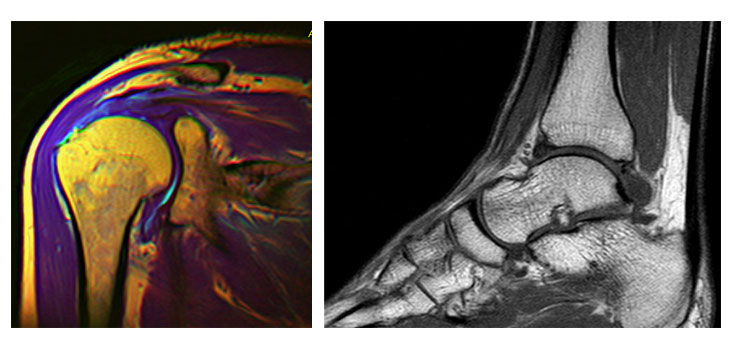
Shoulder meets ankle as Wright Medical Group, Inc., one of the market leaders in lower extremity implants agreed in principle to merge with one of the market leaders in upper extremity implants, Tornier, N.V. The surviving company will be Wright Medical and the nominal headquarters will be just outside of Memphis—although, the official headquarters will be in the land below sea level—the Netherlands—in order to dip into that quirk of American tax law known as “tax inversion”. Either way, Mississippi Delta or De Lage landen, these two companies are flat-landers.
Upper Meets Lower as Wright and Tornier Combine
6 min read Premium comments
Combined the two companies represent about $650 million in implant and instrument sales.
Here is how one analyst forecast the sales and, yes losses, for these two firms.

Scaling Up
This merger is the latest in the now well-established consolidation wave in orthopedics. Zimmer is merging with Biomet. DePuy acquired Synthes. Stryker has scarfed up several interesting young technology companies (and Wall Street analysts keep hinting that Smith & Nephew is in CEO Lobo’s sights).
In the face of changing tax rules, tougher FDA scrutiny, continued reimbursement challenges and the always difficult plaintiff’s bar, most companies have concluded that building scale through mergers or acquisitions is the best, most logical response to such macro-environmental headwinds.
Scale in this case means operational savings of about $45 million over the next couple, three years.
Interestingly enough, it also means combining a management team that worked together in a previous business life. Bob Palmisano, Wright Medical’s CEO, will become President and CEO of the newly combined firm while Tornier’s CEO, Dave Mowry, will be Executive Vice President and COO. The two execs worked together before at ev3. In fact, this combination brings the old team back together—Shawn McCormick, Pascal Girin and Julie Tracy, in addition to Palmisano and Mowry.
Timing
For Tornier, whose sales growth had, in the words of Wells Fargo analysts, “decelerated due to a number of issues such as distributor changes in the U.S. and competitive pressures”, this announcement comes at a good time.
Wright Medical, which was expecting to miss sales expectations for the third quarter (sales for the third quarter were $71.3 million down from analyst consensus estimates of $75.8 million) due to weaker than expected core foot and ankle and international sales, also benefited from the announcement.
Furthermore, neither company is profitable. So the strategic value of this deal overwhelmed the near term sales or earnings short falls.
All of Wall Street’s analysts lined up to support the announcement.
Said BMO’s Joanne Wuensch: “While not the deal we had expected, we do like it. The deal would create a leading extremities company, doubling the revenue base of each and providing a pathway to positive EBITDA, while leveraging the two franchises.”
Said RBC’s Glenn Navarro: “We believe the strategic rationale of the TRNX deal is solid and positions the combined company as the leader in one of the fastest growing and healthiest parts of the orthopedics market—extremities.”
Said Needham’s Mike Matson: “There is no denying that TRNX fits well with WMGI. While WMGI is stronger in lower extremities, TRNX is stronger in upper extremities.” On the good news Matson set his price target at $38 (down from $40) and his rating at “BUY” (down from Strong Buy).
Said Piper’s Mike Miksic: “The combination of Wright Medical and Tornier creates a unique SMID-cap extremities growth franchise, growing mid-teens in expanding markets. ‘New Wright’ remains high-value asset, albeit now on a larger scale.”
Said the team from Wells Fargo: “The combination of WMGI and TRNX creates a high-growth extremities company that will have a comprehensive product portfolio across upper and lower extremities. We think the acquisition makes strategic sense.”
But Wait, There’s Still More
And then Wright also announced that, finally, after a tortuous pathway through the FDA that Augment, Wright Medical’s powerhouse new biologic received that agency’s blessing. How big a deal is this? Quoting top Wall Street analyst, Glenn Navarro with RBC Capital Markets: “Should surgeons be right in their estimates [that they would use Augment in about one-third of their hindfoot and ankle fusion cases], Augment could be approx. $100 million product in five years’ time and represent <1/5 of WMGI’s total sales by 2018, with gross margins that we believe will exceed 80%.”
Wright announced that the FDA had sent the firm an approvable letter which would imply full approval in the coming months. Should that happen, Wright would be offering a growth factor product to physicians by 2Q15. Augment would be indicated for use in ankle and hindfoot fusion.
What a Long and Strange Trip It’s Been
Who remembers that Wright Medical is over 60 years old? Or that at one time it was a supplier of breast implants? Or that it teetered on the edge of bankruptcy for a number of years before, in a flash of serendipity it turned the reins of the company over to its corporate attorney, Tom Patton. At the time (1990s) it seemed as though such a move was the prelude to bankruptcy, but in fact Patton turned out to be a talented manager. He righted the sinking ship, managed to bring in (with help from Stephens Inc.) new capital, new management and essentially put Wright Medical on this path to a $3 billion market value.
Headquartered just outside of Memphis, Tennessee, Wright is part of a long and fascinating history of medical innovation and product companies which started in Memphis. Richards Medical Company, which made orthopedic implants, was purchased by London-based Smith & Nephew in 1986. Former Richards managers founded famed spinal implant manufacturer Sofamor Danek and eventually cashed out in a sale to Minneapolis-based Medtronic in 1998.
When we first heard the news that Tornier was merging with Wright we assumed that would mean yet another Memphis-based medical company becoming a division of some distant parent. But not so. In this case, the surviving company is Wright and it will remain solidly in western Tennessee, on the outskirts of Memphis among the tall pines.
Key Products and Market Positioning

Tornier, which has been able to generate strong sales with shoulder implants, two products stand out—the Aequalis Ascend Flex and the Simpliciti. For Wright Medical, the INFINITY total ankle and the Inbone total ankle have been getting high marks from physicians.
Tornier’s Aequalis Ascend Flex, which was launched in late 2013, is a press-fit reverse shoulder implant, which opened up Tornier’s addressable market by about 30%, says RBC’s Navarro. So far the market penetration has been principally among orthopedic surgeons, generally. But management told analysts that they plan to ship additional Ascend instrument sets into other corners of the U.S. and international markets in the fourth quarter of this year. By all indications Ascend Flex has been a winner for Tornier.
And next year Tornier is expected to launch its new Simpliciti shoulder system.
For Wright, the recent launch of the INFINITY total ankle and the coming launch of Augment puts the focus solidly on ankle replacement. In a recent survey of surgeons by RBC’s analyst Navarro, we learned that total ankle replacements are now about 30% penetrated into surgeon’s practice, up from about 19% two years ago. This is significant and reflects, we think, the rising quality of implants and instruments.
Navarro estimates that penetration could reach 39% in the next two years.
New product launches (like Small Bone Innovations’ STAR ankle), more trained surgeons and an improving reimbursement environment have been the main reason sales and are up.
Navarro also found in his survey that Wright’s INBONE and INFINITY total ankle systems ranked #2 and #3 (after STAR ankle) in the market.
Post deal, the new Wright Medical will be the largest pure play supplier of extremity implants and instruments with sales of $650 million and a double digit sales growth future to, most analysts expect $825-875 million by 2016.
Author
React:
Discussion
This is a fascinating development. In my practice we've seen similar outcomes with the revised protocol. The key differentiator seems to be patient selection criteria. Has anyone else noticed the correlation with BMI thresholds?
Great point. I'd push back slightly on the conclusion, the sample size in the cited study is too small to draw population-level inferences. That said, the directional signal is compelling and worth a larger RCT.
We implemented a similar approach last year. Early results are promising but we're still gathering 12-month follow-up data. Happy to share our protocol if anyone is interested.
Join the conversation
Orthopedic professionals are discussing this. Sign in and upgrade to read every comment and add your voice.