
Do you have a story to tell? We want to publish it. Consider OTW your venue to publish case reports, appeals for volunteer work, new technology assessments, payer battles and even fund raisers. You name it, if it is all about the world of orthopedics and you are passionate about it—then you have an outlet at OTW.
The Article I’ve Always Wanted to Write
3 min read Premium comments
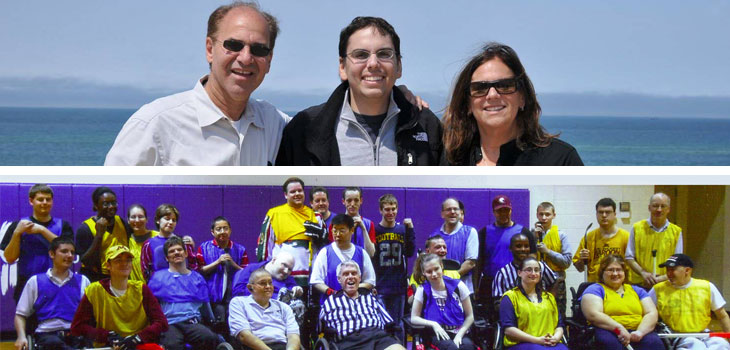
This week, we are proud to offer two personal stories from two fathers who are talking about their sons. In both cases, the appeal is to you, our reader, to support two programs—one is a very important research program and the other is an existing adaptive sports program. Through the examples of these two sons we see why such vitally important programs require your generous support.
Jeff Guyer
It’s been two years since Jeff Guyer, a talented biomedical engineer with Alphatec Spine and the son of Texas Back Institute (TBI) co-founder and former NASS President Dr. Richard Guyer, passed away at the age of 30 from rare form of cancer called myxoid liposarcoma.
Every parent’s heart breaks when they hear of a child—even an adult child—who’s passed too early. Jeff Guyer’s life was an extraordinary one and if there is any comfort, it is in his life well lived.
Dr. Guyer and his wife Shelly sent me an appeal last week to contribute to a fund dedicated to raising research money for sarcoma. Very little money is actually raised each year for this particular type of cancer.
The money is going to Massachusetts General Hospital. This is the fourth year of fund raising. This year the funding got a jump start of $50, 000 from some wonderful friends of the Guyer family and we’re going to our best at OTW to keep the momentum going.
Join me by going to this website: https://give.massgeneral.org/spinspiration/ and putting a few bucks on the September 29 Beyond Pedaling Ride in Snider Plaza. We’re going to be backing Rick and Shelly Guyer. Come join us.
Finally, Texas Back is sponsoring a third silent auction on Friday September 27 where everyone can bid on wonderful and creative baskets created by all the different departments and other friends either by visiting TBI at 6020 West Parker Road, Plano or by going online at www.32auctions.com/texasback.
My Son
As I grow older, I come to understand more thoroughly the often silent challenges people go through with their families and loved ones. We normally don’t see that part of people’s lives. I’ve been fortunate, frankly. My son, who was born with a pretty severe form of cerebral palsy, has grown up to be an independent and terrific adult.
Raising a child with a disability is a learning experience—for everyone. In my own experience I know one thing absolutely. It is that the human spirit is the most powerful force in the world.
In my son’s case, his spirit carried him through multiple surgeries and difficult life challenges. Scott’s grit was especially on display when was playing adaptive hockey in school. He was the team goalie. Wheelchairs would come barreling at him, sticks waving and the puck flying. He would literally launch his body at the coming mass of metal and rubber to block the plastic disc. No player treated any other player gently. Full-body contact. And we’d bring him home bruised, bloody and thoroughly happy.
That was forty years ago.
Looking back, it is crystal clear how much sports helped not only my son but every child who participated. Playing in a team taught competitiveness, spirit and self-reliance. It also created a lifelong group of close friends.
Scott still plays hockey. His friends and a younger generation of teens and 20-year-olds also play in his league. These guys and gals have spina bifida, cerebral palsy, MS, amputations, spinal cord injuries, cognitive issues and other forms of disabilities.
In 1995 Scott and his friends organized their program into a non-profit 501(c)(3) organization to manage four seasonal sports activities—floor hockey, softball, football and soccer—for adults with physical disabilities in and around the Twin Cities.
The name of the group is: “We love to Play.”
I’m telling this story in order help Scott and Charlie Brose, the president of “We Love to Play” raise a little bit of money—about $4, 000—to pay for equipment and admin expenses (printing, mailing, promotions). Everything else is donated—coaches, referees and gymnasiums
So, in addition to helping support myxoid liposarcoma research at Mass General, join us also in supporting adaptive sports for adults with various forms of disability. Please send a few bucks to: www.welovetoplay.org/donate.
Or make your check payable to “We Love to Play” and mail to:
We Love to Play
6537 Riverwood Lane
Brooklyn Center, MN 55430
Author
React:
Discussion
This is a fascinating development. In my practice we've seen similar outcomes with the revised protocol. The key differentiator seems to be patient selection criteria. Has anyone else noticed the correlation with BMI thresholds?
Great point. I'd push back slightly on the conclusion, the sample size in the cited study is too small to draw population-level inferences. That said, the directional signal is compelling and worth a larger RCT.
We implemented a similar approach last year. Early results are promising but we're still gathering 12-month follow-up data. Happy to share our protocol if anyone is interested.
Join the conversation
Orthopedic professionals are discussing this. Sign in and upgrade to read every comment and add your voice.