
The Harvard Business Review calls surgical robots one of “10 Innovations That Will Transform Medicine.”
Was MAKO’s Miss a Hit on Surgical Robotics?
8 min read Premium comments
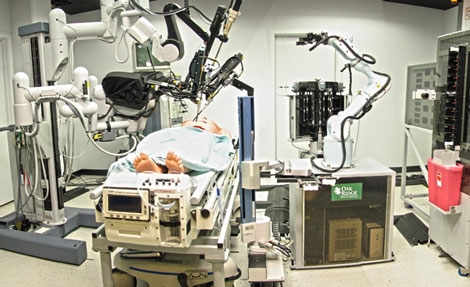
Two years ago, Global Analysts, Inc. predicted that worldwide demand for service robots (which includes medical) would eventually reach $38.42 billion. Several firms, including Mazor Robotics Ltd. and OrthoSensor, Inc. offer orthopedists intelligent devices for orthopedic surgery. The largest and most successful supplier of robotic devices for orthopedic surgery has been Fort Lauderdale, Florida’s MAKO Surgical Corporation.
On May 8th MAKO stumbled badly when, contrary to Wall Street analysts expectations, the firm reported sales of six RIO systems and nine MAKOplasty THA (total hip arthroplasty) systems for the quarter ended March 31, 2012.
Those RIO unit sales were one less than a year ago and the MAKOplasty systems were two less than a year ago. Despite the lower reported unit sales, the number of procedures using MAKO’s RIO and MAKOplasty software/components grew 76% and as the table below illustrates, has been growing very well since 2007.
Number of Orthopedic Procedures Using MAKO’s Surgical Assist Robots
|
2007 |
2008 |
2009 |
2010 |
2011 |
2012 | |
|
1st Quarter |
102 |
265 |
731 |
1, 304 |
2, 297 | |
|
2nd Quarter |
140 |
358 |
793 |
1, 557 | ||
|
3rd Quarter |
159 |
418 |
815 |
1, 813 | ||
|
4th Quarter |
97 |
200 |
561 |
1, 146 |
2, 258 | |
|
Full Year |
168 |
601 |
1, 602 |
3, 485 |
6, 932 |
12, 000 est |
|
% change |
nmf |
258% |
167% |
118% |
99% |
73% |
Source: MAKO Surgical’s Quarterly 10-Q filings
MAKO’s miss however reverberated beyond Wall Street and the real question is: Has MAKO’s lower than expected result for the first quarter opened up a fault line in the concept of robotizing large joint reconstruction surgery?
MAKOplasty’s Value Proposition
MAKO’s RIO system, which is the robot platform upon which the MAKOplasty software and component systems work, costs just under a million dollars. Using it adds 20-30 minutes to OR time. A 2005 study (available at: https://www.shippertmedical.com/UserFiles/File/Timesaving.Pdf) of 100 U.S. hospitals found that OR charges averaged $62/min (range: $22 to $133/min). An extra 20-30 minutes means $1, 240 – $1, 860 in added OR time.
So this is expensive. Since large joint surgery is among the most successful of all surgeries the logical question to ask is: Why incur the expense?
Douglas Padgett, M.D., Chief of Adult Reconstruction for Hospital for Special Surgery in New York, uses the MAKO system and who has spoken about it from many podia says: “Surgical navigation is not enough [of a benefit]. The MAKO system improves both the precision and the accuracy of each case which reduces, for example, problems associated with poor socket placement. With the MAKO system any surgeon can improve the accuracy of their bone preparation as well as the precision of their implant delivery.”
Clearly, MAKO’s value proposition is that its system will substantially improve performance of, first the surgeon, later the implant in daily patient use.
Coincidentally, one week after MAKO reported its first quarter results, many of its users and non-users convened at the Current Concepts in Joint Repair meeting held in Las Vegas. OTW was also there and talked to several MAKO users. For hips, users say they rely on RIO for around 15% of the cases. While we didn’t get a precise number, the adoption percentages are much higher for knee procedure—specifically for the more complex unicompartmental knee surgery.
50% of All Hip Procedures Imprecise
In a study of 2, 061 total hip revisions, researchers found that 50% of the acetabular cups were outside the optimal range in terms of both version and abduction. The study, which won the John Charnley Award, and was published in the journal Clinical Orthopedics and Related Research (Orthop Relat Res. 2011 Feb;469(2):319-29), looked at postoperative AP pelvis and cross-table lateral radiographs on patient who received a total hip arthroplasty or hip resurfacing from 2004-2008.
From 1, 823 hips, 1, 144 (63%) of the acetabular cups were within the abduction range (defined as movement of a limb toward the midline or axis of the body) and 1, 441 (79%) were within the version range (defined as the tipping angle of the joint) but ONLY 917 (50%) were within the range for both.
Why so poor? The authors (Callanan MC, Jarrett B, Bragdon CR, Zurakowski D, Rubash HE, Freiberg AA, Malchau H.) said that surgical approach, surgeon volume, and obesity independently predicted malpositioned cups.
Surgical-assist tools like MAKOplasty address two of the three factors which, according to the study, affect malpositioned cups.
Approximately 280, 000 total hip replacement procedures are performed in the U.S. annually. That number implies that between 2004 and 2008 (the study period) roughly 700, 000 patients received mal-positioned artificial hips and are at risk for instability, lysis and revision surgery.
The fact that more patients are not undergoing revision surgery is, according to Dr. Padgett, indicative of how forgiving this particular surgery is. And, we suspect, explains its popularity with both patients and surgeons.
The Consequences of Mal-Positioning
Mal-positioned knee or hip components are by far the most common cause of poor outcomes and revision surgeries. In the case of hips, two bad things happen when the cup or stem is mal-positioned: the ball starts to rattle around inside cup and may come out entirely (instability); or the two components start rubbing together unnaturally and tiny particles of either component break off and cause inflammation (lysis).
The Changing Face of Revision Total Hip Arthroplasty

Source: Dr. Douglas E. Padgett, Hospital for Special Surgery, NY, NY
In the last 10 years instability and lysis have become the dominant causes of hip failure.
And the cost of correcting or living with mal-positioned knees or hips is, conservatively, billions of dollars. By contrast, the cost of pursuing perfection using surgical robots may well be just hundreds of millions of dollars.
How Do Surgical Assist Devices (Robots) Work?
Surgical robots use computer technology to accomplish two things—improve pre-surgery planning and, in collaboration with the surgeon, perform a more accurate and precise surgery which, in turn, improves long-term outcomes.
The whole process starts with an accurate model of the patient’s anatomy. A typical system creates a three-dimensional data set which is an exact geometrical map of normal and pathological tissues and structures at the operative site. Typically, CT is preferred. MRI data sets can have volumetric deformations.
Then these systems analyze and process the image data. One trick programmers have built into these systems is to color contrast different anatomical levels so that hard structures like bone are easy to distinguish from soft tissues like cartilage or arteries and veins.
Using the virtual 3D anatomical model, surgeons refine their diagnosis and simulate the upcoming surgery. When all surgical planning is done, the robot then uses that data to program pre-planned actions during actual surgery.
During surgery, the robot (or surgical assist device) uses these programmed images and surgeon-generated datasets to direct the actual surgery.
There are three basic types of surgical robots:
-
Supervisory controlled – robot executes a series of pre-programmed actions and actually performs the surgery.
-
Telesurgical – also known as remote surgery, the surgeon manipulates the robotic arms during the procedure.
-
Shared-control – the surgeon performs the surgery and the robot uses the pre-programmed information to provide steady-hand manipulations of the instrument.
MAKO’s system is a shared-control system. And its key feature is the Haptic control aspect which gives the surgeon tactile feedback.
Surgical robots are changing surgery. They make high precision surgery possible in any hospital and in the hands of any surgeon. Understandably, then, robots have found greatest acceptance in the most technically challenging procedures like: neurosurgery (first used in the 1980s), oral and maxillofacial surgery (extremely tight tolerances), laparoscopic abdominal or gynecological surgery, cardiac surgery and uni knee replacement procedures.
Economic Rationale
The #1 hurdle to adoption for MAKO, or any other surgical assist device, is cost. So, what is the economic rationale that works for a hospital? There are probably three basic elements that can support the $1 million down stroke for a surgical robot system:
-
The cost of precision must be less than the cost of imprecision.
-
The robot must deliver consistently excellent outcomes.
-
The robot must be a platform technology that can be employed for multiple indications. After it is fired up at 6am, it must be able to be used continuously until the last patient is wheeled into recovery. In a medium size orthopedic practice this probably means a platform for knee, hip, shoulder, elbow, hand or any other surgery so that the cost will be amortized over the maximum number of surgeries. In a high volume large joint practice, it means knees and hips.
Wall Street’s Take
Wall Street’s sound bite for MAKO now is that it missed one quarter and therefore the investment thesis maybe suspect.
The day MAKO announced lower unit sales than the same quarter a year ago; Wall Street extracted $800 million of value from the company—despite the fact that MAKO reported a 51% jump in first quarter sales to $19.6 million. MAKO reported that its operations burned through nearly $12 million in the quarter. Tellingly, sales general and administration expenses were roughly the same level as total revenues.
Barely 24 hours after MAKO’s first quarter announcement, the ambulance chasing members of the plaintiff’s bar went trolling for disgruntled MAKO shareholders. They found enough to gin up several lawsuits charging MAKO’s management and board of directors with inadequate disclosure. If these run their normal course, there will be a settlement, but shareholders will likely get zip.
Bottom Line
If the goals of orthopedic surgery over the coming decade are to make sure that each patient receives routinely successful outcomes and that each hospital has virtually eliminated poor results, waste and complications, then computer-assisted surgery will become routine.
Over this same decade, we predict, cost per procedure for robotic assist devices will drop. With new market entrants—maybe a lot.
MAKO will, no doubt, issue a steady stream of software and instrument upgrades (for example anterior hip approaches, total knee arthroplasty or broader stem choices) to the RIO which will, over time, make it much easier for hospitals to justify buying.
Hospitals that have made the commitment to surgical robotics in orthopedics are finding that it is a strong marketing plus with patients.
Wall Street, according to the old saw, accurately predicted 10 of the last 3 recessions. Same appears to be true regarding Wall Street’s take on MAKO. Based on our conversations with users and non-users at CCJR, MAKO’s Q1 miss will have little or no impact on rates of hospital adoption of surgical robots in orthopedics.
What will matter, however, is the ability of these suppliers to cut costs per procedure to the point where the cost of precision is less than the cost of imprecision.
Author
React:
Discussion
This is a fascinating development. In my practice we've seen similar outcomes with the revised protocol. The key differentiator seems to be patient selection criteria. Has anyone else noticed the correlation with BMI thresholds?
Great point. I'd push back slightly on the conclusion, the sample size in the cited study is too small to draw population-level inferences. That said, the directional signal is compelling and worth a larger RCT.
We implemented a similar approach last year. Early results are promising but we're still gathering 12-month follow-up data. Happy to share our protocol if anyone is interested.
Join the conversation
Orthopedic professionals are discussing this. Sign in and upgrade to read every comment and add your voice.