
But only if your hospital or clinic needs a health information system that integrates seamlessly with your electronic health record system.
This Article Will Save You $500, 000
6 min read Premium comments
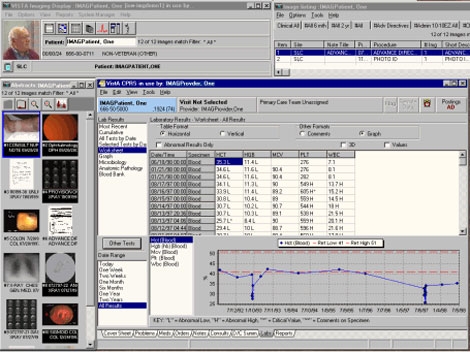
Still interested? Then you need to hear about VistA—the Veterans Health Information Systems and Technology Architecture that is available for FREE.
It is also very popular with its physician and administrative users.
VistA is a collection of about 100 integrated software modules that run the largest single medical system in the United States—the VA (Department of Veterans Affairs). With VistA, the VA provides care to over 4 million veterans, employs 180, 000 medical personnel and operates 163 hospitals, more than 800 clinics, and 135 nursing homes.
This is a robust system. It is probably the most widely used electronic health record (EHR) and health information systems in the world. Nearly half of all U.S. hospitals that have a full implementation of an EHR are VA hospitals using VistA.
And you can get it for free.
Brief History
The VA has had automated data processing systems, including extensive clinical and administrative capabilities, within its medical facilities since before 1985. That system was initially named the Decentralized Hospital Computer Program (DHCP) information system and it was the recipient of the Computerworld Smithsonian Award for best use of Information Technology in Medicine in 1995.
From that august start, billions of dollars were invested in upgrading DHCP to support both ambulatory and inpatient care and the result, which again is FREE and available to any hospital or clinic or nursing home in the U.S is VistA. The most significant change from DHCP and the one that has its users so impressed is the Computerized Patient Record System (CPRS) which is a wonderfully intuitive graphical user interface for physicians and nurses. In addition to CPRS, VistA includes, hang on to your hats, a computerized order entry system, a bar code reader medication administration system, an electronic prescribing system and, yes!, a clinical guideline system.
The CPRS piece allows physicians and nurses to review and update a patient’s electronic medical record including: the ability to place orders for medications, special procedures, X-rays, nursing interventions, diets, and laboratory tests. CPRS is very flexible and will allow for a wide variety of settings so the entire spectrum of health care workers can access a consistent, event-driven, Windows-style interface which is presented to a broad spectrum of health care workers.
Benefits
The VistA electronic medical records system improves efficiency by about 6% per year in most hospitals, clinics or nursing homes. The monthly cost of administering VistA is more than offset by eliminating the cost of even a few unnecessary tests or admissions.
For example, with VistA the VA achieved a pharmacy prescription accuracy rate of 99.997%, and the VA outperforms most public sector hospitals on a variety of other key performance criteria. All due to VistA.
Another example. The VA, because of VistA, is one of only THREE hospital systems in the U.S. that have reached HIMSS stage 7, the highest level of electronic health record integration. To put this in perspective, only 1 of 42 US hospitals have reached HIMSS stage 6.
VistA in Private Hospitals and Clinics
Under the Freedom of Information Act (FOIA), the VistA system, the CPRS interface, and unlimited ongoing updates (500–600 patches per year) are available to any hospital, clinic or nursing home for free. To make it even easier for non-governmental health care providers to have a world class information system, Pacific Telehealth & Technology Hui produced a version of VistA ( the Hui 7), which runs on GT.M in a Linus operating system environment.
Several independent software developers including Blue Cliff, DSS, Inc., Medsprere and Sequence Manager’s Software have adapted VistA so that it will work in the whole variety of health care practices including: individual practices, small and large clinics, all kinds of hospitals and even regional health care confederations which are trying to achieve co-ordination between far-flung facilities. Universities like UC Davis or Texas Tech have implemented such modified VistA systems. In one case, VistA was even adapted for a large veterinary practice.
The icing on the cake, we think, is that VistA can be linked in with any health care databases which was not initially used by the VA system, including billing software, lab databases, and image databases (radiology, for example).

Source: U.S. Department of Veteran AffairsVistA is now at work in non-VA health care facilities in Texas, Arizona, Florida, Hawaii, New Jersey, Oklahoma, West Virginia, California, New York, and Washington, D.C.
In one state, hospital administrators implemented VistA EHR network in a multiple hospital network for one-tenth the price of a commercial EHR network. Specifically, to hire the team to implement and train, this particular hospital network spent about $9 million versus $90 million which was quoted for a commercial system. Interestingly enough, BOTH the VistA and the commercial system used the MUMPS database.
Downloading VistA
Because of the FOIA, the VistA system is public domain software and available to any hospital, clinic or nursing home directly from the VA website or through a growing network of distributors. “Astronaut” is an automated VistA installer suite which installs VistA in less than 30 minutes. Installation instructions for the Astronaut VistA Installer Suite can be found at http://astronautvista.com/astronaut-help/how-to/how-to-install-astronaut-vista-server-and-client. The software engineers at Astronaut have done many bug fixes, upgrades and enhancements which makes VistA eminently usable and suitable for non-governmental use.
VistA’s Details
VistA was developed using the M or MUMPS language/database. It runs on an open source MUMPS database engine, called GT.M. An engine for Linux and Unix computers was also developed. Publicly available VistA distributions are now often bundled with the GT.M database in an integrated package. This makes the installation of VistA very easy. In addition, the free and open source nature of GT.M allows for redundant and cost-effective failsafe database implementations, which has really increased the reliability of the system in complex hospital or clinic networks.
M2Web is an open source web gateway to MUMPS for use with VistA.
Finally, a free open source module from M/Gateway called MGWSI is available to act as a gateway between GT.M, Cache, or M21 MUMPS databases and programming tools such as PHP, ASP.NET, or Java. How cool is that? With these tools, any user can build a great, robust and intuitive web-based interface for VistA.
Personal Health Records With VistA
The VHA (Veterns Health Adminitration) has an ongoing pilot project, known as HealtheVet (HeV) that is creating the next generation of VistA. This new interface will allow every patient (or veteran in the case of the VA) to access, and create a copy of, their health records online. Every patient will be able to port their health records to institutions outside their home health system as well as keep a personal copy of their health records..
VistA Imaging
VistA Imaging is the module that talks to PACS (radiology imaging) systems and integrates such images as EKGs, pathology slides, and scanned documents into the overall VistA electronic medical records system.
VistA as a Portal to a National Healthcare Network
The federal government has mandated that all citizens will have an electronic medical record by 2014. That mandate will require standardized health care data transmission. Enter VistA Web. This is a set of protocols that is being used by the VHA to transfer data between hospitals and clinics so that a single patient record may be viewed by health care providers in any of the 128 VA sites running VistA today.
In addition to VistA Web, the VHA also created the Clinical Data Repository/Health Data Repository (CHDR) which lets data flow between the Department of Defense’s Clinical Data Repository (CDR) & the VA’s Health Data Repository (HDR). We’re talking two-way, real time, flow of pharmacy, allergy, demographic and laboratory data. Coming soon is an upgrade which will add in drug/drug interaction and allergy checking.
Because VistA has proven to be so user friendly and flexible, it has all of the drivers to be the portal for an eventual national health care data network. Already, VistA can standardize text based information exchange using a protocol called HL7 (Health Level 7) which was approved by the American National Standards Institute and DICOM.
Finally, if your hospital or clinic already has a commercial off-the-shelf system, VistA has the ability to interface with them as well. VistA can talk to other EHRs using a standardized information exchange protocols. In 2009, VistA’s managers build an EHR communication link between the VA (using VistA) and Kaiser Permanente (using Epic) using NHIN Connect. When the VA and Kaiser collaboration is done, it will have combined two of the largest medical record systems in the U.S.—which will be exchanging health data across both systems.
VistA—some of the best things in life are free.
Author
React:
Discussion
This is a fascinating development. In my practice we've seen similar outcomes with the revised protocol. The key differentiator seems to be patient selection criteria. Has anyone else noticed the correlation with BMI thresholds?
Great point. I'd push back slightly on the conclusion, the sample size in the cited study is too small to draw population-level inferences. That said, the directional signal is compelling and worth a larger RCT.
We implemented a similar approach last year. Early results are promising but we're still gathering 12-month follow-up data. Happy to share our protocol if anyone is interested.
Join the conversation
Orthopedic professionals are discussing this. Sign in and upgrade to read every comment and add your voice.