
Leslie Cross, the nearly 30-year veteran of DJO’s (nee Smith & Nephew) bracing business has agreed to become Alphatec Spine’s tenth director, sixth independent director.
Les Cross Joins Alphatec’s Board
2 min read Premium comments
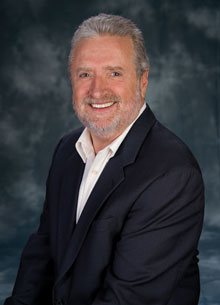
Leslie Cross is one of the legends of orthopedic company management and his decision to join Alphatec’s board of directors is a significant vote in favor of CEO Dirk Kuyper’s vision and management. Les brings solid, practical management experience to an otherwise Wall Street heavy board. You would think with so many Wall Street Masters of the Universe on Alphatec’s board, the stock would perform better.
Welcome, Les.
Leslie Cross earned his medical technology diploma from a technical school—specifically the Sydney Technical College in Sydney, Australia. He later learned the basics of business management at the University of Cape Town in Cape Town, South Africa. Les’ post graduate work, at which he would not only excel but rise to become one of this industry’s best known and most successful leaders, started at the famous and tough American Hospital Supply finishing school.
In 1982, Leslie Cross found a home at London-based Smith & Nephew. Smith & Nephew was at the time a wound care company which had recently acquired the Memphis, Tennessee-based orthopedic company, Richards and had tucked away in a corner was a little bracing division which, in 1982, had just been named DonJoy.
Initially, Smith & Nephew made Les a Managing Director in charge of two different DonJoy divisions. Eight years later Les was asked to take on the job of senior vice president of marketing and business development for the DonJoy bracing and support division of Smith & Nephew.
In 1995, Les was promoted to President of the DonJoy but very quickly rose to the position he would hold until just this year—CEO.
In 1998, Les led the spin off and private equity funding of his company. By March, 1999, Les and the newly christened dj Orthopedics was an independent company based in Vista, California. Sales that year were just $103 million. Earnings were $8 million.
Les took his company public in 2001 selling 7.8 million shares to the public at $17 per share. Total shares outstanding after the offering was 10.8 million for a valuation of about $184 million. Sales that year were $169 million and his operating earnings were $23 million.
Much like Alphatec’s stock today, DJO’s stock price declined after its initial offering and, defying the text book logic of valuation, stayed at industry low levels for, if memory serves, a couple of years. In those days Les and his team didn’t hold quarterly conference calls with analysts. It helped the stock.
DJO’s stock price eventually found its bottom and steadily rising sales and earnings fueled an extended period of ever higher DJO stock prices making it one of the best performing stocks in orthopedics between 2003 and 2007.
On July 15, 2007, Les agreed to combine his company with ReAble Therapeutics in a merger worth a spectacular $1.3 billion.
Now, after nearly 30 years building this small bracing and support business into a market leading diversified orthopedic company, Les has decided to retire from day-to-day activities and has chosen Alphatec’s board of directors as his next stop.
In 2010, the last full year of Les’s leadership, DJO Global reported sales of $966 million.
Alphatec’s chairman, Mortimer Berkowitz III said he was “very pleased that Les Cross had agreed to join Alphatec Spine’s board of directors.”
Yup.
Author
React:
Discussion
This is a fascinating development. In my practice we've seen similar outcomes with the revised protocol. The key differentiator seems to be patient selection criteria. Has anyone else noticed the correlation with BMI thresholds?
Great point. I'd push back slightly on the conclusion, the sample size in the cited study is too small to draw population-level inferences. That said, the directional signal is compelling and worth a larger RCT.
We implemented a similar approach last year. Early results are promising but we're still gathering 12-month follow-up data. Happy to share our protocol if anyone is interested.
Join the conversation
Orthopedic professionals are discussing this. Sign in and upgrade to read every comment and add your voice.