
Within evolutionary biology there is a body of work called signaling theory which examines communication schemes between organisms. These scientists study bird calls, green tree frog croaks, peacock tail waves—any expression that is designed to elicit a response from another organism.
Biologics as Megaphone Medicine
6 min read Premium comments
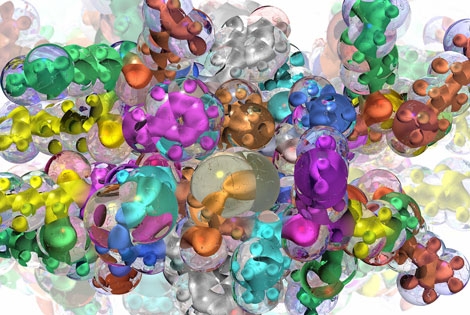
Recently, signaling theorists have been moving into the realm of molecular signaling and are reporting the models they’ve developed for, say, bird calls, are similar to signaling patterns of the endocrine system, the neural system, proteins, peptides and cells.
Whatever Is Old Is New Again
Within orthopedics, the framework for understanding bone remodeling has long been based on the model of a signal transmission (or expression) and reception. The model we are all so familiar with, of course, started with a young fellow who, in 1948, decided to make the long trek from Mass General in Boston (where he’d just completed his medical training) to balmy Los Angeles and the hospital at UCLA. We’re referring, of course, to Marshall Urist. The way he turned a commission to research strontium 90, tetracycline and the treatment of osteogenic sarcoma on behalf of the U.S. Atomic Energy Commission into a master theory of bone remodeling and signaling is legendary.
At the time, which was less than five years after the first atomic bombs were dropped and the effects of radiation on the human body were being documented, the Atomic Energy Commission had a strong interest in understanding the role of radiation in triggering or treating bone cancers.
Dr. Urist’s genius was his ability to descend into the complexity of that question and organize it into a model that clinicians and others would understand. Bone, apparently, was receiving some “signal” that triggered a growth response. What was that signal? Where did it come from? How could he replicate it in a controlled test?
In 1965, 15 years after he started his work, he presented a test which seemed to prove the existence of just such a signal. A protein sourced signal. In his seminal article in Science titled, “Bone Formation by Autoinduction, ” he offered up a narrative of how the body generated bone remodeling signals as follows:
“Wandering histiocytes, foreign body giant cells, and inflammatory connective-tissue cells are stimulated by degradation products of dead matrix to grow in and repopulate the area of an implant of decalcified bone. Histiocytes are more numerous than any other cell form and may transfer collagenolytic activity to the substrate to cause dissolution of the matrix. The process is followed immediately by new-bone formation by autoinduction in which both the inductor cells and the induced cells are derived from ingrowing cells of the host bed. The inductor cell is a descendant of a wandering histiocyte; the induced cell is a fixed histiocyte or perivascular young connective-tissue cell. Differentiation of the osteoprogenitor cell is elicited by local alterations in cell metabolic cycles that are as yet uncharacterized.”
The “dead matrix” Urist was referring to was demineralized bone matrix and the chemical signal that stimulated bone formation or remodeling was a protein. A bone morphogenic protein.
Probably the key word in Urist’s article was “inflammation.” We know now that inflammation is the first signal from which a rich “conversation” develops between cells to organize remodeling, repair and regeneration of damaged tissues. This is now big business in orthopedics. Last year, 2010, more than $1.5 billion of products were sold with bone morphogenic protein as the principal therapeutic agent for orthopedic applications.
Megaphone Medicine
 Earlier this month scientists at Osaka University and King’s College London reported that they had isolated and identified the particular signal that summons stem cells from bone marrow to the site of a wound. The study, which was published in the Proceedings of the National Academy of Sciences, identified the distress signal as HMGB1. In their own words, the study’s authors believe it can be used to put “a megaphone in the system” to improve the treatment of injuries.
According to Professor John McGrath from King’s College, bone marrow plays a role in repairing damaged skin, but the exact process was unknown. So he and his colleagues in Osaka injected mice with bone marrow cells that can be tracked while moving around the body (they glow green). The mice were “wounded” and then given skin grafts. In mice without grafts, very few stem cells travelled to the wound. Those with grafts had many stem cells travelling to the wound.
The investigators’ interpretation of the study was that the engrafted skin tissue, which had no blood vessels and therefore no oxygen, released HMGB1—which called stem cells to migrate to the wound. The signal was also an inflammatory transmission.
As envisaged by Dr. McGrath, future clinicians might one day use a signaling drug similar to HMGB1 to speed healing. He said: “It would be like putting a megaphone in the system, ” bringing stem cells to the injury.
At Osaka University researchers are developing a drug to mimic HMGB1 and hope to begin animal testing this year to be followed with human clinical trials.
Inflammation as the Foundational Signal
As researchers decode the language of biologics and find ways to guide the “conversation” between cells, more and more biologic therapies will be communicative therapies. Urist opened the door with bone morphogenic proteins.
Probably the most dramatic example of where these signaling therapies can go are Osiris’ Prochymal work which, ironically, brings us back to the original U.S. Atomic Energy Commission study which Urist used to launch this entire arena.
In 1948, the Atomic Energy Commission was studying acute radiation sickness. In 2008, Osiris’ product Prochymal was selected by the U.S. Department of Defense to be the preferred treatment for Acute Radiation Syndrome (ARS). ARS results from exposure to nuclear radiation.
The clinical manifestation of ARS is massive inflammation including such gastro-intestinal symptoms as abdominal pain, nausea, vomiting and diarrhea which typically last from two to six days. Depending on degree of radiation exposure, there may be a latent phase during which the patient experiences a brief abatement of symptoms. However, within days to weeks, a hematopoietic (blood-forming) crisis ensues as a consequence of the depletion of both white blood cell and red blood cell progenitors within the bone marrow. The manifest illness is characterized by immunosuppression, fever and diarrhea. Victims can die within days to several months following initial exposure.
Prochymal, which is a highly purified form of mesenchymal stem cells (MSCs) grown in culture, vigorously attack the effects of ARS. Prochymal has been shown in several studies to be able to receive the inflammatory signals emanating from radiation damaged tissues, migrate through the body to those sites of injury and then down-regulate the inflammation.
Because, in the case of ARS, inflammation is responsible for much of the tissue destruction, this down regulation by MSCs rebuilds damaged tissue. The cells also express their own set of signals which are received by growth factors and other cells so that the healing cascade can continue.
Prochymal, by the way, has demonstrated safety and efficacy in seven clinical trials, and has advanced into Phase III for three indications, each of which has been granted FDA Fast Track status.
From Bird Calls to Protein Signals
As the signaling theorists apply their bird call models to the cellular domain, they are reporting remarkably consistent patterns. For example, while different species of birds may cackle, chirp, display certain feather colors or emit chemical signals in millions of theoretical combinations—these same birds are programmed to be able to ignore most of the messages and only respond to highly specific subset of messages. Just like human cells. Each type of cell is programmed to respond to only a select subset of either chemical or mechanical signals. Similarly, cells themselves have “ears”, “eyes” and “noses” in form of surface receptor proteins which function to pick up these various signals. Again, birds or mammals convert these received signals into a series of instructions that determine how they will behave. Do they divide or stay quiescent, or live or die or move to a new location or just change form altogether?
There are even “relay teams” of enzymes, proteins, and other intracellular mediators (or second messengers) that hand off signals and move them from, say, point of injury to bone marrow where stem cells receive the signal and use it to determine what to do next.
Slowly but inexorably, we are building models for understanding the communications that occur at the cellular level. By learning to communicate at the cellular level clinicians will drive new and more effective therapeutic solutions.
Author
React:
Discussion
This is a fascinating development. In my practice we've seen similar outcomes with the revised protocol. The key differentiator seems to be patient selection criteria. Has anyone else noticed the correlation with BMI thresholds?
Great point. I'd push back slightly on the conclusion, the sample size in the cited study is too small to draw population-level inferences. That said, the directional signal is compelling and worth a larger RCT.
We implemented a similar approach last year. Early results are promising but we're still gathering 12-month follow-up data. Happy to share our protocol if anyone is interested.
Join the conversation
Orthopedic professionals are discussing this. Sign in and upgrade to read every comment and add your voice.