
Why replace arthritic knees with metal and plastic components when you can simply transplant a fresh and healthy replacement cartilage? Or, perhaps, more to the point, can meniscal allograft transplants work as well as traditional total knee arthroplasty (TKA) over the long term? A new study published last week in the UK version of JBJS (Journal of Bone and Joint Surgery) is the longest and largest prospective study of meniscal allograft transplantation and articular cartilage repair in patients with significant chondral damage in history. Finally, we may have an answer to these two very interesting questions.
Biologics Trumps Bionics
6 min read Premium comments
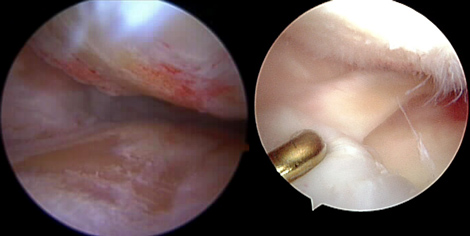
Before this study, the literature described patients with minimal chondral damage and follow up was typically under 24 months with one exception—Verdonk et al. described 100 meniscal allograft transplants with a mean follow-up of 7.2 years.

Kevin R. Stone, M.D./Inc. MagazineEvery year, approximately 608, 000 total knee replacement operations are performed in the United States. But nearly four times that number of patients see physicians for meniscal derangement, articular cartilage disorders or cartilage tears of the knee. In 2009, according to PearlDiver estimates, there were fully 2.5 million cartilage repair interventions of one kind or another.
Along the way to TKA are a range of therapies that attempt to slow down the chronic deterioration of the knee joint. Hyaluronan acid (HA) knee injections, for example, are performed approximately 850, 000 times each year. This study clearly shows the potential of meniscal transplants and pulls back a curtain on a future where biologic repair might actually trump bionic repair.
The study followed patients for as long as 12 years (which is the longest such follow-up for meniscal transplants). The average length of six years follows as the second longest timeframe, with reported outcomes at specific time intervals along the way. For sure, such a long road map has necessary detours and road bumps (like subsequent knee interventions) but it is still a road map. And, with 115 patients in the study, a well populated map at that! Here’s the link: (http://stoneresearch.org/pdf/Stone.MeniscusSurvival.JBJSBr.2010.pdf). And here, like a Sanborn’s travel guide, is our summary of this study’s high and low lights along the road to biologic knee repair.
Authors Stone, Adelson, Walgenbach, Pelsis and Turek (from The Stone Clinic in San Francisco) started with patients who suffered long-term problems. Of the 119 transplants, 118 were associated with chronic injuries, defined as a period of three or more months from the time of injury to surgery. The mean time from the injury to surgery for the patients in this study was 14 years, although one rugged individual had waited nearly 40 years for this treatment.
Most of the patients had had other interventions before this transplant. On average, these patients had 2.1 procedures (0 to 9) performed on the affected knee prior to meniscal allograft transplantation. Post-operatively, a little under half of the patients had further surgeries but none had a total knee replacement.
Finally, the surgeries were, in fact, a bundle of procedures. On average, the study’s authors performed five procedures in addition to implanting an allograft meniscus. What were the other procedures?
-
Articular cartilage paste grafting (n = 67)
-
Microfracture (n = 69)
-
Medial opening tibial osteotomy (n = 15)
-
Anterior cruciate ligament reconstruction with a bone-patellar tendon-bone allograft (n=10)
-
Middle-third patellar tendon autograft (n=6)
- Tendon Achilles allograft (n=1)
For the record, there was no significant difference in the average number of concomitant procedures between those cases that failed (5.3, SD 1.6) and those that did not (4.9, SD 1.7) (p = 0.333).
The implants were all donated cadaveric meniscal tissue. Most were fresh-frozen (n=94) or cryopreserved (n=24) but one was irradiated.
These patients had seriously bum knees. One of the most commonly used measures of knee deterioration is the Outerbridge visual classification system. The five grades of the Outerbridge system are:
-
Grade 0 – normal
-
Grade I – cartilage with softening and swelling
-
Grade II – a partial-thickness defect with fissures on the surface that do not reach subchondral bone or exceed 1.5 cm in diameter
-
Grade III – fissuring to the level of subchondral bone in an area with a diameter more than 1.5 cm
-
Grade IV – exposed subchondral bone
A big old 82% (97 knees) of these patients were Outerbridge grade IV—the worst level—and the remaining patients in the study (n=22) had Outerbridge grade III injuries.
This was a tough crowd. These patients had been in pain for, on average, 14 years. They’d had, on average, two prior surgeries and they were class IV and III Outerbridge. Ok, let the games begin.
How did the meniscus transplants perform?
Using three different measurement systems, all patients showed statistically significant improvements at two, three, five, seven and ten year intervals. Specifically, patients reported statistically significant improvements in pain and activity levels as compared to baseline levels and those improvements, with a single exception, stayed in place for up to ten years post-operatively. The single exception was in the Tegner score where, for the seventh year, the reported pain relief and activity level declined from the fifth year but then rebounded in the tenth year. But that was the only case. Every other measurement showed strong and consistent gains.
Here’s the discussion from the paper:
Apart from the Tegner index score seven years post-operatively, all patient-reported subjective outcome scores showed a significant improvement at all intervals. Comparison between patient-reported subjective outcome scores over the two to 12 years of follow-up showed no significant changes, indicating maintenance of improvement over time. Wilcoxon’s rank-sum revealed a non-significant change of median Tegner index from baseline to seven years (p = 0.076). At baseline, the mean Tegner index score was 0.38 (SD 0.22; 0 to 1); the mean Tegner score was 3.2 (SD 2.0; 0 to 9). At seven years, the Tegner index ratio was 0.49 (SD 0.28; 0 to 1). The mean Tegner score was 3.9 (SD 2.3; 0 to 7). It should be noted that the comparison of seven-year scores with baseline is based on a small number of reported scores (n = 21), and that no significant difference is seen when seven-year Tegner index data are compared with the two- (p = 0.159), three- (p= 0.159), five-(p = 0.170) or ten-year (p = 0.842) post-operative intervals, using the Wilcoxon’s rank-sum test. In only seven knees (5.8%) was more severe pain described at the most recent follow-up on the isolated WOMAC pain question compared with the baseline value. Median baseline pain score was 1 (mild) among these patients, and all nine reported only one pain level higher at the most recent follow-up.
What should patients and their surgeons expect post-operatively?
Having a meniscal transplant did deliver statistically significant pain relief and activity improvement for the vast majority of patients in this study. But it did not necessarily mean the end of surgery. Forty-seven percent of the patients (n=56) required up to five additional operations. Those operations included:
-
Debridement (n=73)
-
Chondroplasty (n=39)
-
Notchplasty (n=16)
-
Microfracture (n=8)
-
Removal of osteophytes (n=12)
-
Removal of loose bodies (n=11)
-
Articular cartilage past grafting (n=7)
-
Excision of a Baker’s cyst (n=2)
-
Anterior cruciate ligament reconstruction (n=1)
Failures and Complications
About 19% of the patients required further operations on the meniscal transplant itself. These operations were 14 medial and 9 lateral partial meniscectomies. In seven of the knees that underwent subsequent partial meniscectomy, the meniscal transplant eventually failed. One patient went on to have a total knee replacement.
The study’s authors performed eight revision surgeries (6.7% of the total) with one patient undergoing two revision surgeries. The authors revised six knees during the early post-operative period at a mean of seven months (1.9 to 12.4). It turns out that three of the patients failed to follow their rehabilitation protocol, and one patient felt the allograft tear while turning over in bed two months post-operatively. The authors revised two of the cases more than three years after the primary operation, one at fouryears, and one at 3.3 years, and then again 2.5 months later. The patient whose knee required two revisions still had an intact meniscus at the end of the study—which was 7.6 years after the patient’s primary operation.

Meniscus model courtesy of The Stone ClinicTwo of the revision cases ultimately failed and one of those elected to have the allograft removed at 1.7 years while another chose to have a knee replacement at 3.9 years. One of the patients who had a revised meniscal transplant died at 4.7 years post-op with an intact meniscus. The remaining five revision cases are considered by the study’s authors to be non-failures at a mean of 2.5 years (1.0 to 4.4).
The most common post-operative complications were infections and those occurred in only four knees. Three of these infections were deep, while one was superficial. All of the infection cases were treated by the study’s authors arthroscopically with irrigation, debridement and intravenous antibiotics. All infections resolved, but one deeply infected knee ultimately suffered failure of the allograft, which was subsequently removed 12.5 months later.
All in all, this was a kicking good study which was dense with valuable and practical information. Hopefully, surgeons on this side of the pond will take note.
Kevin R. Stone, M.D./Inc. Magazine
Author
React:
Discussion
This is a fascinating development. In my practice we've seen similar outcomes with the revised protocol. The key differentiator seems to be patient selection criteria. Has anyone else noticed the correlation with BMI thresholds?
Great point. I'd push back slightly on the conclusion, the sample size in the cited study is too small to draw population-level inferences. That said, the directional signal is compelling and worth a larger RCT.
We implemented a similar approach last year. Early results are promising but we're still gathering 12-month follow-up data. Happy to share our protocol if anyone is interested.
Join the conversation
Orthopedic professionals are discussing this. Sign in and upgrade to read every comment and add your voice.