
Are there too many spine surgeon meetings? Or, are there too few good spine surgeon meetings? One that consistently rises to the top is the 2010 Preservation of Motion in the Spine meeting at Duck Key which starts in about three weeks (April 7 – 10).
Get Thee to Duck Key
4 min read Premium comments
What makes this meeting stand apart? Three reasons:
-
 Intimacy and a rich schedule of hands-on work shops
 -
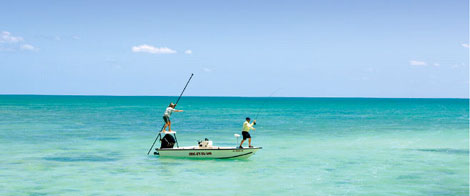
Superior faculty from around the world. It certainly helps that the meeting is held at Hawks Cay. It’s amazing how many top lecturers are ready for sea breezes after hibernating all winter in Baltimore, Philadelphia, Chicago, New York, Denver or Minneapolis.
-
State of the art information including probably the best series on biomechanics of any meeting in the U.S. But, to be precise, the lectures cover all types of spinal disorders and include a truly excellent review of complex cases covering disc replacement options, revisions and the latest techniques and technologies for tough cases.
 Snowbirds take note. It is so great to attend these courses with the sounds of the ocean and dolphins wafting through the open windows.
The course director is the perennial podium speaker at NASS, SAS and other major conferences Dr. Antonio Castellvi. This is Tony’s conference. It reflects his style which is open, comprehensive, sophisticated and a little fearless—particularly when it comes to posting up tough, challenging cases.
If you attend, and we hope you will (no, we don’t have a financial stake—we pay our own way to the meeting) you will come away with an improved ability to:
- Assess and critique emerging surgical techniques and be able to compare them with current treatment options. This is an increasingly important skill.
- Assess and critique the latest implant, biologic and motion preserving technologies.
- Review clinical and biomechanical outcomes from motion sparing devices
- Assess, discuss and critique the biomechanics in both cervical and lumbar spine and how fusion and motion sparing devices affect motion
- Summarize evidence-based information and discuss current controversies in spine
Bring Your Whole Team
Calling all orthopedic surgeons, neurosurgeons, orthopedic surgical and neurosurgical assistants including physician assistants, nurse practitioners, orthopedic nurses and neurosurgical nurses. That’s right. The whole team. Dr. Castellvi has designed this course to elevate the surgeon and the team. Since the morning is set aside for lectures and hands-on clinical sessions, the afternoon is a great time for your team to relax and perhaps do some planning away from the day-to-day demands back home.
The Faculty
Many of these names will be familiar—they’re often authors of the peer reviewed papers you see in your journals.
|
Jean-Jacques Abitbol, MD, FRCSC Orthopedic Surgeon California Spine Group San Diego, CA |
Neel Anand, MD Cedar Sinai Med Center Los Angeles, CA |
James Billys, MD Orthopaedic Surgeon Florida Orthopaedic Institute Brandon, FL |
Christopher Bono, MD Chief of Orthopaedic Spine Service Harvard Medical School Co-Director Harvard MGH-BWH Orthopaedic Spine Fellowship |
|
Antonio Castellvi, MD Director of Spine Fellowship Florida Orthopaedic Institute Tampa, FL |
Boyle Cheng, PhD Asst Professor of Neurological Surgery Dir Welch Neurosurgical Research Lab Univ of Pittsburg Mars, PA |
Anders Cohen, DO Chief of Neurosurgery & Spine Surgery The Brooklyn Hospital Center Brooklyn, NY |
Domagoj Coric, MD Neurosurgeon Carolina Neurosurgery & Spine Associates Chief, Neurosurgery Carolinas Medical Center Charlotte, NC |
|
Reginald Davis, MD Chief of Neurosurgery Greater Baltimore Neurosurgical Association Baltimore, MD |
Ira Fedder, MD Towson Orthopaedics Associates Towson, MD |
Lisa Ferrara, PhD Biomedical Engineer Orthokinetic Technologies LLC Southport, NC |
Rolando Garcia, MD, MPH Orthopaedic Care Center Aventura, FL |
|
Charley Gordon, MD Neurological Spine Surgeon Gordon Spine Associates Tyler, TX |
Stephen Hochschuler, MD Orthopaedic Surgeon Texas Back Institute Chairman of the Board. Texas Back Institute Plano, TX |
Manoj Krishna, FRCS, MCh University Hospital of North Tees Stockton-on-Tees, UK |
Carl Lauryssen, MD Co-director of Spine R&D Olympia Medical Center Olympia Medical Center Beverly Hills, CA |
|
Aniruddh Nayak, Supervisor, Biomechanics Foundation for Orthopaedic Research and Education Tampa, FL |
Kenneth Pettine, MD Rocky Mountain Associates Loveland, CO |
Luiz Pimenta, MD, PhD Associate Professor UC-San Diego Hospital S. Rita- Sao Paulo Sao Paulo, BR |
Dilip Sengupta, MD, PhD |
|
Jessica Shellock, MD Orthopaedic Surgeon Texas Back Institute Plano, TX |
Frank Vrionis, MD, MPH, PhD Director, Complex Spine Surgery and Skull Base Surgery Professor, University of South Florida Tampa, FL |
Scott A. Webb, DO Florida Spine Institute Clearwater, FL |
Anthony Yeung, MD Orthopedic and Minimally Invasive Endoscopic Spine Surgeon. Desert Institute for Spine Care. UCSD School of Medicine Phoenix, AZ |
|
Hansen Yuan, MD Professor of Orthopaedic and Neurological Surgery State University of New York Upstate Medical University Syracuse, NY |
 And here are some of the lecture topics:
- Quality of Spine Motion
- Interpedicular Facet Travel and Center of Rotation
- Biomechanical Analysis of Motion With Stabilimax
- Bone Biomechanics
- Wear of Artificial Motion Preservation Implants and Wear Prediction Models
- Lumbar Total Disc Replacement Panel Discussion
- Biomechanics of Lumbar Total Disc Replacement
- State of the Art Lumbar Total Disc Replacement
- Reoperations in the 1st 1, 000 patients at Texas Back Institute
- Experience With ActivL
- Total Disc Replacement From Charité to Freedom
- Total Disc Replacement With Flexicor
- Lateral Total Disc Replacement
- Prospective Evaluation of the Charité Lumbar Artificial Disc Replacement With Minimum 3-Year Follow Up
- Complications of Total Disc Replacement: Work-Up Strategies
- Dynamic Spinal Stabilization
- Do Posterior Dynamic Systems Actually Move?
- Experience With Dynesis
- Posterior Dynamic Stabilization
- Experience With the Transition System
- Biomechanics of the Total FSU Replacement – Design Criteria
- Experience With FlexuSpine Stabilization System
- Stem Cells in Spine Care
This will be my fifth year attending and frankly Tony’s course improves each year. I hope to see many of our readers in Duck Key. Don’t delay with your registration since openings are limited. To learn more and to register, go the this link: http://www.foreonline.org/CME/conferences/2010-Preservation-of-Motion-in-the-Spine.
Author
React:
Discussion
This is a fascinating development. In my practice we've seen similar outcomes with the revised protocol. The key differentiator seems to be patient selection criteria. Has anyone else noticed the correlation with BMI thresholds?
Great point. I'd push back slightly on the conclusion, the sample size in the cited study is too small to draw population-level inferences. That said, the directional signal is compelling and worth a larger RCT.
We implemented a similar approach last year. Early results are promising but we're still gathering 12-month follow-up data. Happy to share our protocol if anyone is interested.
Join the conversation
Orthopedic professionals are discussing this. Sign in and upgrade to read every comment and add your voice.