

BEAR at Six Years: Finally Ready for Prime Time?
Six-year BEAR results looked similar to hamstring ACLR, with higher hamstring strength.
Jun 15, 2026
Six-year BEAR results looked similar to hamstring ACLR, with higher hamstring strength.
Two of the best knee surgeons duke it out over cemented versus cementless. After a full ten rounds, Indiana’s Meneghini pretty much earned a split decision against Penn’s Lee. Fellow Philadelphian, Bob Booth refereed one of the best Classic Debates. A must read.
The first question every arthroplasty surgeon asks is: “Given my patient’s age and BMI {body mass index}, what implant do I use?”. This debate is about how you answer that question. Hofmann v Berend and could one implant – the primary modular tibia—be a one size fits all? Check out this great debate.
Anterior knee pain is this very stubborn problem that bedevils every large joint surgeon. What role does resurfacing, or not resurfacing, the patella play? With Bob Booth moderating, Robert Barrack and Steven Haas energetically tackle this very timely and important subject in yet another Classic Debate.
Ready to go tourniquetless? HSS’s Jose Rodriquez was not, until he looked at the data and listened to his mentor Chit Ranawat and had a miraculous conversion. Not so fast, says the inimitable Bob Booth. There’s an important place for the tourniquet in most cases. Great debate. Where do you stand?
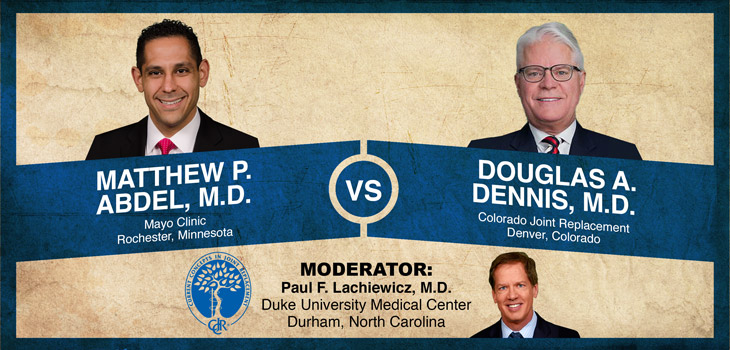
These are tough, tough cases. The patient is distraught. Disabled. Pelvic discontinuity is the sticky issue. What to do? Mayo’s Abdel makes a strong case for a cup-cage construct. But Colorado’s Dennis counters effectively on behalf of a custom triflange. Who is right? To find out, read this excellent debate and discussion.
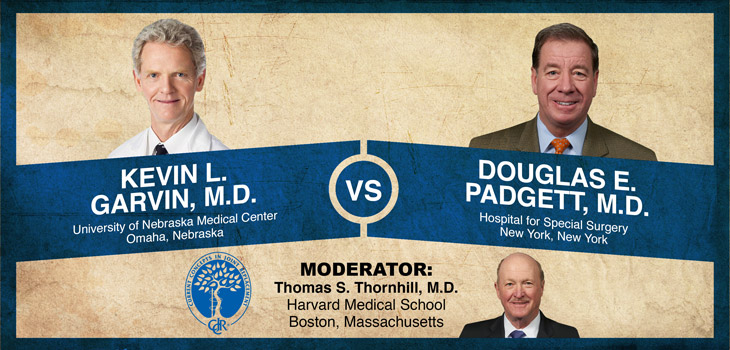
Hip instability, for any number of patient-specific or physician-specific reasons, is unacceptably high. Do you go for the larger head or dual mobility? Nebraska’s Kevin Garvin argues for dual mobility while HSS’ Padgett strenuously disagrees. Harvard’s Thornhill moderates this excellent and timely debate.
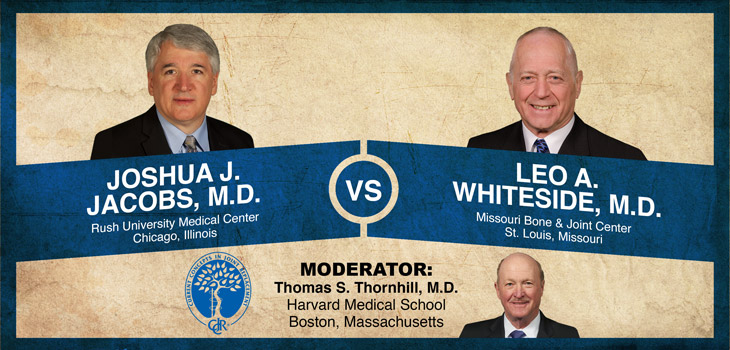
Does metal allergy really exist? How prevalent is it? And what’s the diagnosis? Rush’s Joshua Jacobs debates the esteemed Leo Whiteside and, with help from Moderator Thomas Thornhill, come up with answers to those and other questions. It’s a great and illuminating discussion.
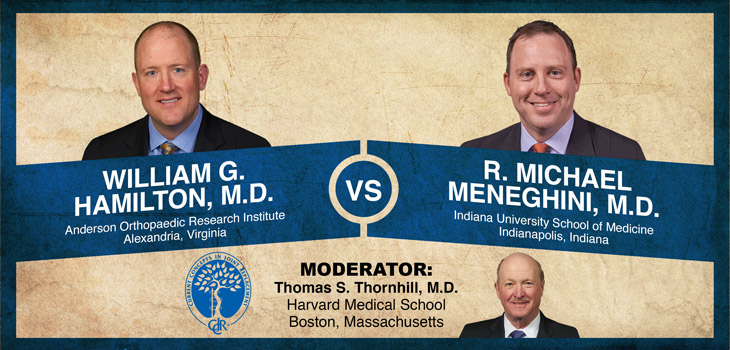
>> Yes, Virginia, there is something new to learn about the anterior hip approach. William Hamilton, whose hip practice is primarily direct anterior takes on Mike Meneghini, who speaks eloquently on behalf of the posterior approach. Has the pendulum in favor of anterior swung too far? You be the judge. Harvard’s Thornhill moderates.
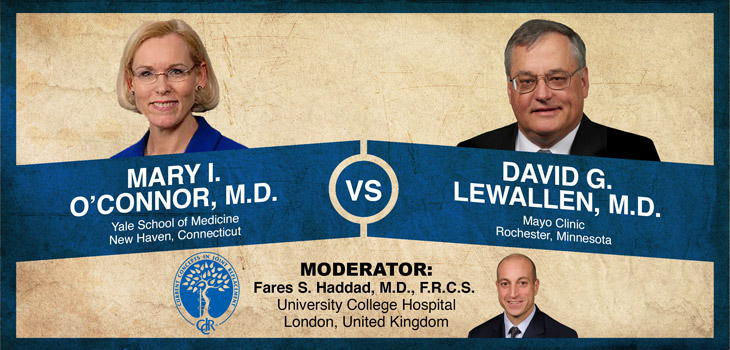
One of the best debates ever. Yale’s Mary O’Connor presents a compelling case for customized knee implants. But Mayo’s resident curmudgeon isn’t buying it. Mary had more studies in her arsenal. But Lewallen had the scars of experience. Who wins? You do. It’s a great debate.

Who would you trust more—a resident with predominately simulation training or a resident with predominately real patient training? It’s not a simple answer. Simulation may be the future, but there are some very important nuances to pay attention to. Great debate. Important reading.
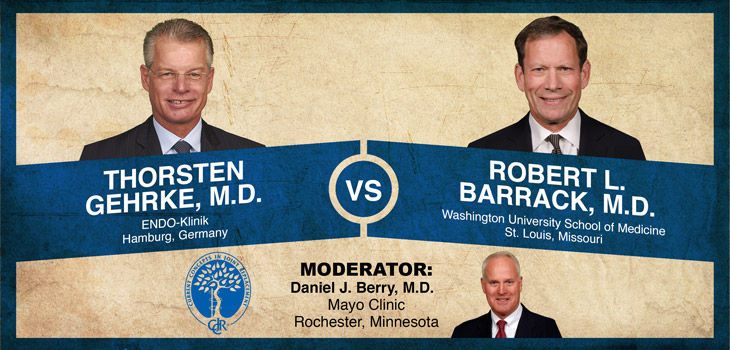
Are ceramic bearing surfaces less prone to infection? In this interesting debate, Gehrke points to registry and other data to suggest it might. Barrack counters, quite rightly, that association is not causation. Still, to use a bird analogy, canaries in the coal mine are also merely associative. Could this registry “noise” be a canary? Interesting debate.
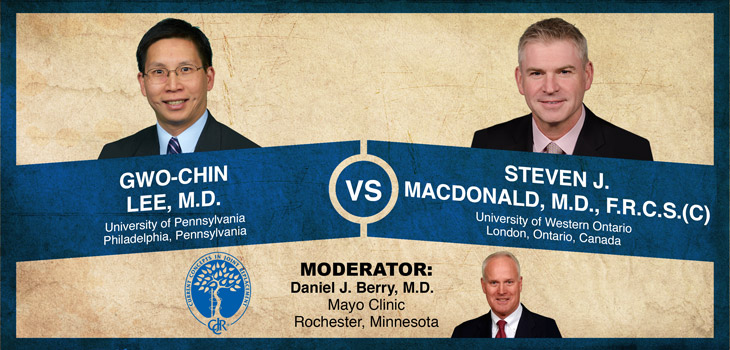
Are ceramic-on-ceramic bearings durable enough to justify cost, squeaking and malposition risk? “Yes” says University of Penn’s Gwo Chin-Lee. “No” says the inimitable Steven MacDonald from University of Western Ontario. This crackling debate is moderated by Mayo’s Dan Berry. Check it out.
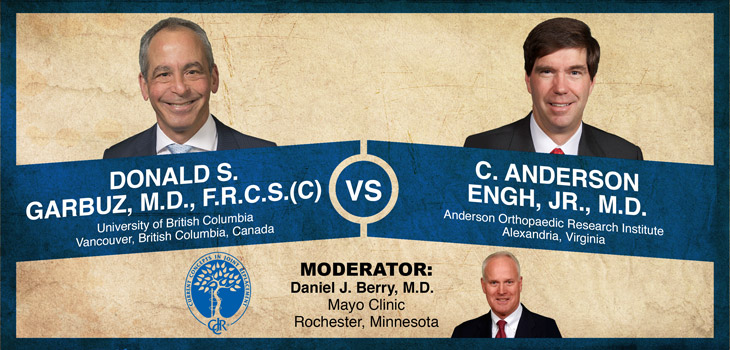
Are ceramic heads worth the cost? Donald Garbuz, who uses ceramic heads every time, says yes. Anderson Engh, says no, it’s not worth the cost. And there are excellent reasons for both conclusions. Who wins this debate? You might be surprised at the answer.
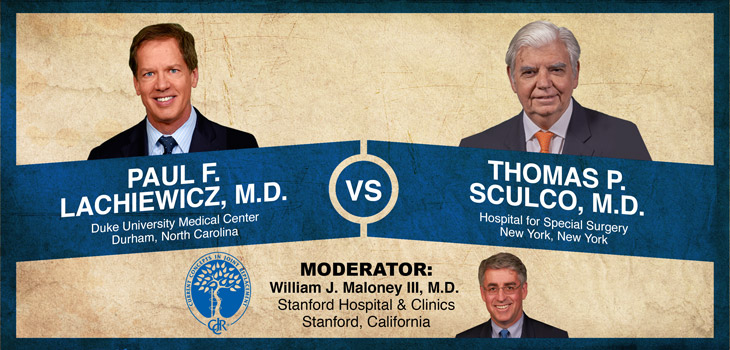
She’s an elderly patient with recurrent dislocations. Use a constrained liner or dual mobility? Lachiewicz champions dual mobility while HSS’ Sculco makes a case for constrained liners. Who wins? You be the judge.
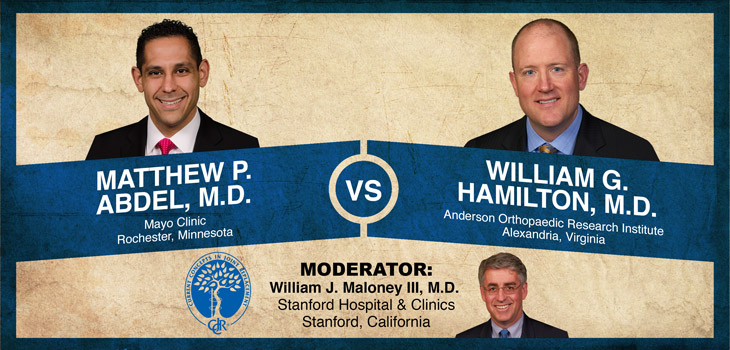
Double trouble or an obvious surgery? Would you try a bilateral anterior hip surgery? Bill Hamilton from Anderson Institute does and he’s delighted with it. Mayo’s Abdel is not nearly no sanguine. Not at all. For him, it’s an unnecessarily risky procedure. Interesting debate for sure.
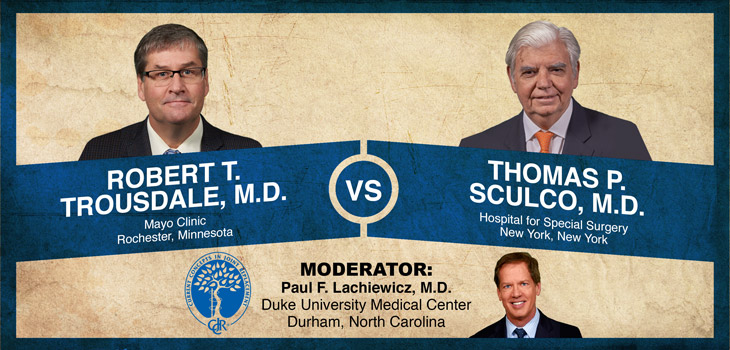
In your tough knee revision cases with significant bone loss, is it time for a $4,000 cone or do you reach for bulk allograft? Mayo’s Trousdale says ‘cone’ while HSS’s Sculco says allograft most of the time. Who wins this great debate? You be the judge.
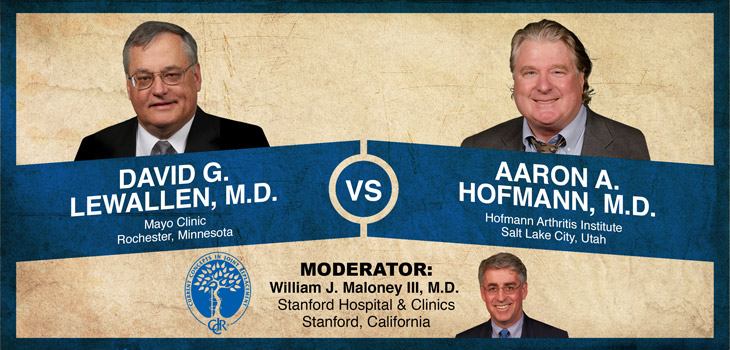
Are you only using all-poly tibias for older patients? In this debate Mayo’s Lewallen puts up the argument that all-poly is “ok” all the time. Aaron Hofmann pushes back and by the end of this debate, both senior surgeons reach a consensus. Another stellar debate.
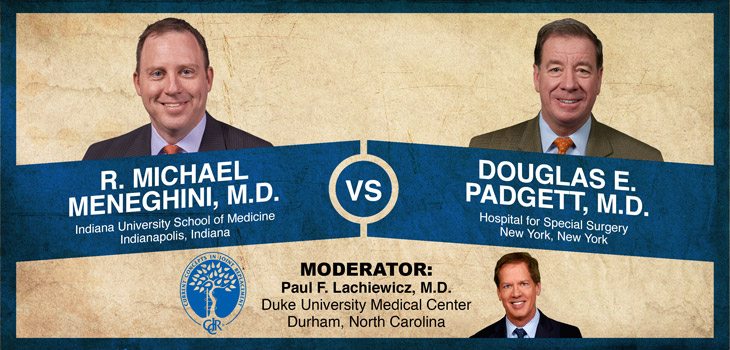
A classic debate updated and revisited. Squaring off is Mike Meneghini who maintains that the cam-post is obsolete and Doug Padgett, who counters with “Michael, you are absolutely wrong!” Check out this enjoyable and informative debate.

>> Is the cementless knee an emergent game changer? Probably not according to this terrific debate. The jury is still out. But new materials in the R&D pipeline could tip the scales in favor of cementless. Hear Drs. Gustke and Thornhill dissect this very timely topic.
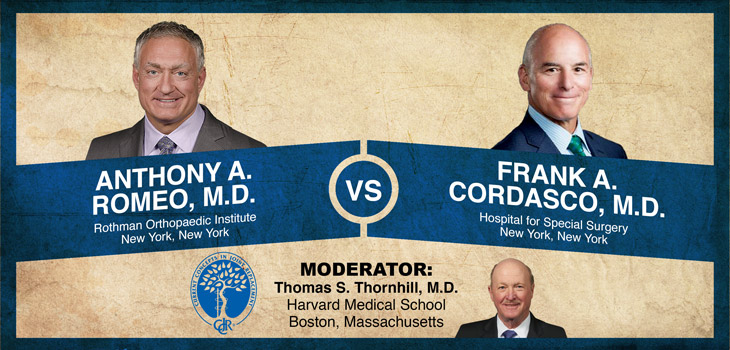
>> Is the stemless shoulder implant a triumph of technology over reason…or the wave of the future? Tony Romeo is thinking stemless while Frank Cordasco says it’s a bit too early, the data is not so strong. Who wins? You be the judge.
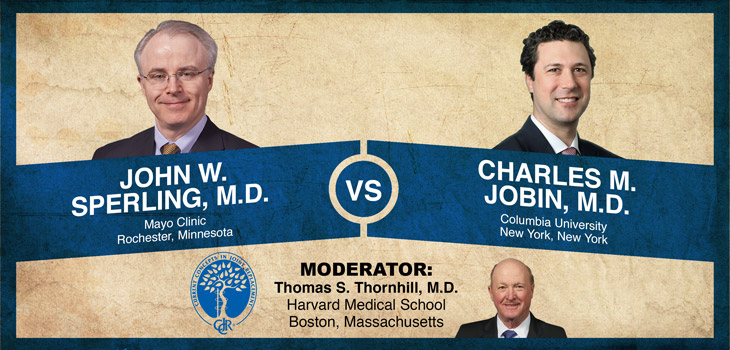
Elderly patients with severe glenoid bone loss. Do you go anatomical or is this a good set of circumstances for a reverse shoulder arthroplasty? Mayo’s Sperling is all about going in reverse while Dr. Jobin sticks with an anatomical approach. It’s a great debate.
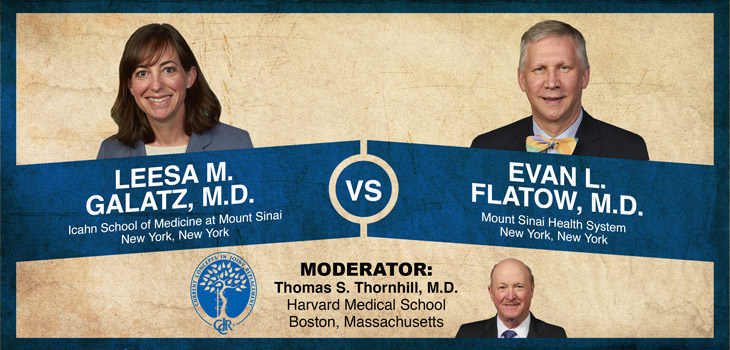
Reverse shoulder surgeries have skyrocketed but is it the preferred treatment for patients with 4-part fractures? Dr. Galatz says “yes” while her colleague Dr. Flatow argues persuasively in favor of other options including non-operative care. Very informative debate.
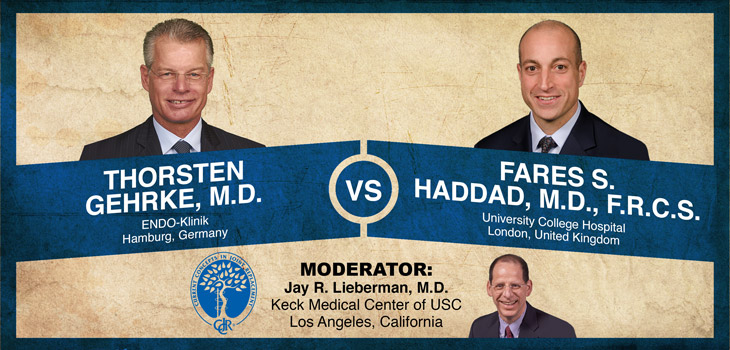
>> To hinge or not to hinge the knee. At Gehrke’s ENDO-Klinik in Hamburg, the decision in 99% of relevant cases is to hinge. But at Haddad’s University College in London, not so much. Can the Brits learn something from the Germans or vice versa? You be the judge.
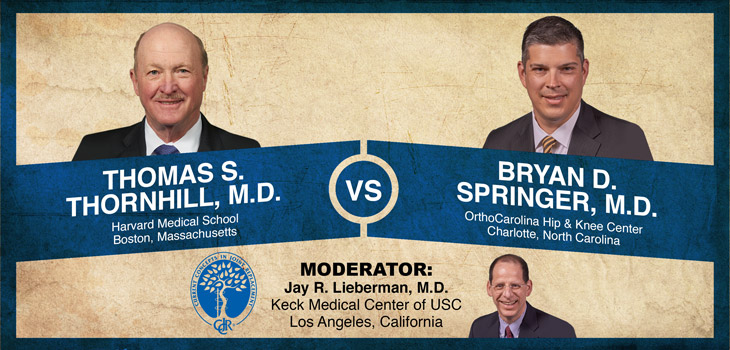
Mind the gap. Or measured resection. Or both? The esteemed Thomas Thornhill from Harvard butts heads with fellow West Virginian (by marriage) Bryan Springer from OrthoCarolina over this issue of Gap Vs Measured Resection. Prepare for a master course from two of the best.
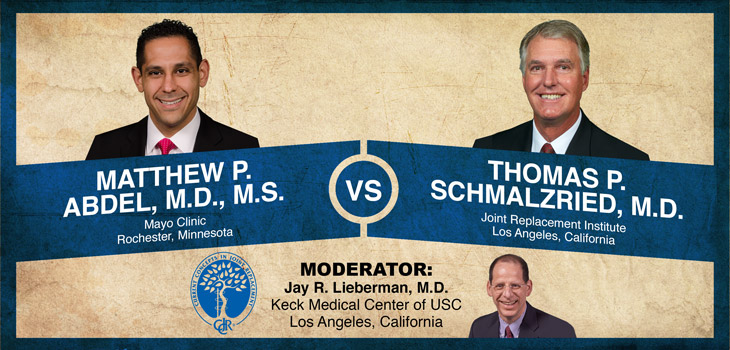
Cemented or Uncemented? That is the question. Whether it is the elderly patient with fixation needs or the younger active patient, where do you stand on this question? Mayo’s Abdel and Joint Replacement Institute’s Schmalzried tackle this very important subject in an even better debate.
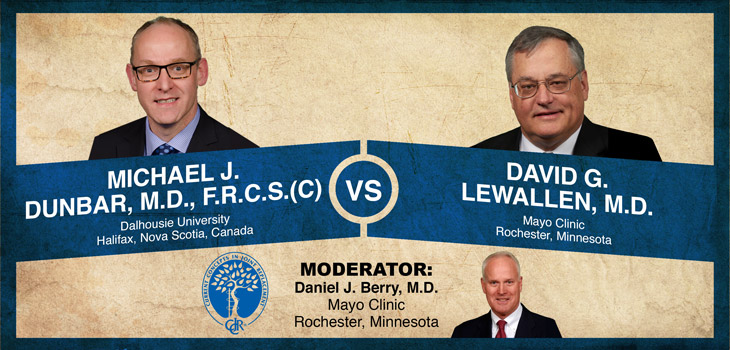
Here’s one of the most controversial total knee reconstruction topics there is. Kinematic Alignment vs. Neutral Mechanical Alignment. The sparks fly a little, but mostly this debate between Dunbar and Lewallen, moderated by Mayo Clinic’s Daniel Berry, sheds a tremendous amount of light on this very important subject.
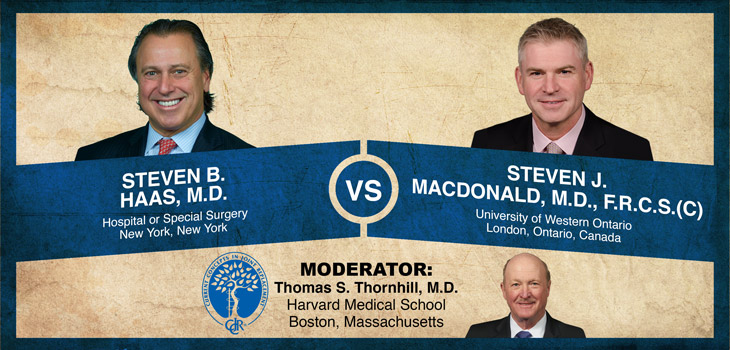
Robotic assist for total knee arthroplasty or tried and true navigation? HSS’ Steven Haas debates Western Ontario’s Steven MacDonald and argues that, yes, the million dollar robotic assist devices make you a better surgeon. Read this timely debate.
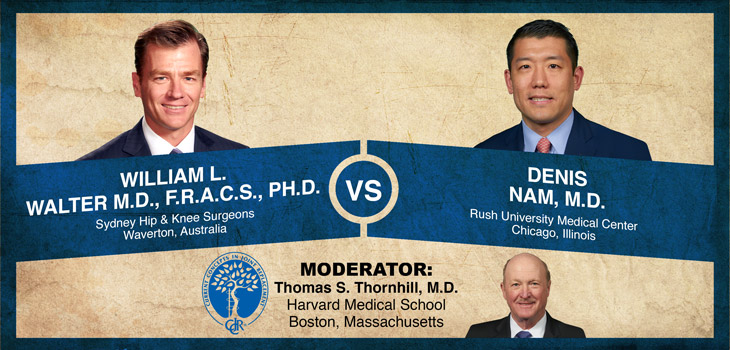
When William Walter from Waverton, Australia, took on Denis Nam from Rush in Chicago over medial pivot knee designs, one of the best, classic debates broke out. For ANY joint arthroplasty surgeon, this is a must-read debate about implants and knee balancing.
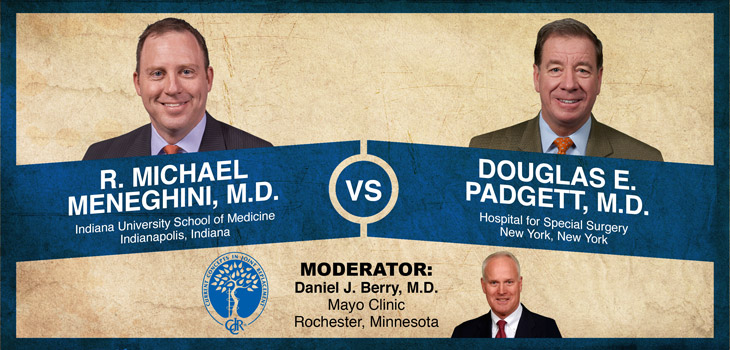
Posterior Stabilized or Cruciate Retaining? Have designs progressed to the point where cruciate retaining deserves more support? Meneghini is a strong “yes” while HSS’ Padgett sticks with the post. Who won their case? You be the judge.
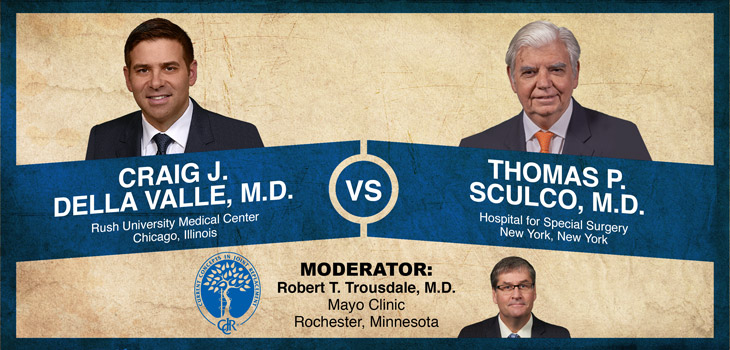
She’s a 60-year-old patient, she’s frantic because her total hip dislocated. She has trunnion problems; her abductor mechanisms are compromised and she’s at ultra-high risk for instability. Do you go dual mobility or constrained liner? This debate has answers.
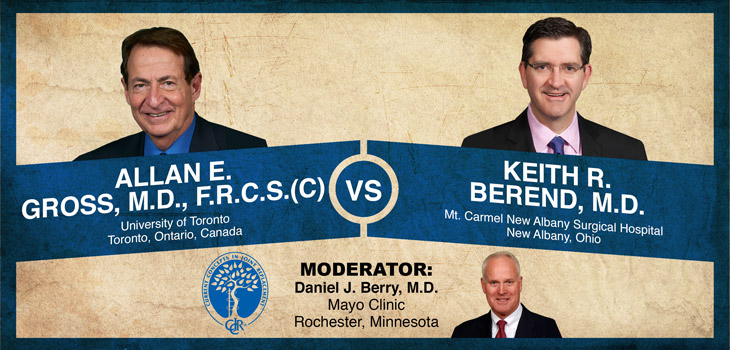
Pelvic discontinuity and acetabular disasters. With Mayo Clinic’s Daniel Berry moderating, Allan Gross from Toronto and Keith Berend from New Albany break down the issues and solutions in a masterful discussion. Ultimately, this is a question of customized procedure vs customized implant.

Has the Hype over anterior total hips obscured the time-tested value of the mini-posterior approach? Absolutely! Says USC’s Larry Dorr. Not so fast says Mayo Clinic’s Michael Taunton. It’s a lively debate and really exposes the need for better long-term data.
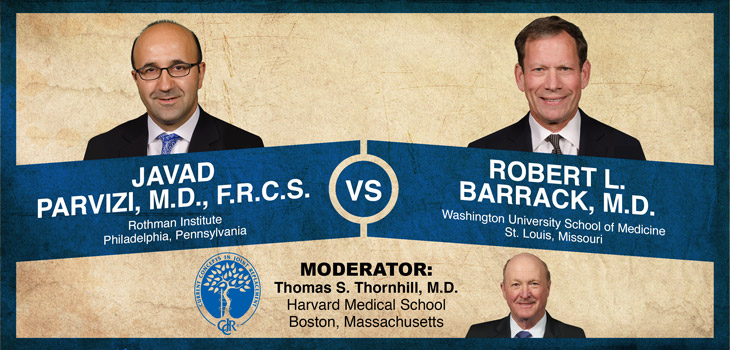
Could your choice of bearing surface affect your risk of peri-prosthetic joint injection? “Yes” says Rothman Institute’s Parvizi. “No” says the Knight Professor of Orthopedic Surgery, Robert Barrack. It’s a great debate. You don’t want to miss it. Here it is.
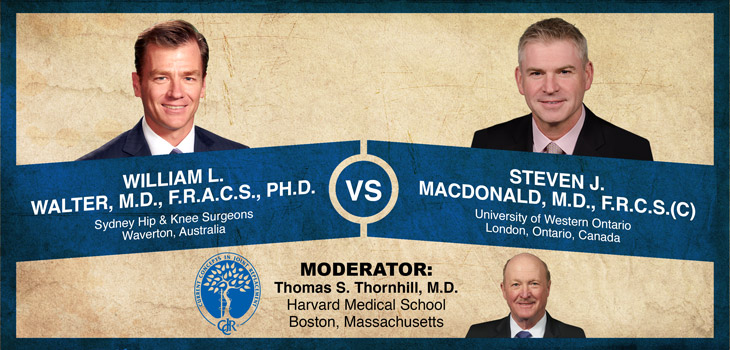
Ceramic-on-ceramic components have such low wear rates that, in theory, they could last 40 years. But at what cost? The debate is on with Australia’s William Walter speaking in favor and Canada’s Steven MacDonald taking the opposite view. And yes, squeaking hips was addressed.
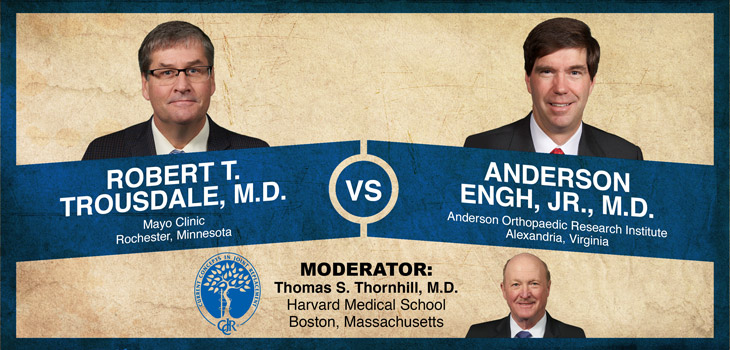
Cobalt chrome or ceramic? Cost or corrosion? Two lions of the debating stage start off in one direction but then veer into a more vital and relevant discussion. This is a great ‘debate’ by Mayo’s Trousdale, Anderson Institute’s Engh as moderated by Harvard’s Thornhill.
Periprosthetic joint infection is a catastrophic problem but is avoiding catastrophe reason enough to justify routine use of antibiotic bone cement? This debate tackles both that issue and differences between U.S. and European approaches. Very informative.
Dual Mobility Cup or Restrained Liner? When it comes to revision cases, the battle lines are clearly drawn between Paul Lachiewicz from Duke University and John Callaghan from University of Iowa. The winner? The audience attending this excellent debate.

Orthopedics This Week streams the latest in navigation, cervical and robotic technology from the floor of NASS 2018.
This debate is a must read for every surgeon doing reverse shoulder procedures. This master course by Flatow and Sperling delivers detailed and time-tested advice on fixation, bone loss and blending bone graft with metal. Really exceptional discussion.
To Stem or Not to Stem, that is the question—for shoulder arthroplasty. Arguing in the affirmative is Butch Krishnan from Baylor, opposing him is Evan Lederman from the University of Arizona. Very timely debate with many practical tips for every shoulder surgeon.
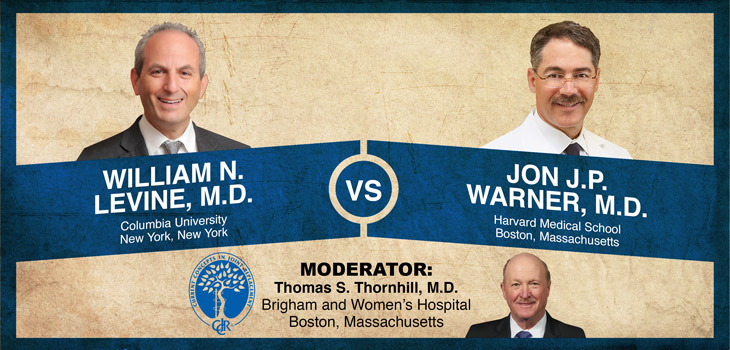
Reverse shoulder or hemiarthroplasty surgery for the active, tennis playing 70-year old? As this debate illustrates, that’s a provocative question. Harvard’s Jon Warner squares off with North Dakota’s favorite son, Bill Levine to tease out the answer. Great debate.
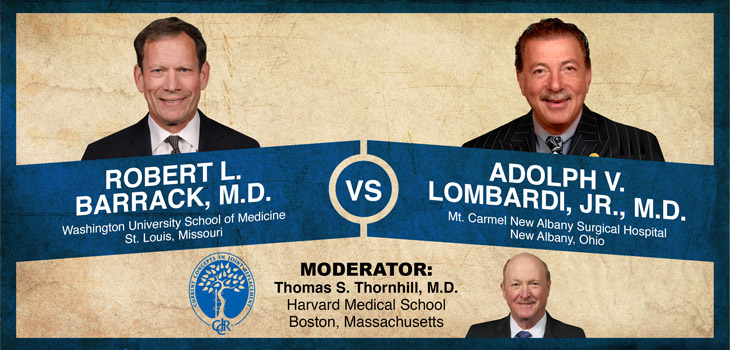
Tourniquets are employed approx. 15,000 times a day. But how, for how long and in which cases make ALL the difference. Three old hands – Thomas Thornhill from Harvard, Robert Barrack from Wash U and Adolph Lombardi from New Albany – give a master class in this classic debate.
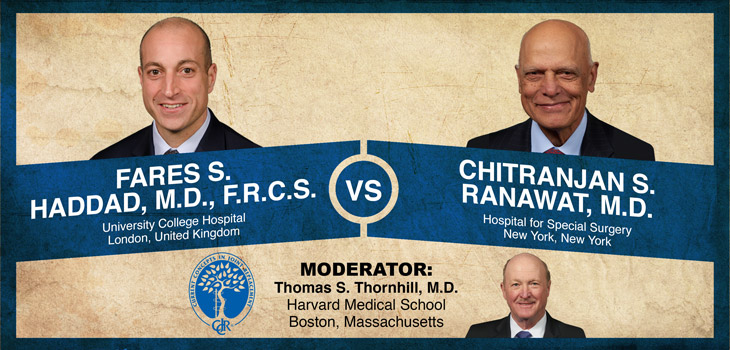
Has knee arthroplasty hit a 15-20% patient dissatisfaction wall? If so, could a solution be hiding in an older technology, the Freeman medial pivot approach? Fares Haddad says that it might while Chit Ranawat argues the opposite. Welcome to a very lively debate.
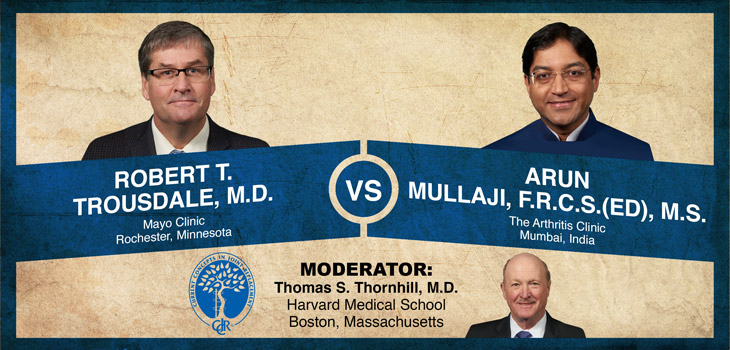
Computer-assisted total knee arthroplasty has its proponents and its critics. In this debate two of the most accomplished and articulate total knee surgeons debate the value and efficacy of computer assist devices in the OR. Tremendous and very timely discussion.
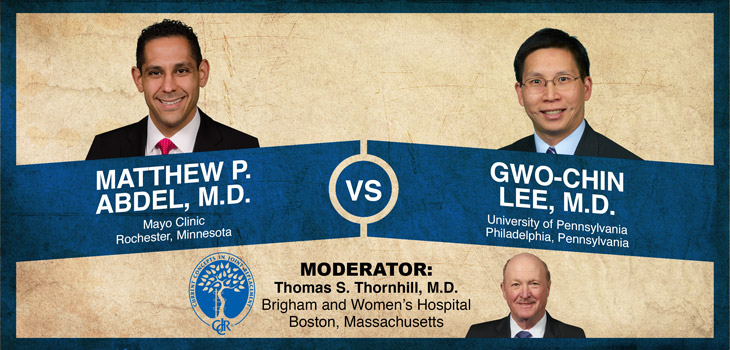
Cementless hips is well established. But in knees? Matthew Abdel from the Mayo Clinic contends that the time is here for cementless knee arthroplasty. Gwo-Chin Lee makes the obvious point that knees aren’t hips. Of course, there’s so much more. This is a great debate.
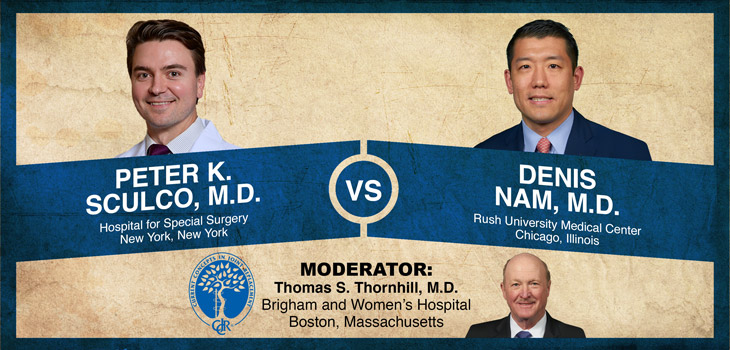
Twenty percent of knee patients, give or take, are not happy with their new knees. Assuming the implant is surviving long term, is this persistent issue due to alignment problems, unreasonable expectations or all of the above and more? Peter Sculco and Denis Nam tackle these thorny issues in this week’s excellent debate.
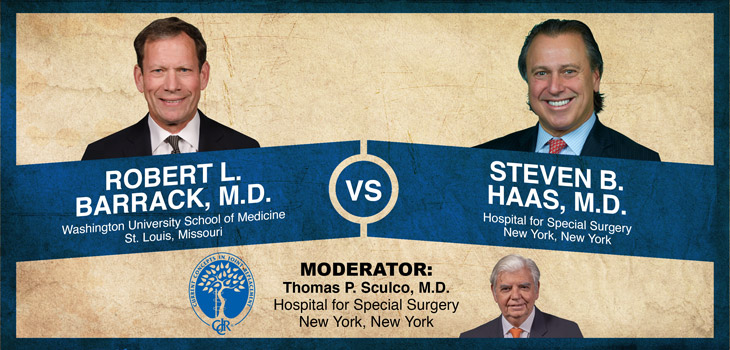
Twenty percent of knee replacement patients are not happy with their total knee replacements. What role could patella resurfacing (or not) play? Two giants of knee replacement, Robert Barrack and Steven Haas, tackle this very critical topic.
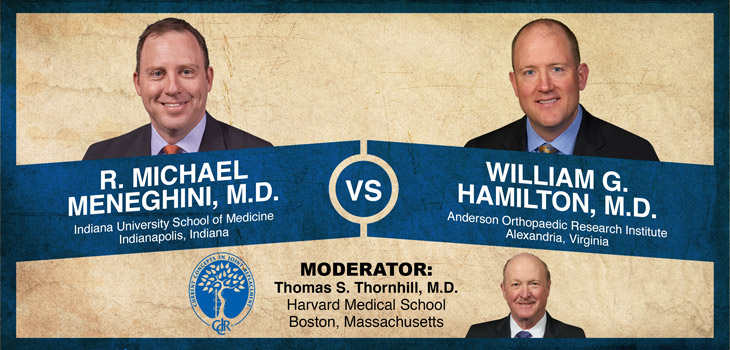
Do total knee replacements render the PCL a vestigial organ—as in, it’s lost its original function? If so, is that clinically relevant? Two giants of large joint replacement surgery wade in on this core issue and point out that updated implant designs and materials may well have resolved this debate.
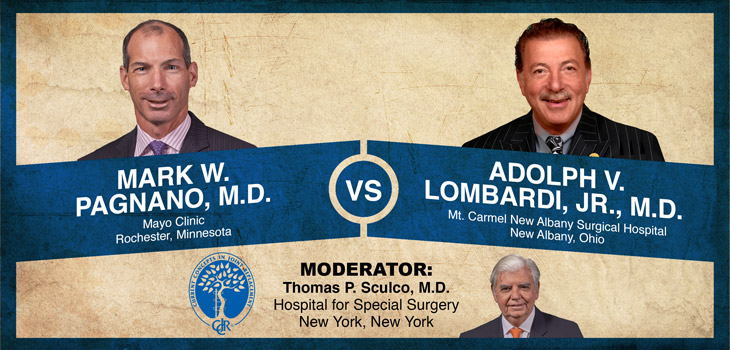
Back to the future with bi-cruciate retaining knee? A trio of Italians tackle this intriguing subject with Mayo Clinic’s Pagnano taking the affirmative, Mt. Carmel’s Lombardi disagreeing and HSS’ Sculco refereeing.
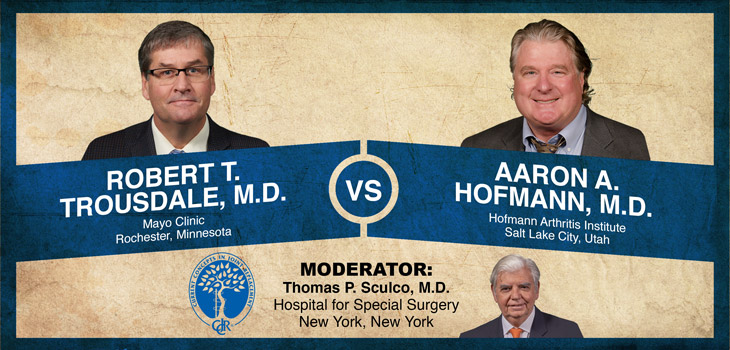
Cemented all poly tibias are certainly something to consider for the active, under 60-year-old patient. In this well-reasoned debate, arguments emerged in favor of all poly but questions about versatility in the long-run—particularly in revision situations—were also articulated.
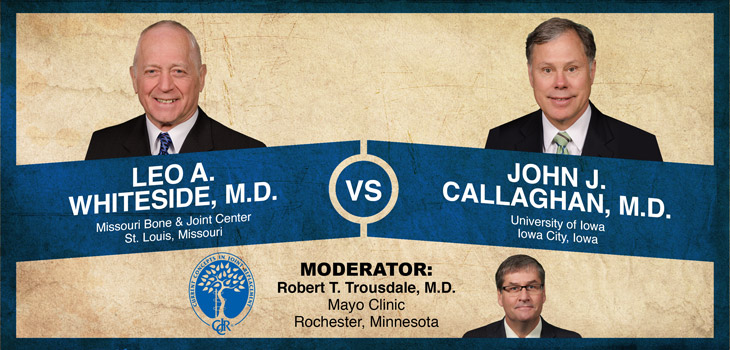
Two Hall of Famers debate one of the great questions in large joint reconstruction—cemented or cementless. Both of these guys have forgotten more than most surgeons know. So, take notes. This is a great debate.
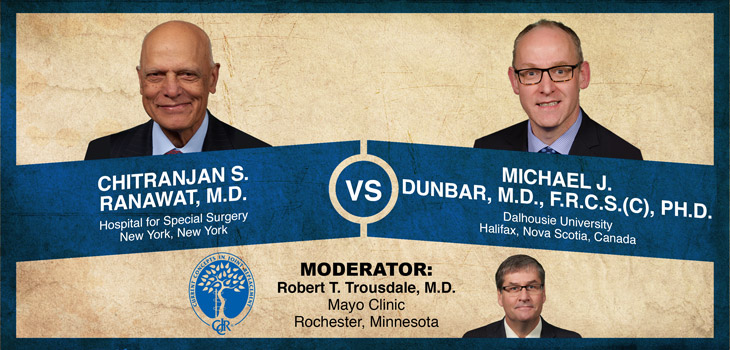
What percentage of your knee patients ‘look good, feel bad’? If its 18%, you’re typical. Why? One reason may be over reliance on neutral alignment. That heretical thought was forcefully and brilliantly raised in this remarkable debate between Chit Ranawat and Michael Dunbar. If ever there was a MUST READ debate, this is it.
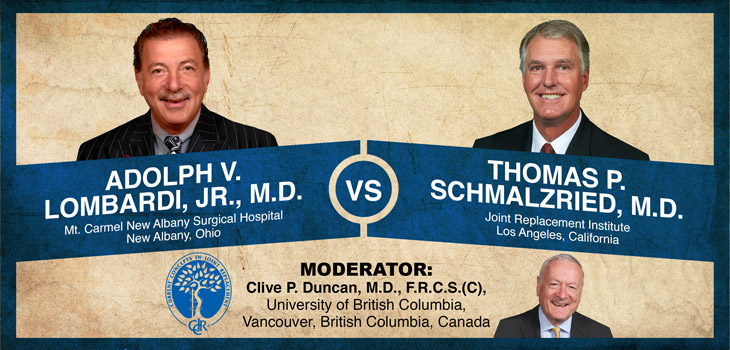
Ceramic with cross-linked polyethylene, is this the new standard for patients under 60 years of age? Adolph Lombardi from New Albany, Ohio’s Mt. Carmel Surgical Hospital says yes. But Tom Schmalzried from Los Angeles isn’t so sure. After reading this debate, what will you think?
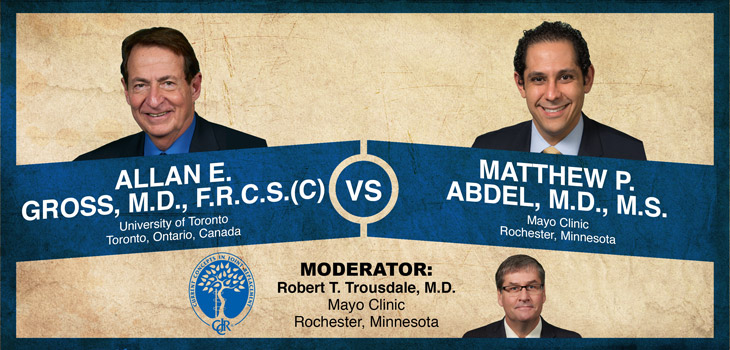
>> Ready for a great discussion on a tough subject? This may well be the “meatiest” CCJR debate yet. Gross and Abdel tackle the always interesting subject of removing the greater trochanter for difficult primary or revision hips. Trousdale masterfully moderates. One of the best CCJR’ debates.
No shortage of important considerations when it comes to the short stem. David Stulberg and Larry Dorr, through the miracle of Seth’s debate format, uncover and review the most important pluses and minuses regarding short stems for primary hip arthroplasty.

Resurfacing or replacement? This was not even close. Three guesses as to which debater won this contest—and the first two guesses don’t count. This sharply fought contest pits Cleveland Clinic’s Peter Brooks against University of Western Ontario’s Steven MacDonald. BC’s Clive Duncan referees.

Outpatient total hip arthroplasty or inpatient. Berend says outpatient is a paradigm shift and represents the future of arthroplasty. Lieberman notes, quite correctly, that outpatient is not for every patient and simple aphorisms don’t serve either the patient or the surgeon well. Excellent debate on this timely subject.

>> Finally, a fair, balanced, fact-based and experiential debate about anterior hip surgery. Not for everyone. Not for every patient. Has clear advantages…for a short while. But is that what hip arthroplasty is all about? Short term outcomes? No spin zone here. One of the best anterior hip debates yet.

Has cross linked polyethylene put wear and tear to bed as an issue? Can younger patients expect a poly hip to last 20 or 30 years or longer? Not likely says Gwo-Chin Lee and he makes a case for ceramics. Doug Padgett counters with 13-year data. Excellent debate.

Two giants of orthopedics Leo Whiteside and Javad Parvizi go head to head on the topic of antibiotic irrigation. Whiteside says it’s the only way to go. Parvizi says dilute Betadine and new CDC guidelines will do just fine, thank you. It’s a great debate!

Recurrent dislocations, total hip revisions—for whatever reason—these are tough problems. Is a dual mobility articulation a better answer than constrained liners? Lachiewicz and Callaghan go head to head over this hot topic. Who wins? You do. This debate is timely and highly instructive.

After articles in The New York Times, The Wall Street Journal and The Washington Post, it’s no wonder that the anterior hip approach is the fastest growing new THA approach in decades. But is it really better, faster, cheaper? Maybe not. This is the debate EVERY hip surgeon should read diligently.

The #1 game changer in large joint arthroplasty has been the shift from inpatient surgery to better pain control and outpatient surgery. Liposomal bupivacaine is the poster child of this shift, but is it worth the extra $300? Michael Berend and Michael Meneghini debate this question in an absolutely stellar review of the latest data.

Popular overseas but less so in the United States. Barrack debates Lombardi over patella resurfacing. Is it really necessary? And, if so, when? This is a solid point counter-point debate with plenty of data to chew on. Another classic CCJR debate.

Top healthcare blogger, John Driscoll, talks with David Williams (Health Business Group) about the end of health insurance merger mania, the climbing price of drugs, high-risk pools and more.

Would you use an all poly tibia in the active patient under 60 years old? Of course you should, says Robert Trousdale from the Mayo Clinic. No way! Says Steven MacDonald from the University of Western Ontario. Younger patients have higher revision rates with an all poly tibia. Who wins this great debate? You be the judge.

Deep down, do you broadly agree with bilateral total knee arthroplasty? Mr. Haddad thinks so but Dr. Pagnano vigorously disputes that in a spirited and highly informative debate. It’s all about risk and return. Enjoy this great exploration of a key question.

Accuracy is everything. This week’s debate is all about varus alignment. If you aim for 3 degrees do you actually get 5 or 6? Or is that a lame argument given today’s computerized navigation tools? Hofmann and Callaghan go six rounds on this timely issue.

Cementless implants…new and improved or just new and unproven? This week’s debate pits Thomas Schmalzried against Kenneth Gustke in a lively discussion of the cemented versus uncemented implants. Let the games begin!

OK, everyone agrees tenodesis is the way to go for TSA. But with no prospective, randomized clinical trials regarding the long head of the biceps after total shoulder arthroplasty there remain too many questions. Which, of course, results in a spirited debate between Galatz and Crosby.

Excellent debate this week. While both debaters agree that metal backed shoulder implants fail, the battle lines are clearly drawn when it comes to uncemented tantalum versus cemented poly. Evan Flatow and Bill Seitz give us an outstanding debate and review this week with Thomas Thornhill moderating.

This is a very challenging problem. Young people with severe shoulder problems. Arthroplasty or arthroscopy? In this debate, the nuances are in full display. This is one of CCJR’s best. Congrats to Seth Greenwald for this excellent program.

All-poly tibia is a very cost effective alternative and, says David Lewallen, M.D., should be part of every knee surgeon’s armamentarium. BUT, newer modular designs and metal backed trays give today’s surgeon more versatility, counters Aaron Hofmann, M.D. This is an essential debate and a must read for every orthopod.
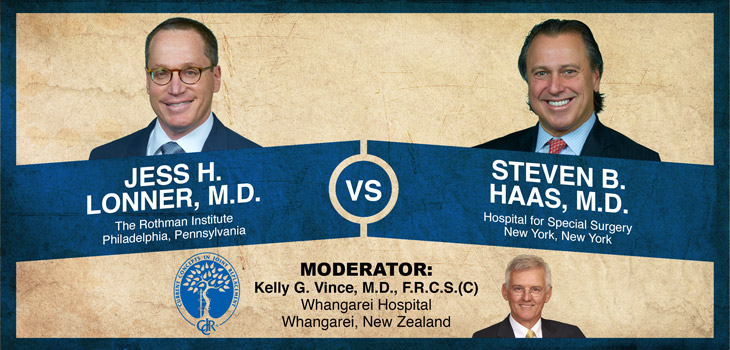
This week’s Orthopaedic Crossfire® debate tackles the sometimes contentious subject of patella resurfacing. Jess Lonner says it is rarely, if ever, necessary. Steven Haas finds a slew of meta studies that say otherwise. Who wins? You be the judge.

To tourniquet or to not tourniquet, that is the question. Dickey Jones says “Let it Bleed”. Keith Berend fights mightily to defend a near defenseless position. But at the end of the day, the winner, it seems, is tranexamic acid. Get ready to read one of the most unusual CCJR debates yet. Have fun folks.

To stem or not to stem, that is the question when faced with a specifically complex primary or revision knee arthroplasty because of deformity or instability. New Zealander Kelly Vince gives the pro-stem case while HSS’ Thomas Sculco shows himself to be a stem-less kind of guy. Who wins? The reader. Another truly excellent and informative debate from CCJR.

Patient specific instrumentation: added cost with no proven value or an evolving technology to raise outcomes and improve OR efficiencies? This very timely debate pits two great surgeon/scientists against each other and in the process sheds light and understanding on this critical issue.

OK, it’s a distal femoral peri-prosthetic fracture. Do you reach for the locking plates, the screws or the intramedullary nails? Or do you opt for a mega prosthesis? This week’s Orthopaedic Crossfire® debate tackles this excellent subject with ENDO-Klinik’s Gehrke choosing the big implant and Orlando Health’s Haidukewych going ORIF. Who wins? You judge.
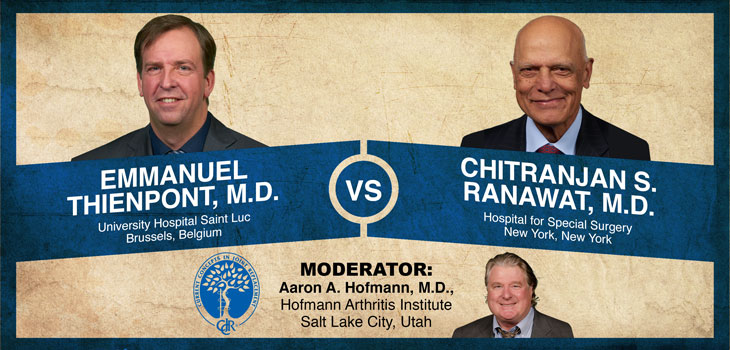
Unicompartmental Knee or Total Knee? What’s not to like about preserving natural kinematics, lower infection rate and good post op range of motion? But can the patient live with higher revision rates? Dr. Thienpont argues for Uni while Dr. Ranawat takes the counter position. Great and timely debate this week.

Same day total knee arthroplasty is the siren song of large joint reconstruction. Michael Berend has performed over 2, 000 knee arthroplasties with 98% of these folks going home the same day and recommends it strongly. Michael Dunbar points out that these are select patients in a tightly controlled environment. Hard to duplicate especially with heavier, more diabetic and older patients. Read this very interesting debate here.

Acetabular bone loss and impaction grafting, for which patients is it good strategy, which patients is it a ‘no-way’ strategy and is it overly technique dependent? Alejandro Gonzalez Della Valle and Allan Gross, with Daniel Berry moderating, tackle this important and impactful (pun intended) subject.

Open reduction internal fixation or total hip arthroplasty for younger (50-60 years old) patients with displaced femoral neck fractures? This week’s debate pits George Haidukewych against Edwin Su. Who wins? You do…with an outstanding debate.

Is the use of ceramic-on-ceramic in young patients the new standard of care? Yes, says Lee. In fact c-on-c has better wear, is more reliable and provides more options. Not so fast says Schmalzried. Survivorship and function are no better, there is a squeaking and fracture risk. Who wins this debate? You be the judge.
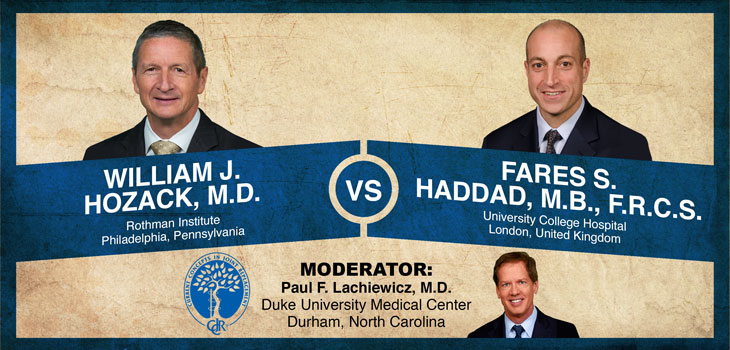
Anterior hip arthroplasty. Is it really better, faster and cheaper or is that mere marketing hype? This week’s debate pits William J. Hozack, M.D. against Fares Haddad, M.B., F.R.C.S. with Paul Lachiewicz moderating on this hot topic. Who wins this most entertaining debate? You be the judge.
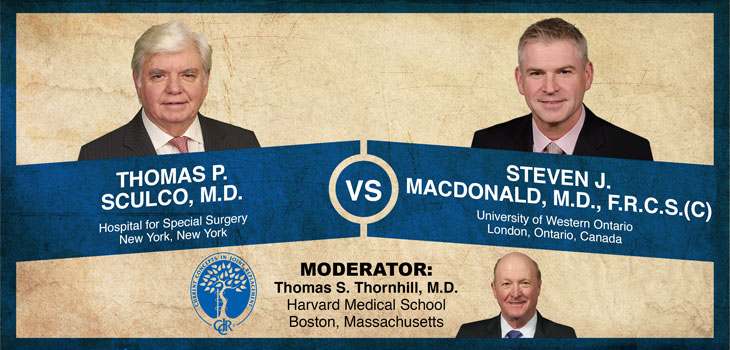
Did Tom Sculco get the short straw in this dual mobility THA debate against Steven MacDonald? At one point Moderator Thornhill offered to shield Dr. Sculco from MacDonald’s expected onslaught of data. What really happened? Here’s a clue: Australian Registry! And not much blood on the floor.
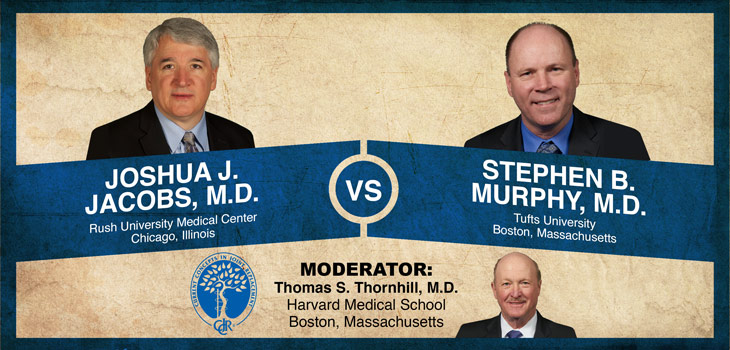
Corrosion, adverse tissue reaction, fracture and Australian Registry data. Jacobs and Murphy stir all those concepts up into a hot gumbo of data and case studies. This debate serves up the facts behind distal neck modularity. Bottom line, these guys were for it before they were against it.

Metal on Metal Hip Resurfacing—YES! It is an option for the right patient and surgeon. De Smet v. Dunbar dive into this very interesting, CCJR debate.

Forty years ago Charnley raised the issue of pulmonary embolism risk. This remains a significant concern for surgeons. This excellent debate from CCJR brings us fully up to date on the latest thinking, studies and advice.

Does a patient’s age determine whether to use ceramic-on-ceramic THA? As we saw with the excellent 2013 CCJR debate regarding ceramic-on-ceramic, this is a popular topic. This year Stephen Murphy reminds us that “ceramic-on-ceramic bearings have excellent results” while William Maloney points out that they are not a standard of care and can squeak. Lieberman moderates yet another terrific CCJR debate.
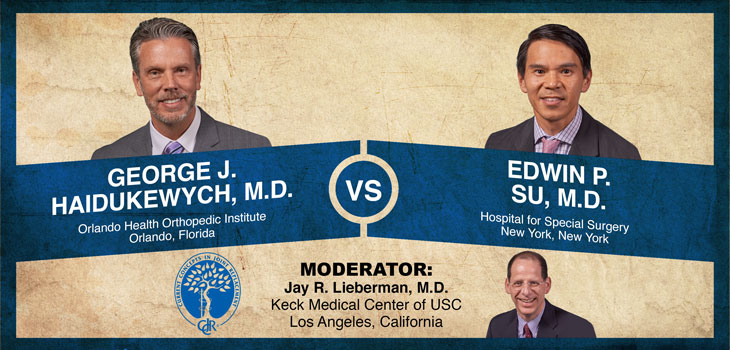
The incidence of femoral neck fractures continues to increase. What’s the best approach for the under 60 patient? George Haidukewych makes the case for open reduction internal fixation (ORIF) while Edwin Su counters with arthroplasty. Who wins? We think the reader.
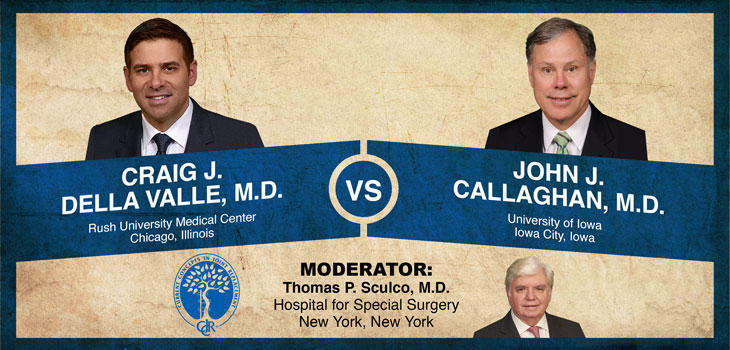
Dual mobility is the new kid on the block for total hip arthroplasty but it’s not for everyone. John Callaghan reminds us that the constrained liners can work well, especially in older patients while Craig Della Valle argues that constrained liners have metal rings that can break. What’s the right answer? This week’s debate may have found it. Read on.

“Are you doing the anterior approach?” According to Bill Maloney, that’s the most common patient question he gets. But not everyone should follow the anterior siren song. Paul Beaule makes a strong case for the benefits of the anterior approach while Dr. Maloney reminds us that the learning curve is steep. This may be one of the most important debates of the year.
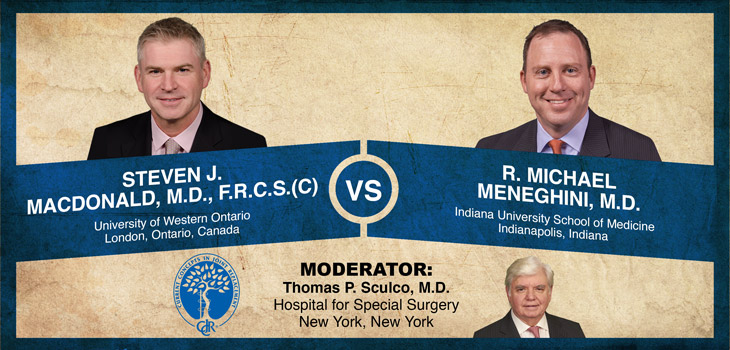
Cobalt chrome or ceramic heads? Steven MacDonald takes the position that there is NO difference between the two in outcomes while Michael Meneghini is very persuasive saying that outcomes are clearly better with cobalt chrome. Who wins this outstanding debate? With mounting evidence of corrosion from cobalt chrome, this is a timely debate.
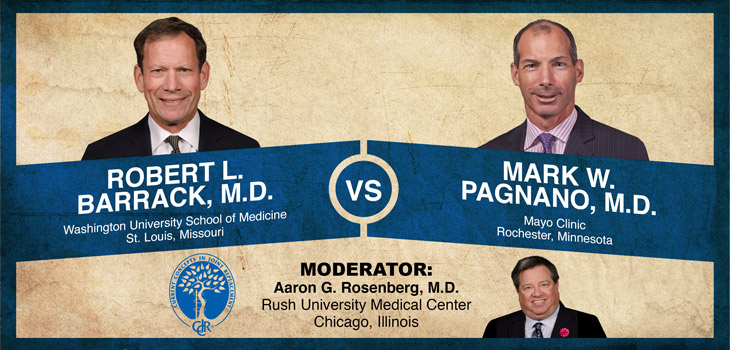
Patient Specific Instrumentation (PSI), unproven value or next new thing for knee replacement surgery? Dr. Barrack says he’s tried it and it didn’t improve outcomes or value. Dr. Pagnano counters by saying that in his experience PSI lowers stress in the OR and is valuable for certain hospitals. Another timely and important debate from CCJR.

All poly tibia knees? Really? Get ready to be surprised. Says David Lewallen MD “Poly designs are cost effective and an excellent solution for a subset of patients.” Taking the opposite point of view is Leo Whiteside MD saying; “Well David, I wish I could agree with you but then we’d both be really wrong.” Welcome to an especially fun and informative debate.
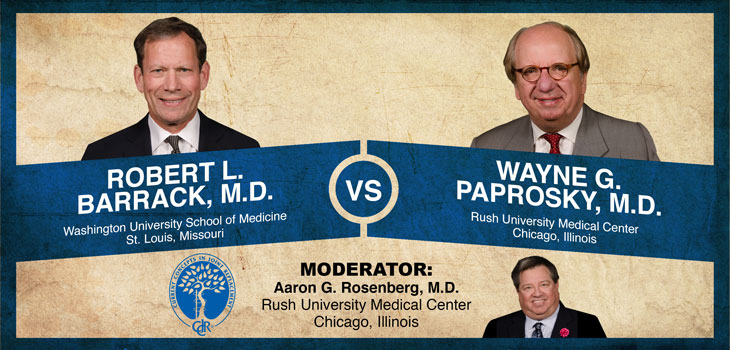
According to Robert Barrack, M.D.” There are about five things that can happen when you resurface a patella and four of them are bad.” Not so, says Wayne Paprosky, M.D. in this spirited CCJR debate. “I say resurface the patella” With modern techniques and instruments “Just go ahead and resurface the patella. Why not finish the job?” Who wins this debate? You be the judge.
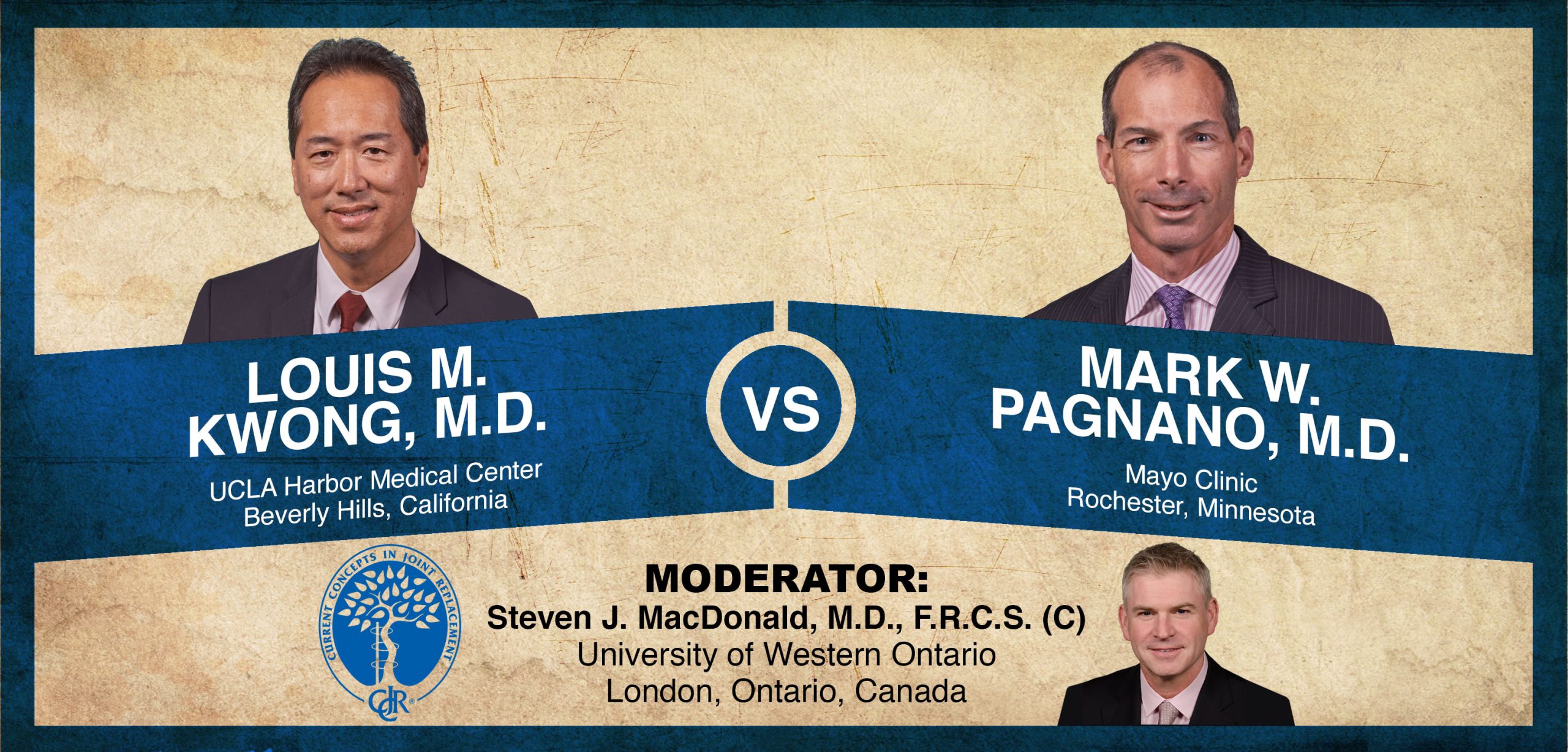
“I believe that we are on the threshold of the cementless total knee coming of age, ” says Louis Kwong. Not so fast counters Mark Pagnano, “It’s my contention that in 2015 cemented fixation remains the gold-standard for total knee arthroplasty fixation.” Who’s right? In this spirited debate it’s truly hard to tell.

Why replace the total knee when your patient only has medial arthritis? Fares Haddad goes toe-to-toe with Thomas Sculco over TKA versus UNI when the issue is medial compartment arthritis. Is TKA the only tried and true solution? You be the judge.
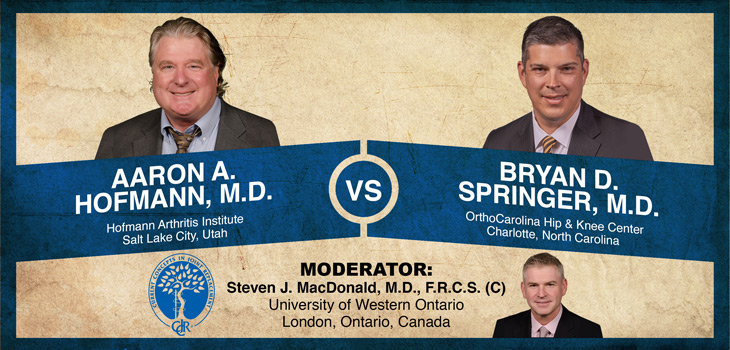
Them’s fighting words! Measured resection or gap balancing in total knee arthroplasty. Aaron Hofmann M.D. makes a strong case for measured resection but Bryan Springer M.D. counters effectively for gap balancing. Who earns an “A”? You be the judge.

Lynn Crosby: “When treating cuff tear arthropathy with loss of acromial-humeral distance; pain with or without activity; good deltoid tone and strength, reverse is the best option. Not so fast, says Reuben Gobezie: “Don’t do these reverse replacements on patients who have these types of tears because they have pre-op range of motion greater than 90. It is not a good outcome.” Who wins this great debate? You decide.

In the Crossfire this week is a very sticky topic—cementing that shoulder replacement. Says John W. Sperling “If we look over all the literature one can see that cement fixation is frankly not necessary.” Not so fast says William H. Seitz, Jr., “Cement has become the gold standard and there are new designs and new techniques and we also have new techniques for cementing as well.” It’s a lively and informative debate, for sure.

To Surface Replace or Not to Surface Replace. That is the question. Buz Burkhead and Anthony Romeo debate fiercely the advisability of shoulder surface replacements when there is a Hills-Sachs lesion. It’s a spirited intellectual tussle which we think you’ll enjoy immensely.

On August 28, 2013, the FDA sent an unwelcome and surprising letter to Georgia-based allograft supplier MiMedx Group, Inc., informing them that one of their allograft products, EpiFix, did not meet the requirements for an allograft and therefore was being sold without the required FDA clearance or approval. The letter, otherwise known as an “Untitled […]

On June 9, 2013 the orthopedic world was jolted by the sudden loss of Harry N. Herkowitz, M.D., the much-loved chairman of Orthopaedic Surgery at Beaumont Hospital in Royal Oak, Michigan. Dr. Herkowitz, who was 65 years old, is survived by his wife Jan, son Seth (Laura) and daughter Rachael (Michael – fiancé).