
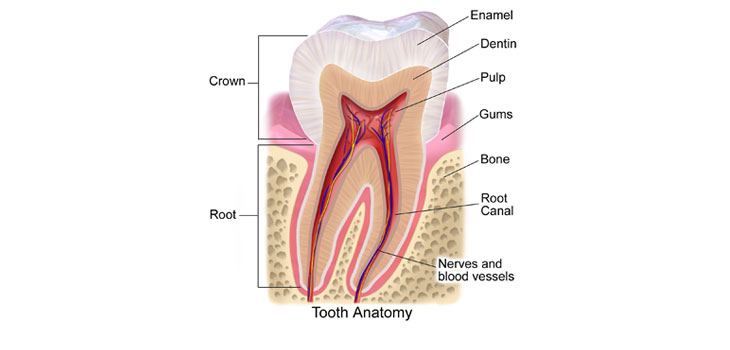
The centers of teeth house nerves but they also contain stem cells. Research from the Karolinska Institute in Stockholm has revealed that the stem cells in teeth may have developed from nervous system cells. The study was reported on ScienceMag.org.
Tooth Stem Cells Have Nervous System Origin
1 min read Premium comments
Secondary
According to writer Sarah C. P. Williams, investigators in the Stockholm study were following glial cells. Glial cells are found in the gums around neurons where they help transmit pain signals. The researchers observed that some of the glial cells moved into the teeth, where they reverted into stem cells. From there they changed again into tooth cells.
Geikhman quoted the study’s lead author, Igor Adameyko, Ph.D., as saying, “More than just applications within dentistry, this finding can have very broad implications. These stem cells could be used for regenerating cartilage and bone as well. This finding goes against what scientists had believed, that ‘one cell type couldn’t switch to the other.’”
The implication of the research, according to Adameyko, is that scientists may unlock a way to grow these stem cells in the lab, which can then be used for therapeutic and corrective procedures such as tissue regeneration.
Author
React:
Discussion
This is a fascinating development. In my practice we've seen similar outcomes with the revised protocol. The key differentiator seems to be patient selection criteria. Has anyone else noticed the correlation with BMI thresholds?
Great point. I'd push back slightly on the conclusion, the sample size in the cited study is too small to draw population-level inferences. That said, the directional signal is compelling and worth a larger RCT.
We implemented a similar approach last year. Early results are promising but we're still gathering 12-month follow-up data. Happy to share our protocol if anyone is interested.
Join the conversation
Orthopedic professionals are discussing this. Sign in and upgrade to read every comment and add your voice.