Is This the Machine Age in Pelvic Fracture Fixation?

By pandycopywriting 0 views 0 comments
Is This the Machine Age in Pelvic Fracture Fixation?

Fixing unstable pelvic fractures is about as fun as trying to play Jenga during an earthquake. These high-stakes injuries come with a whole lot of bleeding, a whole lot of anatomy, and—until now—a whole lot of open surgery. But what if the robots could lend a (perfectly steady) hand?

In a new BMC Surgery study published July 16, 2025, "Efficacy analysis of robot-assisted minimally invasive surgery for the treatment of unstable pelvic fractures", that feels more sci-fi than scalpel, Drs. Dai Yonghong, Zeng Yanhui, and their mechanically inclined colleagues from Foshan Hospital of Traditional Chinese Medicine and Beijing Jishuitan Hospital decided to test just how well robots can handle the job. Spoiler alert: they didn’t disappoint.

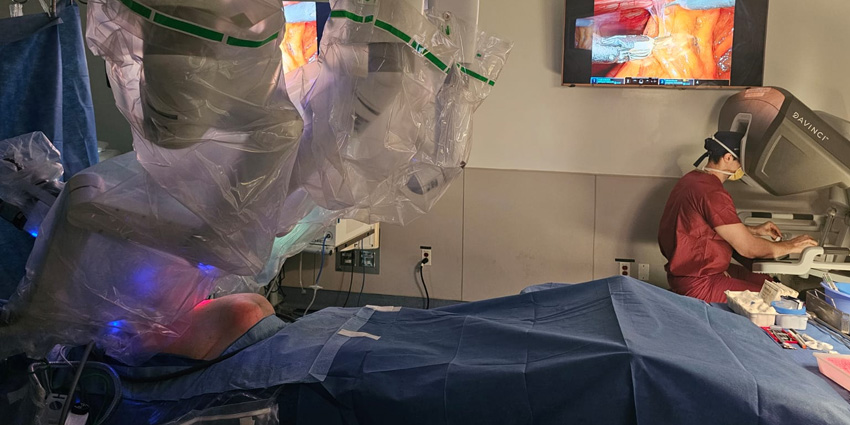
The team pitted traditional open pelvic fracture surgery against a robotic tag-team operation using the Rossum Robot (think: reduction specialist) and TiRobot (a new Chinese made screw navigation system). Their head-to-head comparison included 25 patients in each group—all dealing with unstable pelvic fractures, and none too thrilled about it.

Here’s what they found:

  • Operating time? The robots took longer. Because, you know, perfection is a process.
  • Blood loss? Dramatically less in the robo-group. Like, leave-the-transfusion-cart-in-the-closet less.
  • Incision size? Smaller. Your plastic surgeon friends would be proud.
  • Radiation exposure? Also lower. Your future grandchildren thank you.
  • Complications? Basically the same. No infections, no iatrogenic fractures, no hardware hiccups.
  • Function? Now we’re talking. The robotic patients strutted their way to higher Majeed pelvic function scores, suggesting that precision pays off.

So how does this Rossum-TiRobot duo actually work? Imagine a surgical ballet where a reduction robot uses elastic traction and a passive holding arm to gently reposition bony fragments under 3D imaging guidance. Meanwhile, TiRobot steps in with surgical GPS to drop in screws like it’s threading a needle from across the room. It’s not just high-tech—it’s borderline poetic.

While this dynamic duo didn’t shave time off the procedure (in fact, they added some), they also didn’t add risk—and brought meaningful benefits in tissue preservation, screw accuracy, and patient function. Plus, no one dropped a screw. Literally.

Of course, as the authors themselves point out, the future of robotic pelvic surgery lies in full integration—a single smart platform that handles both reduction and fixation like a pro. But even with current limitations, this study lays serious groundwork for the next phase of orthopedic evolution.

So, fellow fracture-fixers, the robots aren’t coming for your job…yet. But they are coming to help you make that pelvic reconstruction a little less medieval and a lot more modern.

Bottom Line?

Your next surgical partner might not ask for coffee, but it will help you hit your reduction goals without breaking a sweat. Welcome to the machine age of orthopedic trauma.

React:

Comments (0)

Sign in and subscribe to join the discussion.

No comments yet. Be the first to share your thoughts.