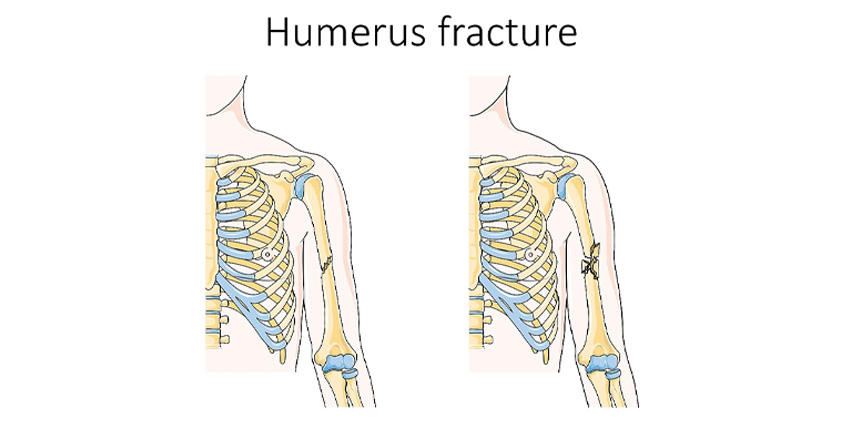
Few injuries test the patience of both trauma surgeons and patients like the humeral shaft fracture.
The sling-and-wait philosophy of functional bracing has always carried the badge of being “good enough” for most patients — but for a construction worker staring down three months of disability, “good enough” often isn’t.
A new JBJS Evidence-Based Orthopaedics commentary, penned by Lisa K. Cannada, M.D., FAOA, FAAOS, FACS (Novant Health Fracture Clinic, UNC Charlotte School of Medicine), highlights randomized data suggesting that surgery finally puts some muscle behind the argument for earlier recovery.
“In Adults with a Humeral Shaft Fracture, Surgical Fixation Resulted in Better Function at 3 Months Compared with Bracing,” was first published online August 29, 2025.
The Trial That Matters
The JAMA Surgery multicenter randomized clinical trial (RCT) compared operative fixation versus nonoperative functional bracing for adult diaphyseal humeral fractures. The punchline? At three months, patients who went under the knife reported better function than those left to stew in their brace.
For working-age adults or anyone with high activity demands, that early functional edge can mean the difference between being back on the job or still explaining to your boss why lifting a coffee cup is your max effort.
Not the End of the Story
Of course, every trauma surgeon knows the deal: fixation isn’t free. Surgical risks, anesthesia exposure, infection potential, and resource costs are all part of the package. Meanwhile, functional bracing remains a perfectly respectable option — no OR, no intubation, no scar. For lower-demand patients, the trade-offs often favor the brace.
Cannada’s review drives home the modern trauma-clinic mantra: it’s about the patient’s goals, not just the fracture line.
What to Discuss in Clinic
- Fracture pattern & soft tissue: Not all shafts are created equal. Spiral vs transverse? Open vs closed? The context matters.
- Comorbidity profile: Diabetic with poor wound healing vs healthy weekend warrior.
- Timeline pressures: Need to get back to caregiving, manual labor, or athletics? Fixation may pay off early.
- Pain & tolerance: Some patients just won’t tolerate the brace, physically or psychologically.
The Bottom Line
This RCT doesn’t dethrone bracing, but it gives surgeons stronger evidence when counseling patients who need faster return to function. At three months, fixation wins. At longer follow-up, the debate remains open — union rates, complications, and reoperations will still guide the long-term calculus.
For trauma surgeons, it’s another tool in the counseling arsenal. For patients, it’s about aligning treatment with their reality. And for the rest of us, it’s a reminder that in fracture care, sometimes faster really is better.