
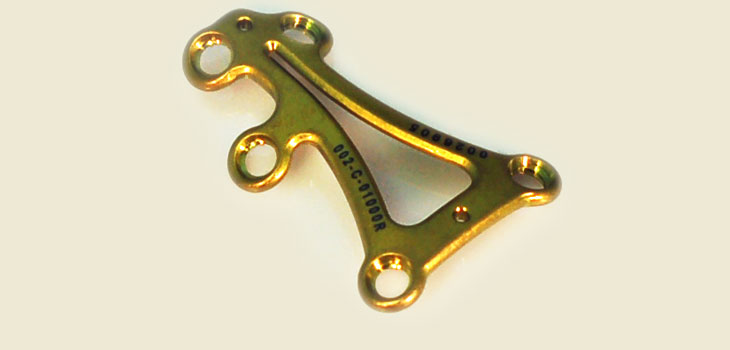
Edge Orthopaedics of Boonton, New Jersey, has received its second U. S. Food and Drug Administration 510(k) clearance for its View Plating System and for its Reduce Fracture Plating System. The View system includes anatomic plates to support multiple indications within the mid-foot while the Reduce Fracture system offers surgeons a wide range of low-profile plate designs to address the most common procedures performed by foot and ankle surgeons. According to the press release, both systems contain titanium alloy and sterile titanium alloy bone screws.
FDA Clears Two Foot Repair Systems
1 min read Premium comments
Secondary
Both plating systems and the compression screws utilize the same instrumentation tray for increased hospital efficiency. Edge COO Anna Kroll said, “By sterile packaging implants and offering one instrumentation tray for multiple product lines, it not only reduces the amount of trays that need to be sterilized and wrapped for a case but it also provides each surgeon the opportunity to change implant needs at a moment’s notice. This can be a game changer for operating rooms.”
Edge Orthopaedics is a privately held medical device company that develops products for extremity orthopedics.
Author
React:
Discussion
This is a fascinating development. In my practice we've seen similar outcomes with the revised protocol. The key differentiator seems to be patient selection criteria. Has anyone else noticed the correlation with BMI thresholds?
Great point. I'd push back slightly on the conclusion, the sample size in the cited study is too small to draw population-level inferences. That said, the directional signal is compelling and worth a larger RCT.
We implemented a similar approach last year. Early results are promising but we're still gathering 12-month follow-up data. Happy to share our protocol if anyone is interested.
Join the conversation
Orthopedic professionals are discussing this. Sign in and upgrade to read every comment and add your voice.