
Doctors should reach around and pat themselves on the back.
Doctors Lead as Organ Donors
1 min read Premium comments
Secondary
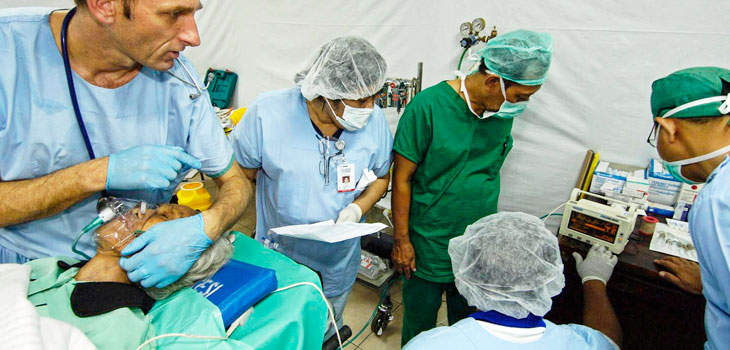
There are more doctors—twice as many as the general public—who are registered organ donors.
That information came out of a study authored by Alvin Ho-ting Li. He cross-referenced data on 15, 000 active physicians in Ontario, Canada, in 2013 and matched them with 60, 000 residents who were similar in age, sex, income and residential neighborhood. He found that more than 43% of the doctors were registered organ donors, compared to 30% of their matched comparison group and 24% of the general public in Ontario, according to Katheryn Doyle, writing for Reuters Health.
Doctors who were younger, female and lived in rural communities were more likely to be registered donors, the study found. Claire Wakefield M.D., of Sydney Children’s Hospital in Randwick, Australia, told Reuters Health that, “Many physicians see the ramifications of the organ donation shortage first hand in their patients, so they may be more motivated to contribute to the shortage if possible.”
“We hope that these results will generate further discussion and awareness, and encourage everyone to sign up for organ and tissue donation, ” Li said. Currently almost 123, 000 people in the U.S. are waiting for an organ transplant, most commonly for a kidney or liver, according to Reuters Health.
Author
React:
Discussion
This is a fascinating development. In my practice we've seen similar outcomes with the revised protocol. The key differentiator seems to be patient selection criteria. Has anyone else noticed the correlation with BMI thresholds?
Great point. I'd push back slightly on the conclusion, the sample size in the cited study is too small to draw population-level inferences. That said, the directional signal is compelling and worth a larger RCT.
We implemented a similar approach last year. Early results are promising but we're still gathering 12-month follow-up data. Happy to share our protocol if anyone is interested.
Join the conversation
Orthopedic professionals are discussing this. Sign in and upgrade to read every comment and add your voice.