
There are plenty of things spine surgeons would happily eliminate from their operating rooms: unnecessary delays, equipment malfunctions, difficult registrations, insurance paperwork, and, somewhere near the top of the list, radiation exposure.
Orthofix's 7D MRVision: 1st Place in 2026 Spine Technology Awards
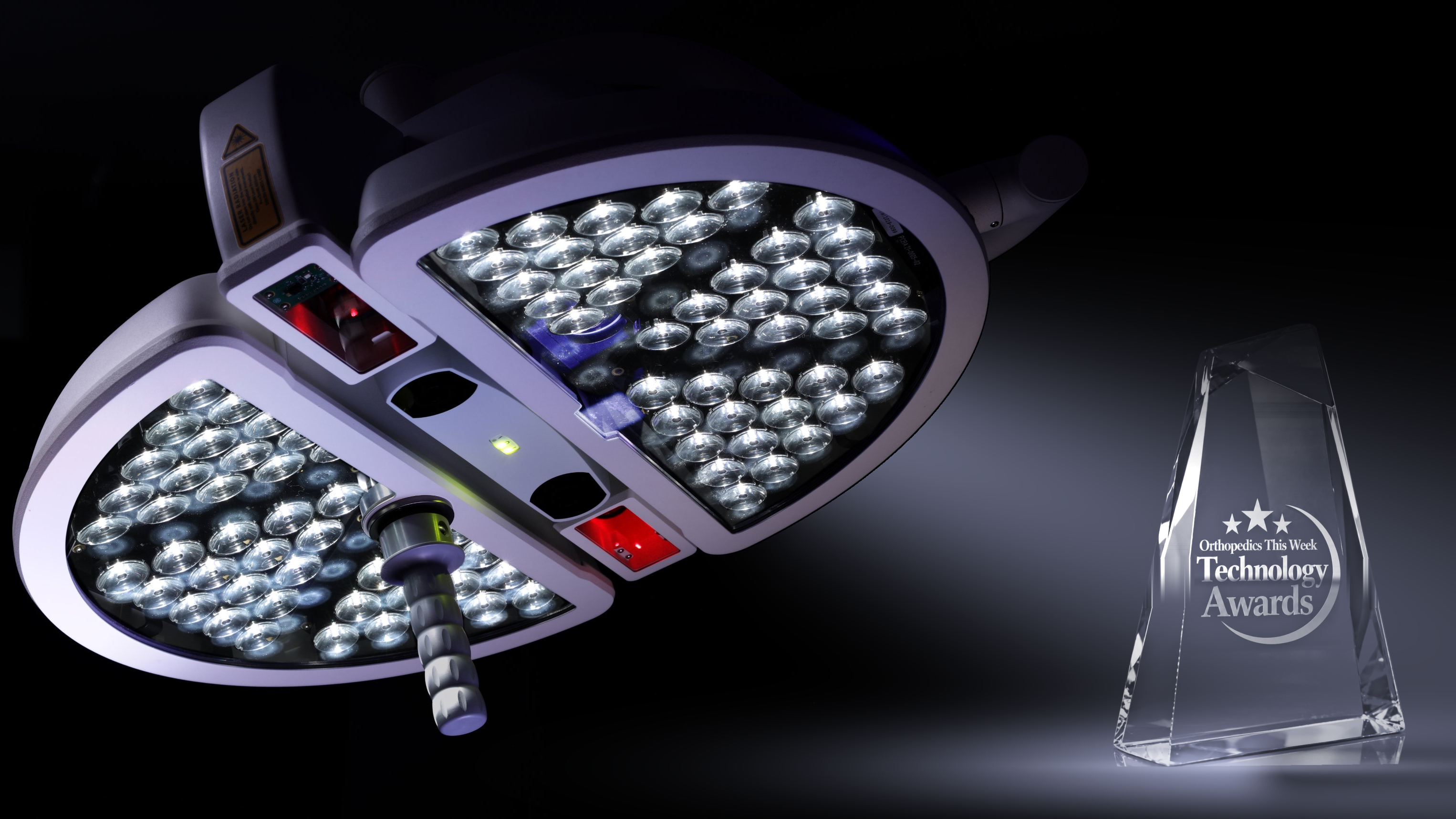
Now Orthofix has another reason to celebrate the possibility of taking radiation out of the spinal navigation equation.
Its 7D MRVision™ technology earned first place in the 2026 Orthopedics This Week Spine Technology Awards, finishing at the top of the competition with 110 out of a possible 150 points from five judges.
MRVision wasn't simply the flashy new technology in the room. It demonstrated something arguably more important: a convincing combination of innovation, clinical relevance, staying power, and potential to improve the standard of care.
And it did so with remarkable consistency.
A Different Way to See the Spine
Spinal navigation has transformed the way surgeons approach complex procedures. Better visualization, more accurate instrumentation, and increasingly sophisticated image-guided workflows have made navigation an important tool in modern spine surgery.
But there's an inconvenient companion to much of this technology: radiation.
For surgeons who spend much of their professional lives under the fluoroscope, cumulative exposure is hardly an abstract concern.
Enter 7D MRVision.
The system combines two technologies: BoneMRI™, developed by MRIguidance, and Orthofix's 7D FLASH Navigation System™.
The system transforms preoperative MRIs into a synthetic CT dataset suitable for spinal navigation.
The synthetic CT dataset is then integrated with the 7D FLASH machine-vision navigation platform.
The result? Image-guided spinal surgery without radiation-based imaging for navigation.
For surgeons who have spent years trying to minimize radiation while maintaining the advantages of navigation, that's an appealing proposition.
Machine Vision Meets MRI
BoneMRI converts MRI information into a synthetic CT representation that can be used for surgical planning and navigation. The 7D FLASH system then uses proprietary machine-vision technology to support image registration and navigation.
Orthofix reports that registration can be completed in less than 30 seconds. Thirty seconds.
That's about the time it takes to answer a question from the circulating nurse, adjust your gloves, or wonder why the music in the operating room has suddenly changed to something from the 1980s.
The system is designed to fit into existing clinical workflows while reducing dependence on radiation-based registration techniques.
The Judges Liked More Than the Technology
The 2026 judging panel evaluated each submission using six criteria, awarding between one and five points for each:
Creativity and innovation.
Long-term significance and staying power.
Ability to solve a current clinical problem.
Improvement to the standard of care.
Cost effectiveness.
Whether the judge would personally consider using the technology.
With five judges and a maximum of 30 points per judge, the highest possible overall score was 150.
MRVision scored 110.
But the most revealing information may be found in the individual criteria.
The technology led the entire field in two categories: long-term significance and improvement to the standard of care. It also tied for the highest score in the category asking whether judges would personally use the technology.
Four of the five judges gave MRVision a four or five for personal use. That's meaningful.
The Elephant in the Operating Room: Cost
Advanced navigation platforms are capital investments. MRI access, software, equipment integration, training, and implementation all have economic implications. A technology can be clinically attractive and still face difficult purchasing decisions.
The financial argument for MRVision will ultimately depend on factors such as the cost of additional imaging, workflow efficiency, resource utilization, and the economic value of reducing radiation exposure.
The important distinction is between the purchase price of a technology and its total value to a healthcare system.
Surgeons will want to know whether the technology performs consistently across different patient anatomies, procedures, and clinical settings.
A Partnership That Brought Two Technologies Together
The award also recognizes a collaboration between Orthofix and MRIguidance.
Orthofix brought its 7D FLASH Navigation System and machine-vision expertise to the partnership.
MRIguidance contributed BoneMRI technology, which converts MRI data into a synthetic CT dataset suitable for navigation.
Orthofix's integration of the FLASH platform followed its 2023 combination with SeaSpine. The company announced its U.S. distribution agreement for BoneMRI in January 2024 and reported the first eight combined cases.
The result is more than a new software feature or another navigation accessory. It is an attempt to rethink the imaging foundation of spinal navigation.
That is likely one reason the technology impressed the judging panel.
A Higher Standard of Care -- Long Term
MRVision led the competition in long-term significance and improvement to the standard of care, tied for the highest personal-use score, and was the only entry that avoided a score below three from every judge on every criterion.
That's a compelling endorsement.
The technology combines MRI-based synthetic CT imaging with machine-vision navigation to pursue something spine surgeons have wanted for years: the ability to navigate accurately without relying on radiation-based imaging for navigation.
Orthofix and MRIguidance deserve recognition for bringing these technologies together.
For spine surgeons, the message is simple: The future of navigation may not require another X-ray.
And if the operating room can eventually have better navigation with less radiation, that's a technology worth watching.
Sometimes the biggest breakthrough isn't seeing more.
It's finding a way to see what you need without exposing everyone in the room to something they don't.
Congratulations to the Orthofix and MRIguidance teams on earning first place in the 2026 Orthopedics This Week Spine Technology Awards.
Orthofix contributors:
Adrian Mariampillai, Michael Leung, Jocelyne Boone, Christine Li, Elena Marenny, Charlotte Logeman, Jithesh Jayaraj, Tina Zhang, Sabrina Kader, Jane Seo, Peter Siegler
MRIGuidance contributors:
Marijn van Stralen, Peter Seevinck, Dacina Crainic, Rick Bergmans, Bram Kooiman, Stijn van Wijngaarden, Kees van Wijk, Huiqin Chen, Florian Calvet, Dionysios Ziogas, Jasper van der Graaf, Tijl van der Velden, Hilde Geraedts
Author
Why This Matters
Two Perspectives
MBA Lens: Economic and industry impact
Orthofix's 7D MRVision secured first place in the 2026 Spine Technology Awards, highlighting its market potential by eliminating radiation in spinal navigation. This collaboration with MRIguidance integrates BoneMRI with Orthofix's 7D FLASH system, offering rapid registration and addressing a critical surgeon concern. Its high scores for long-term significance and improved standard of care suggest strong adoption potential, despite being a capital investment.
- The technology's value proposition centers on reducing radiation exposure, a significant differentiator in the competitive spine navigation market.
- Strategic partnership and integration of existing technologies aim to enhance market penetration and redefine imaging foundations for spinal procedures.
PhD Lens: Clinical and outcomes impact
Orthofix's 7D MRVision, a 2026 Spine Technology Award winner, integrates MRIguidance's BoneMRI with Orthofix's 7D FLASH Navigation System. This innovation converts preoperative MRIs into a synthetic CT dataset, enabling radiation-free image-guided spinal surgery. The system utilizes machine-vision technology for rapid registration, completed in under 30 seconds, significantly improving clinical workflow and patient/surgeon safety by eliminating radiation exposure.
- The core mechanism involves transforming MRI data into a synthetic CT for navigation, bypassing the need for radiation-based imaging.
- Clinical relevance is high, as it addresses cumulative radiation exposure while maintaining the benefits of accurate image-guided spinal procedures.
React:
Discussion
This is a fascinating development. In my practice we've seen similar outcomes with the revised protocol. The key differentiator seems to be patient selection criteria. Has anyone else noticed the correlation with BMI thresholds?
Great point. I'd push back slightly on the conclusion, the sample size in the cited study is too small to draw population-level inferences. That said, the directional signal is compelling and worth a larger RCT.
We implemented a similar approach last year. Early results are promising but we're still gathering 12-month follow-up data. Happy to share our protocol if anyone is interested.
Join the conversation
Orthopedic professionals are discussing this. Sign in and upgrade to read every comment and add your voice.