
CHARLOTTE, N.C.--(BUSINESS WIRE)--Pressio Spine announced today the successful completion of its first clinical cases using the Continuum™ Compression Staple, a nitinol fixation system for single level anterior cervical discectomy and fusion, or ACDF. Led by Dr. Daniel Leas at Carolina Neurosurgery and Spine Associates, the cases marked the beginning of the company’s initial user program and provided an early evaluation of Continuum in the clinical setting.
Pressio Spine Announces Successful Completion of Initial Continuum™ Cases
2 min read Premium comments
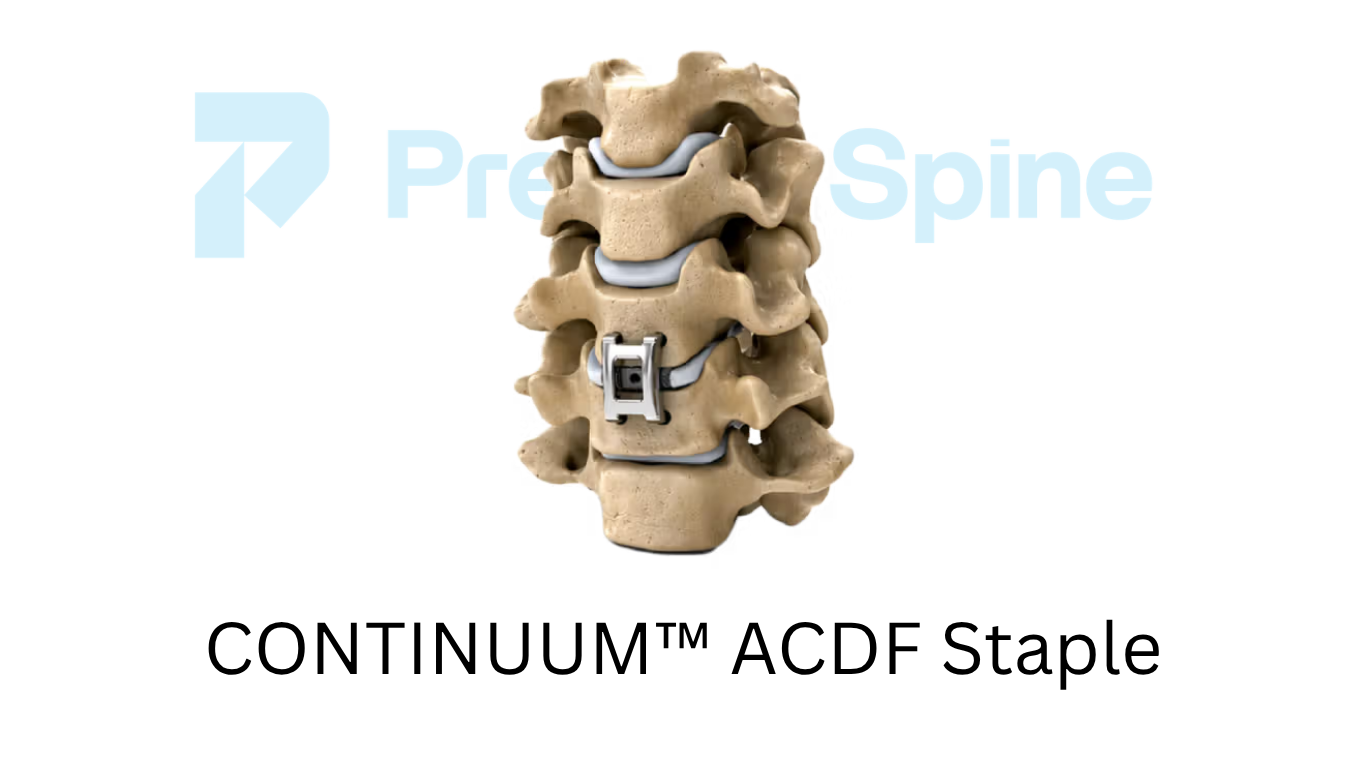
#acdfPressio SpineContinuum™ Compression Staplenitinol fixation system
Continuum is engineered from superelastic nitinol to provide continuous compression across the fusion site. Unlike traditional anterior fixation systems that require multiple screws and angled placement, Continuum is positioned in line with the spine through a streamlined placement technique. This reduces the number of implant placement steps and simplifies the operative workflow.
Continuum is supplied as a fully sterile, single use instrument kit. The system arrives ready for surgery and requires no sterile processing or loaner tray coordination. It can also support cases added on short notice. For ambulatory surgery centers and hospital operating rooms, this model simplifies inventory management and reduces the preparation required from facility staff.
"My first cases with Continuum validated what the design promised. The nitinol compression is doing real work immediately. I don't have to think about screw angles or trajectories or multi-step fixation protocols. The technique is intuitive, the instrumentation is complete and ready, and the construct performance was evident from placement. For me and my team, this simplifies cervical fusions considerably."
Dr. Daniel Leas
"For decades, anterior plates in cervical fusion have been static. They hold position. That's it. They don't support healing. Continuum changes that entirely. The nitinol compression is actively working, continuously supporting the fusion site. That's a fundamental shift in what an anterior fixation device can deliver clinically. And beyond the clinical benefit, the package is elegant for the facility. Sterile, ready to use, no processing required, no inventory complexity. A surgeon can add a case to the schedule on short notice without logistical friction. That combination of clinical performance and operational simplicity is what makes this a game changer for both the OR and the ASC."
Kent Ellington, CEO of Pressio Spine
Pressio also offers Tidal, a 3D printed titanium cervical fusion cage with 80 percent porosity to support graft integration. Its threaded insertion design provides rotational stability during placement.
Together, Continuum and Tidal provide anterior fixation and an interbody cage through a fully sterile, single use system. Both devices arrive ready for surgery, reducing separate sourcing, processing, and inventory requirements. Pressio Spine is continuing enrollment with additional surgeons and surgical centers interested in evaluating the complete Continuum and Tidal system.
About Pressio Spine
Pressio Spine was founded to bridge the gap between clinical potential and patient outcomes. The company develops practical technologies designed to help surgeons deliver high quality spine care in the modern operating environment.
Contacts
Media Contact
Martin Klazmer
martinklazmer@pressiospine.com
Author
TH
TJ Halvorson
The De Angelis Group | Orthopedics This Week | MSK Innovations
Why This Matters
Two Perspectives
MBA Lens: Economic and industry impact
Pressio Spine launched its Continuum™ Compression Staple, a nitinol fixation system for single-level ACDF, emphasizing operational efficiency and clinical differentiation. The fully sterile, single-use kit streamlines inventory management and reduces facility preparation, supporting adoption in both hospitals and ambulatory surgery centers. This strategy aims to simplify workflow and enable short-notice cases, potentially enhancing market penetration by addressing logistical challenges and offering a differentiated compression mechanism compared to static anterior plates.
- The single-use, sterile kit model simplifies inventory and reduces processing, appealing to cost-conscious facilities and improving operational workflow.
- Differentiation through continuous nitinol compression and a bundled offering with the Tidal cage aims to capture market share from traditional static fixation systems.
PhD Lens: Clinical and outcomes impact
Pressio Spine's Continuum™ Compression Staple, a nitinol fixation system for single-level ACDF, utilizes superelastic nitinol to provide continuous compression at the fusion site, a fundamental shift from static anterior plates. Initial clinical cases validated the immediate compressive action and streamlined placement technique, simplifying operative workflow. The system aims to actively support healing, contrasting with traditional fixation that merely holds position. It is offered with Tidal, a 3D printed titanium cage designed for graft integration.
- The system's core mechanism relies on superelastic nitinol for continuous compression, a novel approach compared to static anterior fixation.
- Early clinical observations suggest immediate construct performance and simplified surgical technique, though detailed outcomes or safety data are not yet presented.
React:
Discussion
This is a fascinating development. In my practice we've seen similar outcomes with the revised protocol. The key differentiator seems to be patient selection criteria. Has anyone else noticed the correlation with BMI thresholds?
Great point. I'd push back slightly on the conclusion, the sample size in the cited study is too small to draw population-level inferences. That said, the directional signal is compelling and worth a larger RCT.
We implemented a similar approach last year. Early results are promising but we're still gathering 12-month follow-up data. Happy to share our protocol if anyone is interested.
Join the conversation
Orthopedic professionals are discussing this. Sign in and upgrade to read every comment and add your voice.