
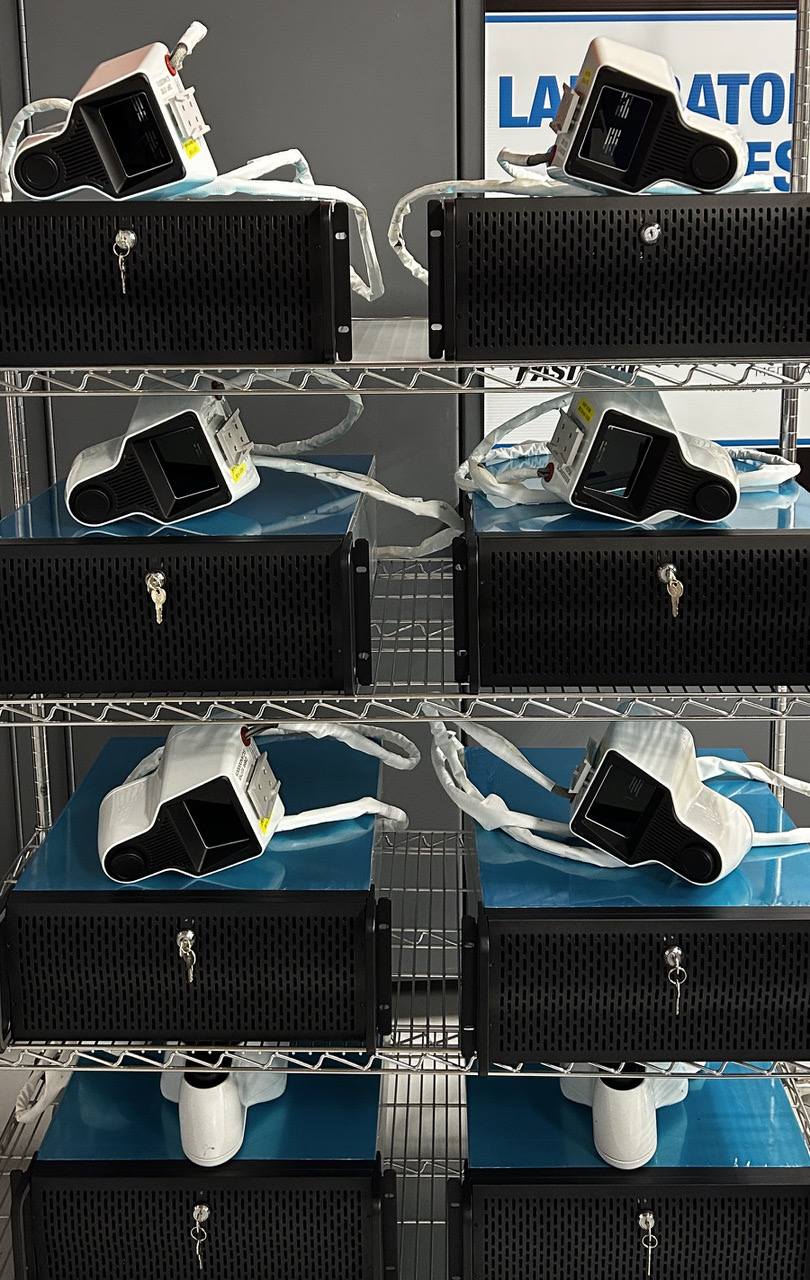
AUSTIN, Texas – July 22, 2026. Orthopedic robots are closer than ever to navigating without pins or arrays: VISIE Inc. today announced that the first production units of its computer vision system have come off the line at its contract manufacturer. The sub-component technology, which lets robotics and navigation manufacturers build robots that see what surgeons see, is now ready for partners to integrate.
VISIE SHIPS: First Production-Built Computer Vision Systems
3 min read Premium comments

The first batch of VISIE's computer vision systems moves directly into verification and validation (V&V), the structured testing that anchors VISIE's imminent FDA submission, with the next units off the line shipping to integration partners as development kits. The system is built under a full quality management system (QMS), the same processes that will govern commercial production, and equipped with an API for rapid integration. It also features VISIE's proprietary Continuous Anatomic Auto Tracking (CAAT) that enables surgical robotic systems to see and continuously track anatomy, without pins, arrays, or manual registration.
"This is much more than another prototype," said Doug Fairbanks, CEO of VISIE Inc. "The last nine months have been transformational. For years, the question was whether this technology could work. Now the question is how fast our partners can integrate it and take it to market. VISIE is ready to ship dev kits."
In a conversation with Orthopedics This Week, Fairbanks credited the pace to a team that came at the problem without any inherited assumptions. "We've taken a lot of people from outside the industry, and they're really good at understanding the concepts of innovation," he said. "If you talk to anybody in the industry, there's often a lingering frustration that a project is three to five years out. To the credit of the team at VISIE, they just don't know that you cannot go full speed all the time. They find the next problem, and they're not going to let it bother them. They're going to solve it and go to the next thing. We're meaningfully different than who we were nine months ago, and on top of being really innovative, here is a company executing on the fundamentals you have to deliver for a medical device.”
The milestone follows a rapid progression: VISIE first demonstrated CAAT in late 2024, executed the first pin-free knee bone cuts using spatial computing in mid-2025, and launched its partner APIs for robot-agnostic integration earlier this year.
"Earlier this year we put out an API, which gives you a digital socket to plug into the software," Fairbanks told OTW. "Now we're saying we're going to do the hardware too, and it's ready to be plugged in. The lingering question is who's first, who is prepared to make the most outsized impact."
The development kits will support partner system integration, technical evaluation, and continued product development. VISIE's computer vision system is not yet FDA cleared and is not available for sale or clinical use.
About VISIE Inc.
Today's navigation systems rely on arrays, reference markers fixed to the patient with pins drilled into bone, plus manual registration of anatomic landmarks before a robot can operate. Throughout the procedure, the robot never sees the patient, only the arrays; if one is bumped, splashed with fluids, or shifts, the system must be re-registered mid-surgery. These steps add time, disrupt workflow, and leave the robot blind to the anatomy itself. VISIE's computer vision system is designed to replace them with continuous, direct 3D vision, allowing robotic systems to see patient anatomy the way surgeons do.
VISIE develops computer vision solutions: a key component of Physical AI that enables surgical robotic and navigation systems to see, understand, and continuously track anatomy in real time, the way surgeons do. Learn more at www.visievision.com.
Author
TH
TJ Halvorson
The De Angelis Group | Orthopedics This Week | MSK Innovations
Why This Matters
Two Perspectives
MBA Lens: Economic and industry impact
VISIE Inc. has achieved a significant commercial milestone by producing its first computer vision systems, ready for integration by robotics and navigation partners. This sub-component technology aims to disrupt the market by enabling pin-free, array-free surgical navigation, potentially streamlining workflows and accelerating adoption of advanced robotic systems. The strategy involves providing development kits to partners, positioning VISIE as a key enabler for next-generation surgical robotics.
- VISIE's strategy is to supply core computer vision technology to robotic manufacturers, enabling pin-free navigation.
- The company is shipping development kits to accelerate partner integration and market entry for next-gen surgical robotics.
PhD Lens: Clinical and outcomes impact
VISIE Inc. has produced its first computer vision systems featuring proprietary Continuous Anatomic Auto Tracking (CAAT), designed to enable surgical robots to continuously track anatomy in real-time. This technology eliminates the need for traditional pins, arrays, or manual registration, providing direct 3D vision. Production units are undergoing verification and validation for FDA submission, while development kits are shipping to integration partners.
- The system utilizes Continuous Anatomic Auto Tracking (CAAT) for real-time, pin-free 3D anatomical tracking by surgical robots.
- Initial production units are undergoing V&V for FDA submission; the system is not yet cleared for clinical use.
React:
Discussion
This is a fascinating development. In my practice we've seen similar outcomes with the revised protocol. The key differentiator seems to be patient selection criteria. Has anyone else noticed the correlation with BMI thresholds?
Great point. I'd push back slightly on the conclusion, the sample size in the cited study is too small to draw population-level inferences. That said, the directional signal is compelling and worth a larger RCT.
We implemented a similar approach last year. Early results are promising but we're still gathering 12-month follow-up data. Happy to share our protocol if anyone is interested.
Join the conversation
Orthopedic professionals are discussing this. Sign in and upgrade to read every comment and add your voice.