
IRVINE, Calif., July 1, 2026 /PRNewswire/ — OrthAlign, Inc., the leader in handheld orthopedic technology, announced the successful completion of the first clinical cases utilizing the Lantern® ASC system, marking a major milestone in bringing advanced surgical technology built for the ambulatory surgery center (ASC) environment.
OrthAlign Announces First Cases with Lantern® ASC System, Eliminating the Economic Barriers of Robotic Technology
2 min read Premium comments
milestoneOrthAlignambulatory surgery centertotal kneeLantern ASC
Designed specifically for the realities of outpatient joint replacement, Lantern ASC delivers the accuracy of advanced enabling technology in a portable, simple, and cost-effective platform that eliminates many of the financial and operational barriers associated with robotic systems.
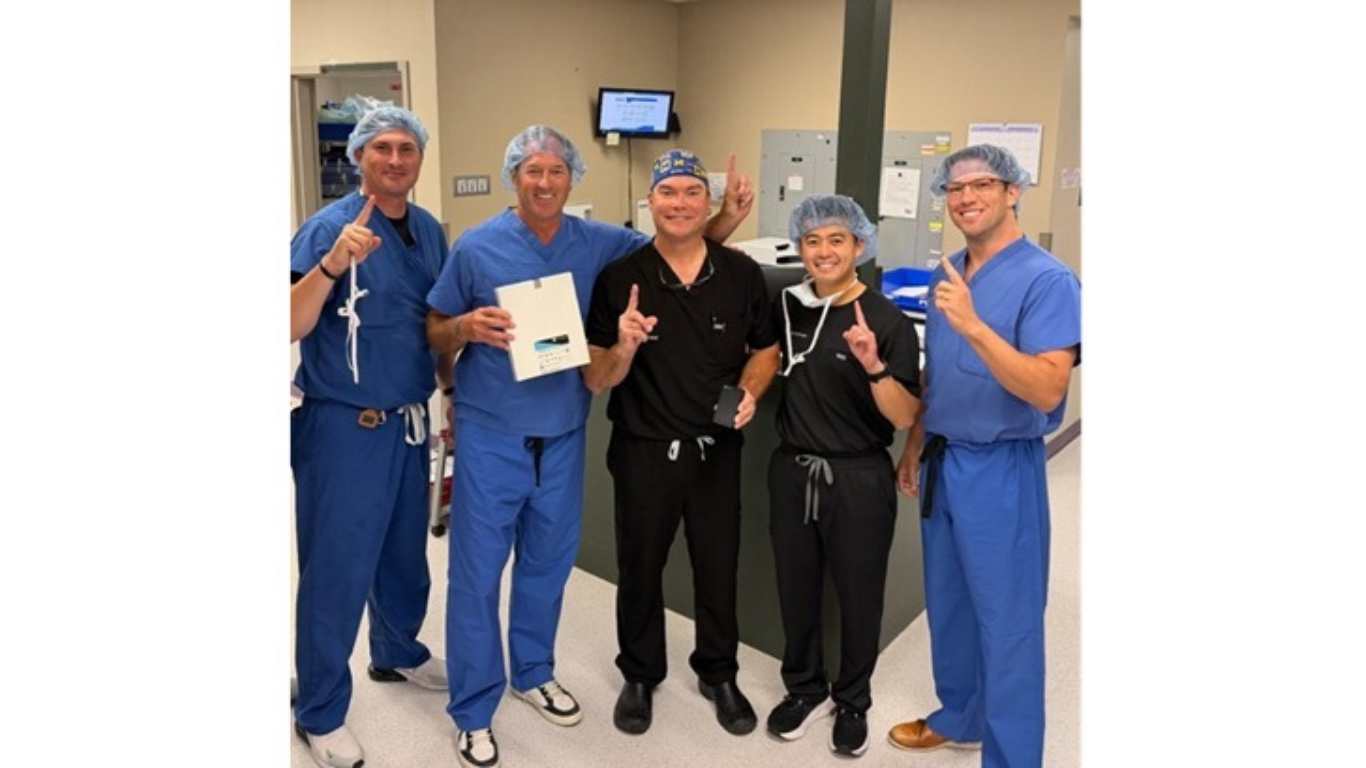
The first cases were performed on June 30th by Dr. Zane Uhland, orthopedic surgeon and ASC owner, who performed 6 total knee procedures with Lantern ASC in a high-efficiency outpatient setting in under 4 hours.
“As both a surgeon and an ASC owner, I’ve always believed that technology should enhance patient care without creating additional complexity for the surgical team or the facility,” said Dr. Zane Uhland. “Lantern ASC delivered exactly that. The system integrated seamlessly into our workflow, provided the real-time data needed to confidently make intraoperative decisions, and allowed us to maintain an efficient surgical schedule without sacrificing precision. In the ASC environment, where efficiency matters, it’s rare to find technology that improves decision-making while fitting so naturally into the way we already operate.”
Unlike robotic platforms that often require substantial capital investments, annual service agreements, dedicated operating room space, and implant volume commitments, Lantern ASC enables facilities to adopt advanced technology without sacrificing financial flexibility. The system is compatible with most major implant systems, allowing the freedom to choose the implant that best serves each patient.
Lantern ASC also scales naturally with procedural volume. Facilities can expand access to enabling technology without purchasing additional capital equipment, incurring escalating service costs, or committing to long-term contractual obligations.
“For too long, advanced technology has required facilities to accept significant financial and operational tradeoffs,” said Eric Timko, Chief Executive Officer of OrthAlign. “Lantern ASC delivers a fundamentally different model, providing the benefits of enabling technology without expensive capital purchases, ongoing service contracts, or implant commitments. By preserving procedural efficiency and avoiding the workflow delays often associated with robotic systems, Lantern ASC helps ASCs treat more patients each day, driving greater revenue, stronger operating margins, and long-term growth while delivering high-quality patient care.”
Built upon the success of over 450,000 OrthAlign cases, Lantern ASC includes a reusable navigation unit paired with a procedural Smart Pack Kit, integrating seamlessly into existing surgical workflows. Lantern ASC delivers real-time navigation for total knee, partial knee, and ligament balancing in primary and revision knee arthroplasty. The system’s minimal footprint, rapid setup, and intuitive workflow allow facilities to maximize throughput and maintain efficient OR utilization providing a critical advantage as total joint procedures continue to migrate to the ASC setting.
With the successful completion of these first clinical cases, OrthAlign continues its mission of making advanced orthopedic technology accessible to every surgeon, facility, and patient.
SOURCE OrthAlign
Author
TH
TJ Halvorson
The De Angelis Group | Orthopedics This Week | MSK Innovations
Why This Matters
Two Perspectives
MBA Lens: Economic and industry impact
OrthAlign's Lantern® ASC system targets the growing outpatient joint replacement market by eliminating significant economic and operational barriers associated with traditional robotic systems. This strategy provides ASCs with advanced navigation technology without substantial capital investment, service contracts, or implant commitments, fostering financial flexibility and scalability. The system aims to drive greater revenue and operating margins for facilities.
- The system's cost-effective, flexible model disrupts the competitive landscape by removing high entry barriers for advanced surgical technology in ASCs.
- By preserving procedural efficiency and allowing implant choice, Lantern ASC enhances facility throughput and financial performance, supporting long-term growth.
PhD Lens: Clinical and outcomes impact
The Lantern® ASC system is a handheld orthopedic technology designed for outpatient joint replacement, providing real-time navigation and data for total knee, partial knee, and ligament balancing in primary and revision arthroplasty. Built on prior OrthAlign success, it integrates a reusable navigation unit with a Smart Pack Kit. Initial clinical cases demonstrated efficient workflow and precision in total knee procedures.
- The system offers real-time intraoperative data, enabling confident surgical decisions and maintaining precision in a high-efficiency outpatient setting.
- Its minimal footprint, rapid setup, and intuitive workflow are designed to maximize operating room throughput and utilization for various knee arthroplasty procedures.
React:
Discussion
This is a fascinating development. In my practice we've seen similar outcomes with the revised protocol. The key differentiator seems to be patient selection criteria. Has anyone else noticed the correlation with BMI thresholds?
Great point. I'd push back slightly on the conclusion, the sample size in the cited study is too small to draw population-level inferences. That said, the directional signal is compelling and worth a larger RCT.
We implemented a similar approach last year. Early results are promising but we're still gathering 12-month follow-up data. Happy to share our protocol if anyone is interested.
Join the conversation
Orthopedic professionals are discussing this. Sign in and upgrade to read every comment and add your voice.