
LAUSANNE, Switzerland, July 6, 2026
Neo Medical Introduces Instant MIS Access™: A New Platform Designed to Address the Operational Barriers Limiting Minimally Invasive Spine Surgery
3 min read Premium comments
launchminimally invasive surgerylumbarNeo Medical SANeo Instant MIS Accessposterior thoracicsacral
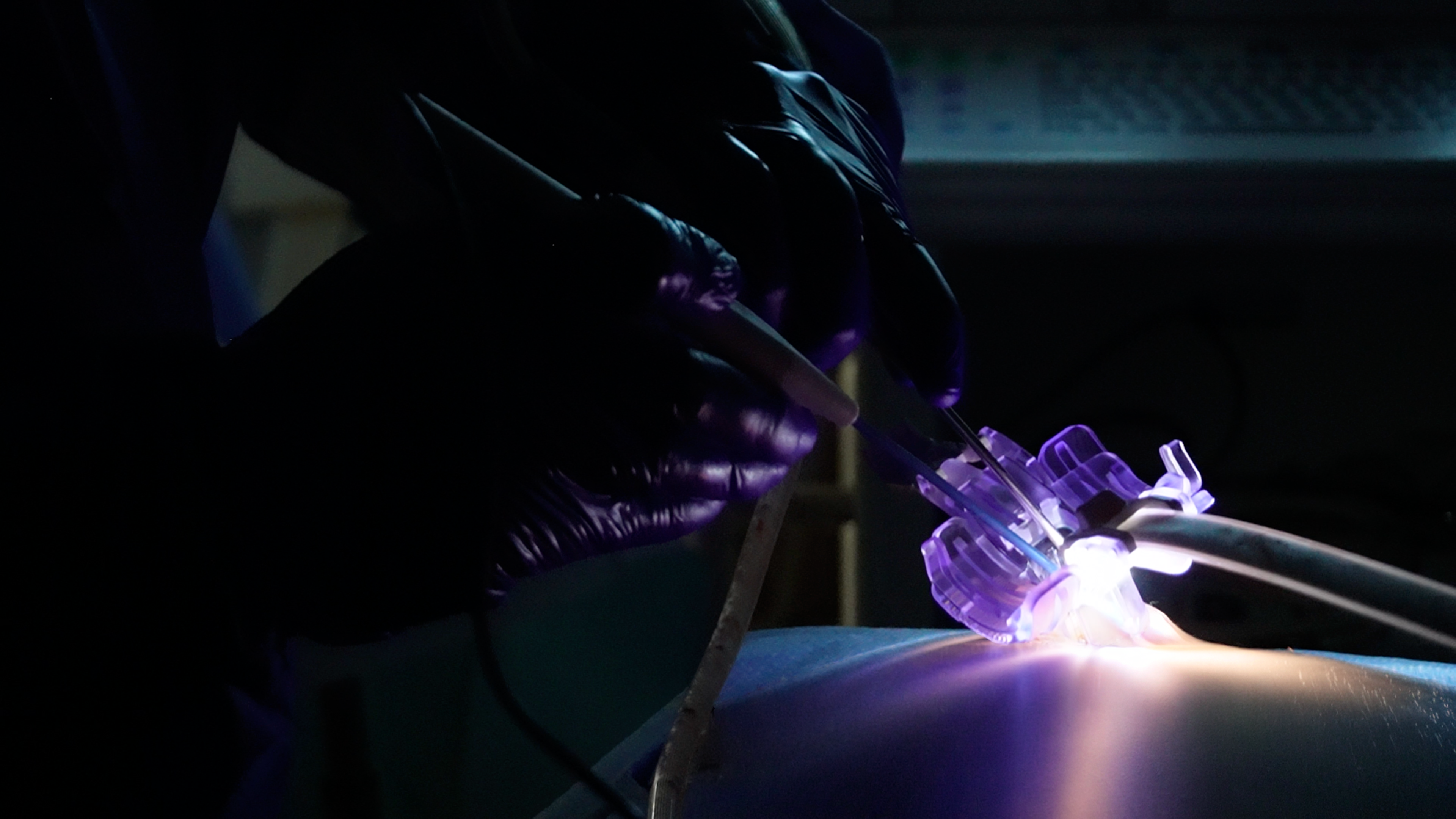
Neo Medical SA, a Swiss technology company specializing in spine surgery, today announced the U.S. commercial launch of the Neo Instant MIS Access™ platform for posterior thoracic, lumbar, and sacral minimally invasive surgery (MIS) procedures, designed to address many of the operational barriers that continue to limit MIS’s wider adoption.
The launch marks a significant expansion of Neo Medical’s spine platform, addressing one of the persistent barriers to broader MIS adoption: the operational infrastructure required to deliver minimally invasive procedures consistently across surgical settings. It represents a further step toward Neo’s vision of a fully integrated, sterile-ready procedural ecosystem spanning access, instrumentation, advanced materials, force-control technologies, and intraoperative data.
MIS techniques are associated with reduced tissue disruption, shorter recovery pathways in selected patients, and potential operating room efficiencies.1,2 Despite decades of clinical advancement in minimally invasive spine surgery, operational infrastructure is a significant constraint to its wider adoption.
Traditional MIS access often depends on capital equipment, reusable instrument inventories, reprocessing cycles, table-mounted systems, vendor logistics, and workflow coordination that can limit scalability across hospitals and ambulatory surgery centers (ASCs).
Neo's new Instant MIS Access™ platform was designed specifically to remove those barriers.
"The future of minimally invasive spine surgery is no longer defined by surgical technique alone," said Vincent Lefauconnier, Co-Founder and CEO of Neo Medical. “It is defined by how efficiently healthcare systems can deliver those procedures at scale. We believe the next frontier in MIS adoption is operational simplicity, and Instant MIS Access was designed specifically to address that challenge."
Internal value models indicate that the Neo Instant MIS Access™ platform requires no capital investment, can be prepared in less than 2 minutes, and may reduce per-case operational burden by up to $2,500 compared with conventional MIS access infrastructure. In turnover-constrained facilities, the system may also support increases in operating room throughput and procedural capacity.
“The Neo system integrates seamlessly into our workflow for both the surgical team and me,” said Dr. Robert Eastlack, Head of the Division of Spine Surgery at Scripps Clinic. “It provides stable access and clear visualization through a small incision without adding complexity in the operating room or during turnover. The setup is straightforward, the workflow is intuitive, and it addresses many of the practical barriers that have traditionally limited broader adoption of MIS.”
The launch extends Neo Medical’s strategy of reducing procedural complexity in spine surgery through sterile-ready technologies, modular instrumentation, advanced materials, proprietary Force Control Technology™, and intraoperative augmented reality capabilities.
“We are grateful to the surgeon partners who helped bring this system to market, including Dr. Juan Valdivia Valdivia, Dr. Ali Mesiwala, Dr. Robert Eastlack, and Dr. Tyler Carson,” added Lefauconnier. “Their clinical insight and collaboration were essential to developing a system designed around the realities of spine care, not only what happens in surgery, but what it takes for teams and institutions to deliver MIS efficiently, consistently, and at scale.”
The system is commercially available in the United States, with launches in Europe and other international markets expected to follow, subject to applicable regulatory processes.
About Neo Medical
Neo Medical SA is a Swiss technology company specializing in spine surgery.
The company develops an integrated procedural architecture designed to reduce complexity, support reproducibility, and advance value-based care in spine surgery.
Neo Medical’s platform combines sterile-ready technologies, modular instrumentation, advanced materials, force control principles, and intraoperative data capabilities to support surgeons, hospitals, and patients across surgical spine care.
Disclosure
Dr. Robert Eastlack is a paid consultant to Neo Medical SA.
Media Contact
Max Howells
max.howells@neo-medical.com
+44 7985 695 215
References
1. Zhou J, et al. Incidence of surgical site infection after spine surgery: a systematic review and meta-analysis. Spine (Phila Pa 1976). 2020;45(3):208-216.
2. Pokorny G, et al. Minimally invasive versus open surgery for degenerative lumbar pathologies: a systematic review and meta-analysis. Eur Spine J. 2022 Oct;31(10):2502-2526.
Author
TH
TJ Halvorson
The De Angelis Group | Orthopedics This Week | MSK Innovations
React:
Discussion
This is a fascinating development. In my practice we've seen similar outcomes with the revised protocol. The key differentiator seems to be patient selection criteria. Has anyone else noticed the correlation with BMI thresholds?
Great point. I'd push back slightly on the conclusion, the sample size in the cited study is too small to draw population-level inferences. That said, the directional signal is compelling and worth a larger RCT.
We implemented a similar approach last year. Early results are promising but we're still gathering 12-month follow-up data. Happy to share our protocol if anyone is interested.
Join the conversation
Orthopedic professionals are discussing this. Sign in and upgrade to read every comment and add your voice.