
A Pioneer of Minimally Invasive Spine Care, Teacher to the World, and Physician Who Never Lost Sight of His Patients
Dr. Gabriele P. Jasper, MD (1955–2026)
5 min read Premium comments
Spine SurgeryGabriele JasperJasper Spine Instituteplane crashendoscopic spineBrick Township, New Jersey
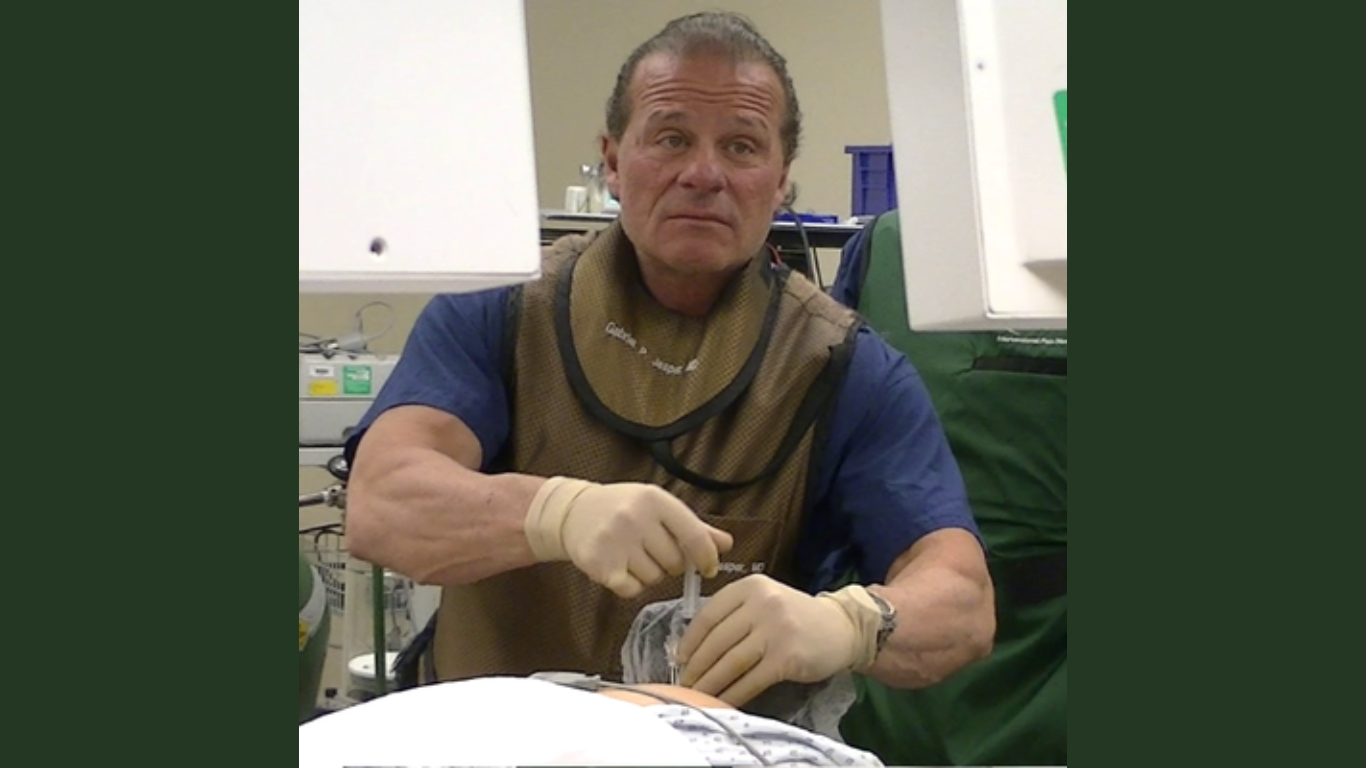
The world of spine medicine lost one of its most recognizable leaders and innovators on July 13, 2026, when Dr. Gabriele P. Jasper was killed in the tragic crash of his Piper Aerostar shortly after takeoff from Adirondack Regional Airport in Saranac Lake, New York. He was 70 years old.
The tragedy was made even more heartbreaking because Dr. Jasper did not die alone. Also aboard the aircraft were his daughter, Gabriella Hillgrube, 33, and his two-year-old granddaughter, Giuliana, representing three generations of one family whose lives ended together in a matter of moments. The National Transportation Safety Board continues to investigate the cause of the accident.
For thousands of patients, however, Dr. Jasper will not be remembered for the way he died, but for the way he practiced medicine — with relentless optimism that spine pain could be treated with less invasive techniques, shorter recoveries, and greater compassion.
An International Medical Heritage
Medicine was woven into the fabric of Dr. Jasper's life long before he entered an operating room.
Born into a remarkable medical family, he followed the example of his father, renowned urologist Dr. Philip Jasper, while growing up surrounded by physicians. His siblings also pursued careers in medicine, creating a family whose commitment to patient care spanned multiple specialties.
Educated first in Bologna, Italy, Dr. Jasper attended the historic University of Bologna, one of the world's oldest medical schools, before returning to the United States for postgraduate training.
His clinical education was unusually broad. Rather than following a single specialty, he completed training in:
General Surgery
Trauma Surgery
Anesthesiology
Pain Medicine
That multidisciplinary background would later become one of his defining strengths, allowing him to understand spinal disorders from surgical, neurological, anesthetic, and pain-management perspectives simultaneously.
Finding His Calling
Although board-certified in anesthesiology, Dr. Jasper increasingly gravitated toward chronic spinal pain.
Working at Community Medical Center in Toms River during the 1990s, he became deeply involved in pain medicine at a time when the specialty itself was rapidly evolving.
Rather than accepting that chronic back pain inevitably led to large open spinal operations, he became fascinated by emerging endoscopic techniques capable of treating carefully selected patients through dramatically smaller surgical corridors.
In 2002 he founded what would become the Jasper Spine Institute in Brick Township, New Jersey.
His vision was ambitious but straightforward: Treat spinal disorders effectively while helping patients avoid unnecessary open surgery whenever possible.
One of the Early Champions of Endoscopic Spine Surgery
Long before endoscopic spine surgery became fashionable, Dr. Jasper was among its most energetic advocates.
He devoted his career to refining minimally invasive procedures for:
Lumbar spinal stenosis
Herniated discs
Degenerative disc disease
Sciatica
Chronic axial back pain
He became particularly known for open endoscopically assisted tubular retractor procedures that emphasized smaller incisions, reduced blood loss, less postoperative narcotic use, and faster recovery compared with traditional open operations.
Not every spine surgeon agreed with every aspect of his philosophy — as is often true with innovators who challenge conventional practice — but few questioned his technical skill or his passion for advancing less invasive treatment options.
A Teacher to Surgeons Around the World
Dr. Jasper's influence extended far beyond New Jersey. Throughout his career he traveled extensively, teaching minimally invasive endoscopic spine procedures to physicians in Europe, Asia, and throughout the United States.
According to colleagues, he trained hundreds of surgeons and regularly lectured at universities and professional meetings around the world. He also authored numerous publications on endoscopic spine surgery and became a respected speaker in the field.
Former colleague Chris Alderucci perhaps summarized his professional legacy best: "There will be many surgeons and patients from around the world that will be sad to hear this news."
Recognition From His Peers
Perhaps the clearest acknowledgment of his influence came in 2015, when Dr. Jasper received the prestigious Parviz Kambin Award in Mainz, Germany.
Named after the surgeon widely regarded as the father of transforaminal endoscopic spine surgery, the award recognizes outstanding scientific and educational contributions to the field.
According to his family and professional biography, Dr. Jasper became the first interventional pain physician ever to receive this distinction — a reflection of how successfully he bridged pain medicine and minimally invasive spine surgery.
Patients Came First
Awards and innovation mattered to Dr. Jasper, but those who worked beside him consistently point to another defining characteristic: his devotion to patients.
His practice philosophy emphasized listening carefully, understanding each patient's individual story, and tailoring treatment rather than defaulting to major surgery.
Former colleagues described him as someone who simply refused to give up on patients living with debilitating pain.
That philosophy helped build the Jasper Spine Institute into one of the region's best-known specialty spine centers.
Living Life at Full Speed
Medicine was only one part of Dr. Jasper's identity. Friends remember someone who approached life with enormous enthusiasm. He loved:
Flying airplanes
Racing automobiles
Riding motorcycles
Boating
Fishing
Formula One racing
The Adirondack Mountains
His obituary recalls the advice given by his father: "Work hard, play hard, and love your life." By all accounts, Dr. Jasper embraced those words completely.
A Family Man Above All
Despite his international reputation, those closest to him consistently describe family as the center of his world.
His daughter Gabriella worked alongside him at the Jasper Spine Institute, and colleagues noted how deeply he treasured spending time with both her and his young granddaughter. The loss of all three generations simultaneously transformed what would have been a tragic aviation accident into an almost unimaginable family catastrophe.
A Lasting Legacy
Innovators in medicine are often remembered for a procedure, an instrument, or a publication. Dr. Gabriele Jasper's legacy is broader than that. He helped accelerate acceptance of minimally invasive endoscopic spine procedures during a period when many surgeons remained skeptical.
He educated physicians across continents. He cared for thousands of patients suffering from chronic spinal pain.
And perhaps most importantly, he demonstrated that technical innovation and personal compassion need not exist separately.
Today, the Jasper Spine Institute has pledged to continue the work he began, assuring patients that the mission he created — providing exceptional, minimally invasive spine care — will endure.
For many physicians, patients, and trainees around the world, Dr. Gabriele Jasper will be remembered not simply as an accomplished spine specialist, but as one of the early ambassadors of endoscopic spine surgery — a physician who believed there was almost always a better, less invasive way to help someone walk out of pain and back into life.
Author
Why This Matters
Two Perspectives
MBA Lens: Economic and industry impact
Dr. Gabriele Jasper significantly influenced the market adoption of minimally invasive endoscopic spine surgery, challenging traditional open surgical practices. His founding of the Jasper Spine Institute in 2002 demonstrated a strategic vision to offer less invasive alternatives, positioning the institute as a specialty center. He actively educated surgeons globally, accelerating the diffusion of these techniques and shaping the competitive landscape for spinal care.
- Jasper Spine Institute's strategy focused on avoiding unnecessary open surgery, emphasizing minimally invasive techniques.
- Dr. Jasper's global teaching efforts facilitated widespread adoption of endoscopic spine procedures, impacting market growth.
PhD Lens: Clinical and outcomes impact
Dr. Gabriele Jasper was a pioneer in refining minimally invasive endoscopic spine procedures for conditions like lumbar stenosis and herniated discs. His multidisciplinary background informed a comprehensive understanding of spinal disorders, leading to techniques emphasizing smaller incisions, reduced blood loss, and faster recovery. He received the Parviz Kambin Award for his scientific and educational contributions, bridging pain medicine and advanced surgical approaches.
- He developed open endoscopically assisted tubular retractor procedures, improving patient outcomes with less invasiveness.
- His clinical education in general surgery, trauma, anesthesiology, and pain medicine provided a unique perspective on spinal disorder treatment.
React:
Discussion
This is a fascinating development. In my practice we've seen similar outcomes with the revised protocol. The key differentiator seems to be patient selection criteria. Has anyone else noticed the correlation with BMI thresholds?
Great point. I'd push back slightly on the conclusion, the sample size in the cited study is too small to draw population-level inferences. That said, the directional signal is compelling and worth a larger RCT.
We implemented a similar approach last year. Early results are promising but we're still gathering 12-month follow-up data. Happy to share our protocol if anyone is interested.
Join the conversation
Orthopedic professionals are discussing this. Sign in and upgrade to read every comment and add your voice.