
GAINESVILLE, Fla., July 8, 2026 /PRNewswire/ — Advita Ortho, a global medical technology leader, announced a series of new peer-reviewed research supporting the continued evolution of its Newton® knee balancing intelligence, advancing the potential for more predictive, measurement-based decision-making in total knee arthroplasty.
Advita Ortho Expands Scientific Evidence Advancing the Future of Predictive Planning for Total Knee Arthroplasty
3 min read Premium comments
Advita Orthototal knee arthroscopyNewton knee balancing intelligencemeasurement-basedsoft tissue dynamics
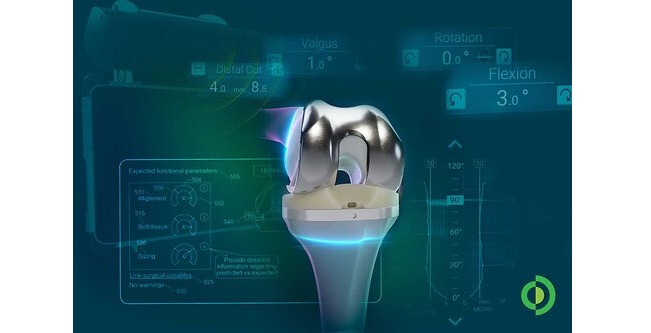
Through real-time measurement of ligament behavior across the full range of motion, Newton converts soft tissue dynamics into actionable intraoperative guidance, supporting more consistent and reproducible surgical execution.
“This body of research demonstrates how objective soft tissue data can be processed to enhance the planning of patient-specific targets,” said Laurent Angibaud, Senior Vice President, Advanced Surgical Technologies at Advita Ortho. “As this dataset expands and is reinforced by a growing volume of peer-reviewed research, it becomes increasingly powerful. Backed by our growing intellectual property portfolio, we are enabling more consistent, reproducible planning today, while laying the groundwork for predictive decision-making in the future.”
Across recent publications in leading journals, including the Journal of Arthroplasty, Journal of Orthopaedic Research and Arthroplasty Today, studies demonstrate the impact of integrating real-time dynamic soft tissue measurements into surgical planning. One study established the benefit of considering the soft-tissue laxity as an input to fuel the planning algorithm, while additional research demonstrated the potential for machine learning models to support predictive decisions, including tibial insert selection and individualized balancing strategies.
A newly introduced classification framework further advances this work, providing a structured method to define knee phenotype based on dynamic intraoperative measurements. Together, the expanding evidence base illustrates how objective measurement, machine learning and standardized frameworks can drive more consistent and personalized outcomes in total knee arthroplasty.
“For surgeons, achieving the right balance in a knee replacement remains one of the most complex aspects of the procedure,” said James Huddleston, MD, of Stanford University. “While real-time, objective data across the range of motion from the Newton solution already provides a clearer understanding of each patient’s knee and supports more reproducible decisions, this body of research helps establish the foundation for translating those insights into self-generated patient-specific planning.”
Newton Knee soft tissue balancing is part of Advita Ortho’s Active Intelligence® ecosystem, which provides personalized planning, surgical guidance and data insights across total joint procedures. As the platform evolves, Advita aims to continue to expand its growing data foundation to support future advancements in smart planning, predictive analytics and surgical decision support.
For more information, visit www.AdvitaAI.com.
Alexa K. Pius, Prudhvi T. Chinimilli, Laurent D. Angibaud, Amaury Jung, Corey A. Jackson, James I. Huddleston, Unsupervised Machine Learning Drives Dynamic Alignment Classification in Navigated Total Knee Arthroplasty, The Journal of Arthroplasty, 2026, in press, doi: 10.1016/j.arth.2026.04.091
Chinimilli PT, Angibaud LD, Jung A, Huddleston JI 3rd. Machine Learning Based Prediction of Tibial Insert Thickness in Total Knee Arthroplasty From Intraoperative Knee Joint Laxity Data. J Orthop Res. 2026 Feb;44(2):e70155. doi: 10.1002/jor.70155\
Chinimilli PT, Angibaud LD, Jung A, Naji O, Huddleston JI 3rd. Evaluating Ligament Laxity Profiles Across Full Range of Motion in Total Knee Arthroplasty: Insights Into the Tibia-First Technique. J Orthop Res. 2026 Mar;44(3):e70181. doi: 10.1002/jor.70181
Sodhi N, Angibaud LD, Chinimilli PT, Kerveillant F, Huddleston JI 3rd. Full Motion Arc, Laxity-Based Planning for Total Knee Arthroplasty: The Next Milestone for Enabling Technology. Arthroplasty Today. 2026 Mar 2;38:101959. doi: 10.1016/j.artd.2026.101959
US12,239,384: Computer-based platform for implementing an intra-operative surgical plan during a total joint arthroplasty. Issued on March 4, 2025
US12,383,338: Computer-based platform for implementing an intra-operative surgical plan during a total joint arthroplasty. Granted on August 12, 2025
US12,544,141: Computer-based platforms for implementing a weight-based personalized implant planning during a total joint arthroplasty and methods of use thereof. Granted on February 10, 2026
About Advita Ortho
Advita Ortho is a global medical device company committed to advancing patients’ lives through innovative orthopedic solutions. We specialize in high-quality implants and a comprehensive suite of integrated surgical technologies that are powered by data, artificial intelligence and machine learning. Offering trusted leadership and clinical expertise, Advita Ortho is uniquely positioned to advance mobility and improve lives worldwide. Learn more at www.advita.com and connect with us on LinkedIn, X and Instagram.
SOURCE Advita Ortho, LLC
Author
TH
TJ Halvorson
The De Angelis Group | Orthopedics This Week | MSK Innovations
Why This Matters
Two Perspectives
MBA Lens: Economic and industry impact
Advita Ortho is strategically expanding the scientific evidence for its Newton® knee balancing intelligence, aiming to solidify its market position in total knee arthroplasty. This initiative supports a shift towards predictive, measurement-based decision-making, enhancing surgical consistency and reproducibility. By integrating real-time soft tissue data and machine learning, Advita is building a robust data foundation for future smart planning and predictive analytics, strengthening its competitive edge and driving adoption.
- Company strategy focuses on leveraging peer-reviewed research to validate and advance its Active Intelligence® ecosystem.
- This approach aims to enable more consistent, reproducible planning, laying groundwork for future predictive decision-making and market leadership.
PhD Lens: Clinical and outcomes impact
Advita Ortho's Newton® system utilizes real-time dynamic soft tissue measurements to provide intraoperative guidance, converting ligament behavior across the full range of motion into actionable data. Recent peer-reviewed studies demonstrate the system's impact, showing benefits of integrating soft-tissue laxity into planning algorithms and the potential for machine learning to predict tibial insert selection and individualized balancing strategies, enhancing TKA outcomes.
- Mechanism involves objective measurement of dynamic soft tissue laxity to inform surgical planning and execution.
- Evidence supports machine learning for predictive decisions and a new classification framework for knee phenotypes based on intraoperative data.
React:
Discussion
This is a fascinating development. In my practice we've seen similar outcomes with the revised protocol. The key differentiator seems to be patient selection criteria. Has anyone else noticed the correlation with BMI thresholds?
Great point. I'd push back slightly on the conclusion, the sample size in the cited study is too small to draw population-level inferences. That said, the directional signal is compelling and worth a larger RCT.
We implemented a similar approach last year. Early results are promising but we're still gathering 12-month follow-up data. Happy to share our protocol if anyone is interested.
Join the conversation
Orthopedic professionals are discussing this. Sign in and upgrade to read every comment and add your voice.