
Location, Location: Why Your ACDF Graft’s Real Estate Matters
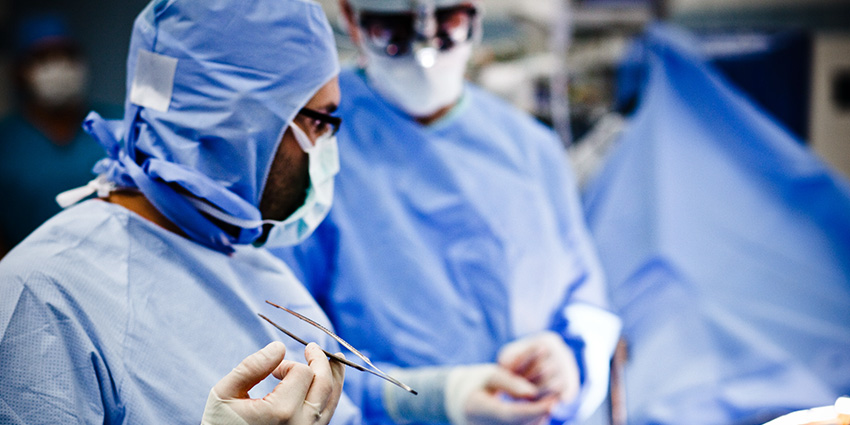
If you’ve ever stood at the C-arm wondering “Is that graft a hair too posterior?,” congratulations — you’re already thinking like the authors of this study.
Anterior cervical discectomy and fusion (ACDF) may be the most familiar play in the cervical spine playbook, but pseudarthrosis remains its most stubborn plot twist. Despite solid implants, pristine technique, and a textbook closure, some fusions just don’t fuse. So, what gives?
According to one research team, the answer might be surprisingly simple: where you park the graft.
Millimeters That Matter
This case-control study examined 118 patients undergoing single- and multi-level ACDF, totaling 221 fusion levels. Using dynamic radiographs, the authors classified each level as fused or meeting the criteria for pseudarthrosis.
Then came the key question: Was the interbody graft sitting more anterior — or more posterior — within the disc space?
To keep things honest, the team brought in multivariable regression and propensity score matching, controlling for demographics, surgical variables, and implant factors. In other words, this wasn’t just eyeballing lateral X-rays over coffee.
Posterior Grafts, Anterior Problems
Here’s where it gets interesting:
- Only 62% of levels fused, while 38% met criteria for pseudarthrosis (a sobering reminder we’re all human).
- Fused levels had more free space posterior to the graft — about 1mm more, which in spine surgery is basically an eternity.
- Every extra millimeter of posterior free space reduced the odds of pseudarthrosis.
After matching anterior and posterior graft placements apples-to-apples:
- Anterior grafts: approximately 29% pseudarthrosis
- Posterior grafts: approximately 52% pseudarthrosis
That’s not subtle. That’s a warning shot.
Why might this matter biomechanically?
While the study didn’t dive deep into mechanics, the implications are hard to ignore:
- An anteriorly placed graft may better resist flexion forces
- It may promote more favorable load sharing across the disc space
- A posterior graft, meanwhile, may invite micromotion — the sworn enemy of fusion
In short: posterior grafts may be setting the stage for motion where you want rigidity.
The Take-Home Message
When it comes to ACDF, millimeters matter.
This study suggests that posterior graft placement significantly increases the risk of pseudarthrosis, while anterior positioning may quietly boost fusion success — in both single- and multi-level cases.
So next time you’re tapping that graft into place, remember: anterior is not just cosmetic — it may be biologically strategic.
Origin Study Title: The Effect of Positional Graft Placement on Pseudarthrosis Rates in Anterior Cervical Discectomy and Fusion
Authors: Shabani, Soroush B.S.; Yoshida, Brandon M.D.; Ton, Andy M.D.; Karakash, William B.S.; Avetisian, Henry B.S.; Rusu, Daniel B.S.; Lindgren, Aidan B.S.; Mills, Emily M.D.; Wang, Jeffrey C. M.D.; Hah, Raymond J. M.D.; Alluri, Ram K. M.D.
Author
Discussion
This is a fascinating development. In my practice we've seen similar outcomes with the revised protocol. The key differentiator seems to be patient selection criteria. Has anyone else noticed the correlation with BMI thresholds?
Great point. I'd push back slightly on the conclusion, the sample size in the cited study is too small to draw population-level inferences. That said, the directional signal is compelling and worth a larger RCT.
We implemented a similar approach last year. Early results are promising but we're still gathering 12-month follow-up data. Happy to share our protocol if anyone is interested.
Join the conversation
Orthopedic professionals are discussing this. Sign in and upgrade to read every comment and add your voice.