
Where’s the Bleeding Edge of Regenerative Medicine? TOBI!!
If you’re looking for the bleeding edge of regenerative medicine—and maybe also a little bit of actual bleeding during a cadaver lab—you might want to book your flight to Las Vegas. The 16th Annual TOBI Conference is coming to Caesars Palace, August 21–23, 2025, and it’s not your typical stuffy medical meeting.
TOBI—short for The Orthobiologic Institute—is where science meets spine, tendons meet technology, and doctors meet…blackjack tables. And this year, TOBI isn’t going it alone. The 2025 conference is teaming up with The American Society of Interventional Pain Physicians, turning this into a mega-gathering of specialists who believe healing can come from your own cells, not just a scalpel.
Meet the Maverick Behind the Movement
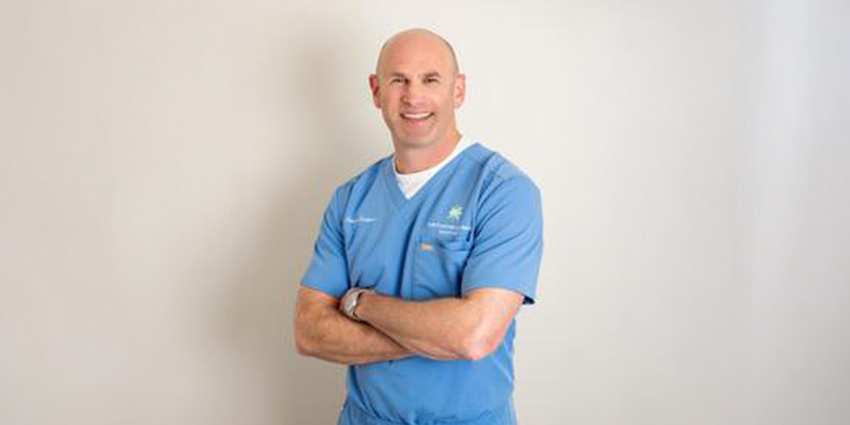
Dr. Steven Sampson, founder of The Orthohealing Center in Los Angeles and the mastermind behind TOBI, never set out to start a conference. He just wanted better options for his patients. “Nineteen years ago,” he told OTW, “I was disappointed in the types of treatments available for orthopedic injuries.”
Then came his eye-opening stint in Spain, treating elite World Cup athletes and learning about something revolutionary at the time—blood-spinning. His first patient? A U.S. athlete with an medial collateral ligament (MCL) tear who recovered in half the expected time thanks to platelet-rich plasma (PRP). “I was hooked,” he said.
But back home? Crickets. “None of the medical societies were talking about it,” said Sampson. So, like any good disruptor, he went rogue: started a blog, shared what he was seeing, and eventually launched a one-man conference that would evolve into the premier regenerative medicine gathering it is today.
Not Just Lectures—It’s Hands-On Healing
TOBI is where orthopedic surgeons, pain docs, sports med specialists, and even military physicians converge to learn, teach, and challenge the boundaries of biologic healing. And it’s not just about sitting through slides.
Thursday, August 21 kicks off with a full-day, hands-on cadaver lab—a visceral way to learn the latest techniques in MSK ultrasound, bone marrow aspirate concentrate, microfragmented adipose tissue (MFAT), and intraosseous and spine interventions. It’s surgical school meets science fair.
What’s on the TOBI Main Stage?
Each day is packed with talks designed to provoke thought, share breakthroughs, and maybe ruffle a few regulatory feathers.
Friday, August 22 – Where Science Gets Personal
- 8:10 a.m. – The Future Role of Regenerative Medicine: Where are we headed—and who’s driving?
- 8:25 a.m. – Orthobiologic Injections for Knee OA: Research meets real-world knees.
- 9:15 a.m. – Choosing the Right PRP Kit: Because not all kits are created equal.
- 9:45 a.m. – PRP for Hip Labral Tears: Is the hip hype real?
Saturday, August 23 – Healing Gets Weird (and Wonderful)
- 8:05 a.m. – Juicing the Platelets: Lysate prep for lumbar disc herniations. Yes, it’s a thing.
- 8:50 a.m. – Gut Instincts: Your microbiome might just be whispering to your spine.
- 10:50 a.m. – Tackling Chondral and Subchondral Challenges with PRP: Deep cartilage talk, deeply interesting.
- 1:00 p.m. – Fueling Recovery: Nutrition as a regenerative co-therapist.
- 1:30 p.m. – Exosomes 101: Tiny packages, big potential.
Vegas Vibes, Clinical Truths
TOBI may be hosted in the glitz of Caesars Palace, but the science is serious. Regulatory hurdles? Check. Controversial protocols? Absolutely. But also: collaboration, creativity, and real camaraderie.
And Sampson’s advice for making the most of TOBI? “Talk to each other.” Whether you’re at the buffet, in a breakout session, or navigating the cadaver lab, the magic happens in the conversations.
So, whether you’re a veteran of the regenerative frontier or just curious about how to spin blood into healing gold, TOBI 2025 might be the most clinically productive—and unexpectedly fun—thing you do all year.
For more information about the upcoming TOBI Conference, click here.
Author
Discussion
This is a fascinating development. In my practice we've seen similar outcomes with the revised protocol. The key differentiator seems to be patient selection criteria. Has anyone else noticed the correlation with BMI thresholds?
Great point. I'd push back slightly on the conclusion, the sample size in the cited study is too small to draw population-level inferences. That said, the directional signal is compelling and worth a larger RCT.
We implemented a similar approach last year. Early results are promising but we're still gathering 12-month follow-up data. Happy to share our protocol if anyone is interested.
Join the conversation
Orthopedic professionals are discussing this. Sign in and upgrade to read every comment and add your voice.