
FDA Grants 510(k) Clearance for MRI-Compatible Interbody Implant
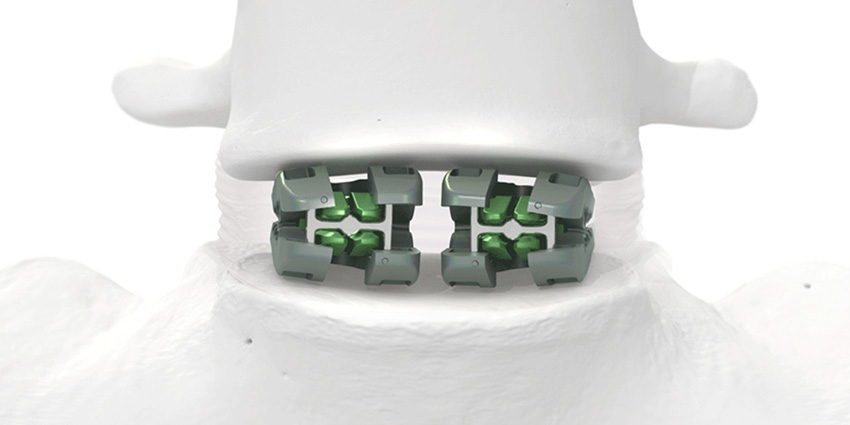
The U.S. Food and Drug Administration (FDA) has granted 510(k) clearance for the MRI-compatible FlareHawk Interbody Fusion System, developed by Accelus, a privately held medical technology company specializing in spinal implants.
According to the FDA’s 510(k) summary, the FlareHawk implant is indicated for spinal intervertebral body fusion procedures using autogenous bone graft and/or allogeneic bone graft composed of cancellous and/or corticocancellous bone. The device is intended for use in skeletally mature individuals with degenerative disc disease (DDD) at one or two contiguous levels from L2 to S1, following a discectomy. Patients may also present with up to Grade 1 spondylolisthesis or retrolisthesis at the affected level(s).
MRI Compatibility and Safety Profile
A key feature of this latest clearance is the device’s compatibility with magnetic resonance imaging (MRI). Extensive bench performance testing and validated modeling studies were conducted to evaluate magnetic field interactions, image artifacts, and radiofrequency (RF)-induced heating. These analyses included worst-case scenario simulations to ensure safety in clinically relevant muscle-like and bone tissues during MRI exposure.
The FlareHawk device is now cleared for safe MRI scanning under specific conditions:
- Static Magnetic Field Strength: 1.5T or 3.0T
- RF Excitation: Circularly Polarized (CP)
- RF Transmit Coil Type: Volume RF body coil
- Operating Mode: Normal Operating Mode
- Maximum Whole-Body SAR: 2 W/kg
- Maximum Head SAR: 3.2 W/kg
- Scan Duration: Up to 60 minutes of continuous scanning
- MR Image Artifact: Presence of the implant may produce localized image artifact
Substantial Equivalence and Regulatory Pathway
The FlareHawk system qualified for 510(k) clearance under the criteria of substantial equivalence to a previously cleared predicate device of the same name. This regulatory pathway permits earlier market entry for devices that demonstrate comparable safety and effectiveness to existing technologies.
Executive Commentary
Accelus President and CEO Kevin McGann emphasized the importance of this clearance in the context of patient care and surgical decision-making:
“The ability to confidently undergo MRI scans is an important factor for both patients and surgeons when selecting spinal implants,” McGann stated. “This additional clearance reinforces our commitment to offering safe, high-quality solutions that address the real-world needs of the spine surgery community.”
A Step Forward in Spine Care
The FDA’s clearance of the MRI-compatible FlareHawk implant reflects the growing demand for advanced, imaging-friendly interbody devices in spinal surgery. By combining structural performance with MR safety, Accelus continues to expand its portfolio of next-generation solutions designed to improve clinical outcomes and procedural flexibility.
Author
Discussion
This is a fascinating development. In my practice we've seen similar outcomes with the revised protocol. The key differentiator seems to be patient selection criteria. Has anyone else noticed the correlation with BMI thresholds?
Great point. I'd push back slightly on the conclusion, the sample size in the cited study is too small to draw population-level inferences. That said, the directional signal is compelling and worth a larger RCT.
We implemented a similar approach last year. Early results are promising but we're still gathering 12-month follow-up data. Happy to share our protocol if anyone is interested.
Join the conversation
Orthopedic professionals are discussing this. Sign in and upgrade to read every comment and add your voice.