
Westborough, Massachusetts-based Miach Orthopaedics, Inc. made news at the Orthopaedic Summit Evolving Techniques Conference 2024 by announcing that the company’s Bridge-Enhanced Anterior Cruciate Ligament Restoration (BEAR) Implant not only surpassed a 4,000th patient milestone, but also achieved key end points in a recently released clinical trial.
Miach Orthopaedics: 4,000 Patients and Counting
2 min read Premium comments
#anteriorcruciateligament#bridgeenhancedaclrestoration#miachorthopaedicsSecondary#bearimplant
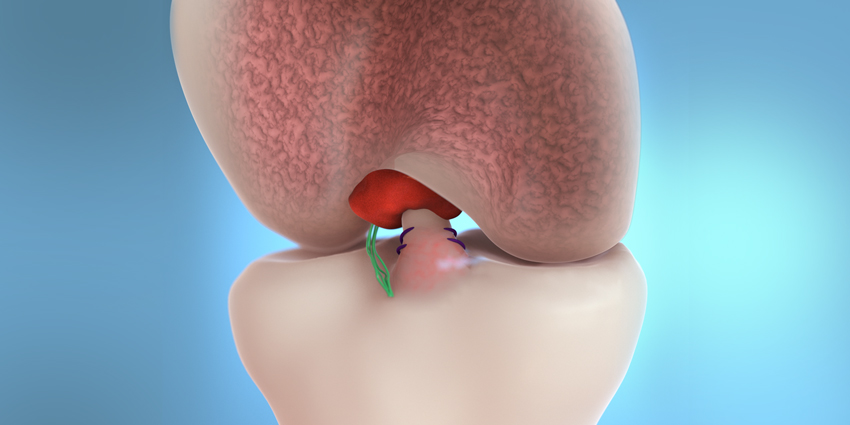
According to Miach Orthopaedics, “The BEAR Implant is the first disruptive technology in ACL [anterior cruciate ligament] tear treatment in more than 30 years. The implant enables a torn ACL to heal and restores the natural function of the knee. It is a paradigm shift from the current standard of care—reconstruction that replaces the ACL with a graft.”
“The BEAR Implant is the first medical technology to demonstrate, with Level 1 clinical evidence, that it enables the body to heal its own torn ACL.”
“Unlike reconstruction, which is the current standard of care, the BEAR Implant does not require a second surgical wound site to remove a healthy tendon from another part of the leg or the use of a donor tendon. Instead, it acts as a bridge to help the ends of the torn ACL heal together.”
“The surgeon injects a small amount of the patient’s own blood into the implant and attaches it between the torn ends of the ACL in a minimally invasive procedure. The combination of the BEAR Implant and the patient’s blood enables the body to heal the torn ends of the ACL, bringing them back together while maintaining the ACL’s original attachments to the femur and tibia. As the ACL heals, the BEAR Implant is resorbed by the body.”
Interim Clinical Study Data Released
Miach also released interim clinical study data for the BEAR implant. Patrick McBrayer, company president and CEO told OTW, “At the Orthopaedic Summit Evolving Techniques Conference, Bridge Registry investigator Dr. Greg DiFelice of Hospital for Special Surgery provided a sneak peek at interim results, which showed consistent safety outcomes regardless of procedure technique in the first 100 patients evaluated at one year. We expect more detailed Bridge Registry results to be presented at a medical meeting and published in 2025 and will share further details at that time.”
“The Bridge Registry is the first study to assess real-world performance of the BEAR Implant, focusing on safety data across a variety of surgical techniques and at multiple centers. Outcomes measured include IKDC [International Knee Documentation Committee] subjective score, AP knee laxity measured by pivot shift and Lachman tests, adverse events, RSI [repetitive strain injuries] and KOOS [Knee Injury and Osteoarthritis Outcome Scores].”
“ACL reconstruction has been the gold standard for decades,” said Scott A. Sigman, M.D., chief medical officer and founder of OrthoLazer Orthopedic Laser Centers, to OTW. “BEAR ACL technology stands out by allowing surgeons to repair the ACL with a higher rate of healing. The BEAR technology allows surgeons to unlock the biological healing potential of the human body.”
“BEAR ACL restoration preserves the normal neuromuscular status of the ACL which translates into patients stating their knees feel more normal. This opens up a more beneficial patient postoperative recovery and outcome. In addition, preclinical studies demonstrated a reduction in post ACL surgery knee osteoarthritis. If this translates into the human clinical experience. this would open up long-term benefits for our patients and would be the holy grail of ACL surgery.”
Author
React:
Discussion
This is a fascinating development. In my practice we've seen similar outcomes with the revised protocol. The key differentiator seems to be patient selection criteria. Has anyone else noticed the correlation with BMI thresholds?
Great point. I'd push back slightly on the conclusion, the sample size in the cited study is too small to draw population-level inferences. That said, the directional signal is compelling and worth a larger RCT.
We implemented a similar approach last year. Early results are promising but we're still gathering 12-month follow-up data. Happy to share our protocol if anyone is interested.
Join the conversation
Orthopedic professionals are discussing this. Sign in and upgrade to read every comment and add your voice.