
FDA Clears Dr. Betz’s Vertebral Body Replacement Device
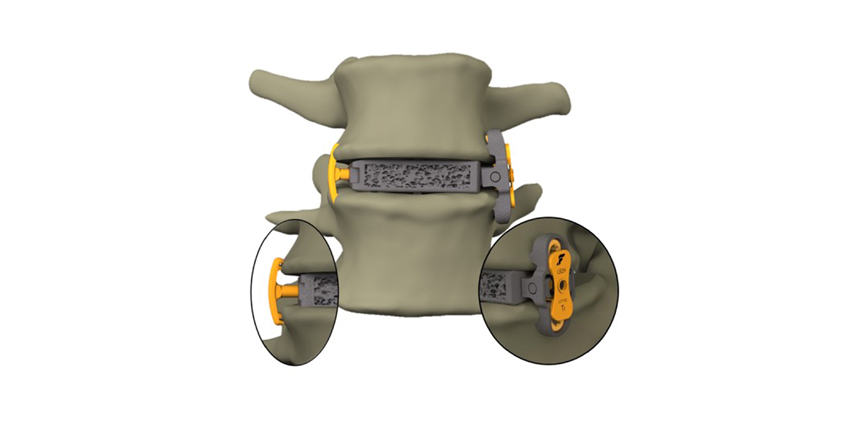
The U.S. Food and Drug Administration (FDA) has granted 510(k) clearance to a novel spinal vertebral body replacement device indicated for partial replacement of a diseased or damaged vertebral body.
According to the FDA’s clearance order, the new device, brand named Vertiwedge® Intraosseous System and supplied by Foundation Surgical Group, Inc., the company founded around technologies developed by one of the giants of spine surgery, Randal Betz, M.D.
The device is indicated “for use in the thoracolumbar spine (T1-L5) for partial replacement of a diseased or damaged vertebral body resected or excised to replace a portion and/or restore the height of a collapsed vertebral body for the treatment of previous trauma (i.e., fracture or tumor) or degenerative spine disease.”
According to Foundation Surgical CEO Dr. Betz, “With the FDA clearance of the Vertiwedge® and the launch of the VBO® procedure, we are ushering in a new era of spine surgery.”
Dr. Betz continued, “Our approach allows for the treatment of degenerative conditions while preserving the spine’s natural motion, a significant step forward in patient care.”
According to the FDA, “The system is to be placed within the vertebral body following an osteotomy and supplemented with autograft or allograft and to be used with its contralateral staple; should a physician choose to use fewer than the maximum number of screws, then supplemental fixation must be used to augment stability.”
Additionally, Foundation’s Vertiwedge is intended to “restore the integrity of the spinal column even in the absence of fusion in patients with advanced stage tumors involving the thoracolumbar spine in whom life expectancy is of insufficient duration to permit achievement of fusion.”
In order to qualify for shorter and earlier 510(k) clearance the device must be substantially equivalent to a predicate device. Here, the primary predicate device is the PILLAR SA PEEK Spacer System with Blackstone Medical, Inc. listed as the manufacturer. In 2006, Blackstone Medical Inc. was acquired by Orthofix International NV.
Foundation Surgical is an Arizona-based spinal implant company. The company announced this device was its second cleared device in the past few months.
According to the Foundation Surgical press release, “The Vertiwedge® is the first intraosseous device designed to facilitate and maintain vertebral body correction of partially collapsed vertebrae via the groundbreaking VBO® [Vertebral Body Osteotomy] procedure.” Additionally, this “novel single position, motion-sparing technique, allows for effective treatment through a conventional lateral or oblique lateral approach and facilitates indirect decompression of the nerve roots while preserving the natural motion of the disc and facet joints without the need for intervertebral fusion.”
Author
Discussion
This is a fascinating development. In my practice we've seen similar outcomes with the revised protocol. The key differentiator seems to be patient selection criteria. Has anyone else noticed the correlation with BMI thresholds?
Great point. I'd push back slightly on the conclusion, the sample size in the cited study is too small to draw population-level inferences. That said, the directional signal is compelling and worth a larger RCT.
We implemented a similar approach last year. Early results are promising but we're still gathering 12-month follow-up data. Happy to share our protocol if anyone is interested.
Join the conversation
Orthopedic professionals are discussing this. Sign in and upgrade to read every comment and add your voice.