
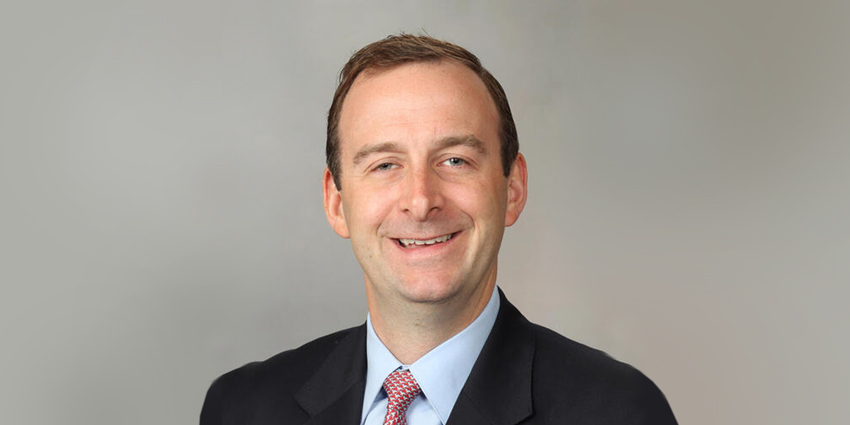
Charles P. Hannon, M.D., an orthopedic surgeon with the Mayo Clinic in Rochester, Minnesota, was honored with the American Association of Hip and Knee Surgeons’ (AAHKS) James A. Rand Young Investigator’s Award at the society’s annual meeting in November.
Charles P. Hannon Is 2024 James A. Rand Young Investigator’s Award
2 min read Premium comments
#charleshannon#jamesarandyounginvestigatorsaward
The award named in honor of James A. Rand, M.D., founding member and past president of the Association, recognizes Hannon’s research on reducing opioid use after hip and knee replacement.
Every year the award is given to a young investigator who demonstrates excellence in knee-related research.
The study, “What is the Safest and Most Effective Dose of IV Dexamethasone in TKA? A Multicenter Prospective RCT,” compared three different doses of IV dexamethasone to determine effectiveness in total knee arthroplasty. Hannon and his team randomized over 400 patients to three doses, measuring pain, nausea, and glucose levels.
Patients who were in the 16mg group, consumed less opioids and reported less pain and nausea, Hannon said.
He added that he and his team have received funding for a follow-up study to now look at the number of doses of dexamethasone to administer in total arthroplasty.
Hannon is an associate professor in the department of orthopedic surgery and a senior associate consultant of adult reconstruction at Mayo Clinic. He specializes in primary total knee arthroplasty, robotic total knee arthroplasty, robotic unicompartmental knee arthroplasty, primary total hip arthroplasty, direct anterior total hip arthroplasty, revision total knee arthroplasty, revision total hip arthroplasty, periprosthetic fracture, and periprosthetic joint infection.
He has authored over 100 peer-reviewed publications and serves as the co-lead investigator for several clinical practice guidelines in orthopedic surgery. He also serves on several committees for national organizations including AAHKS and the American Academy of Orthopaedic Surgeons. He is a former AAHKS Health Policy Fellow.
Hannon has been a member of the American Association of Hip and Knee Surgeons since 2017. He told Orthopedics This Week that societies like the American Association of Hip and Knee Surgeons are important for its support of new research in hip and knee surgery and its advocacy for its members and their patients.
He said what drew him to orthopedics was his own experience as a child. He was born with a club foot and his doctor always cared about him personally. He wasn’t just a diagnosis.
“I wanted to be just like him,” he explained.
Hannon earned his undergraduate degree in political science from Villanova University and his medical degree from Georgetown University School of Medicine. He completed his orthopedic surgery residency at Rush University Medical Center and his RST Adult Reconstruction – Lower Extremity fellowship at the Mayo Clinic College of Medicine. He also has an MBA from the University of Chicago.
The American Association of Hip and Knee Surgeons’ Annual Meeting was held November 7-10, 2024, in Dallas, Texas.
The mission of AAHKS, which was founded in 1991, is to improve patient care in hip and knee surgery through education, advocacy, research, and outreach. More than 5,000 surgeons and other hip and knee health care professionals are members of the association.
Author
React:
Discussion
This is a fascinating development. In my practice we've seen similar outcomes with the revised protocol. The key differentiator seems to be patient selection criteria. Has anyone else noticed the correlation with BMI thresholds?
Great point. I'd push back slightly on the conclusion, the sample size in the cited study is too small to draw population-level inferences. That said, the directional signal is compelling and worth a larger RCT.
We implemented a similar approach last year. Early results are promising but we're still gathering 12-month follow-up data. Happy to share our protocol if anyone is interested.
Join the conversation
Orthopedic professionals are discussing this. Sign in and upgrade to read every comment and add your voice.