
Los Gatos, California-base Tenon Medical, Inc. has released initial, interim data from its Catamaran SI Joint Fusion System® MAINSAIL™ study. The study is a single arm, ongoing prospective multicenter, post-market evaluation of the clinical and radiographic outcomes of adult patients with sacroiliac joint disruptions or degenerative sacroiliitis treated with the Catamaran SI Joint Fusion System.
Interm Data From Catamaran SI Fusion Study Released
2 min read Premium comments
Secondary#sijointfusion#catamaranmainsail#sacroiliacjoint#tenonmedical
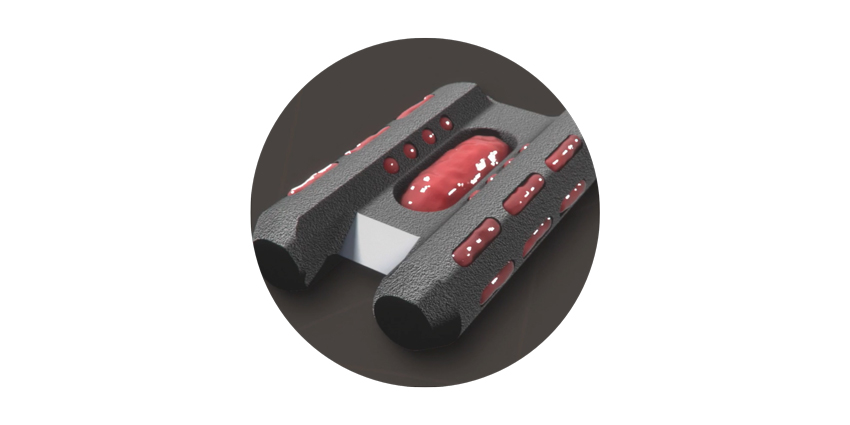
The interim data is from 33 consecutive patients treated with the Catamaran SI Joint Fusion System in six U.S. clinical sites. The device is a titanium implant comprised of two pontoons, connected by an osteotome bridge, which is designed to transfix the SI joint along its longitudinal axis providing immediate fixation and stabilization of the joint, with the aim of achieving a successful long-term fusion.
The interim data contained evidence of fusion at 12 months, with 6 patients reaching 12-month follow-up with CT radiographic imaging; 4 of the 6 patients showed unequivocal evidence of fusion with bridging bone.
The researchers said that 55% of procedures were completed in under 45 minutes, with the shortest procedural time recorded as 24 minutes. In addition 50% of the Catamaran procedures required < 1 minute of fluoroscopy time and all procedures were performed in an outpatient setting.
The research team reported statistically significant reduction in sacroiliac joint pain and disability scores at six months, with no serious adverse events, no reoperations, and no reinterventions reported. There were no vascular or nerve injuries associated with the inferior-posterior surgical approach used to deliver the Catamaran implant. High patient satisfaction was reported throughout all timepoints, with 93.3% of patients reporting high satisfaction with their treatment at six months.
Tenon Medical President and CEO Steve M. Foster told OTW, “Tenon Medical launched the Catamaran SI Joint Fusion System in early 2023. Since that time, we’ve been enrolling in a post-market, prospective, multi-center trial designed to assess this system/approach.”
According to Foster, the system was designed according to AO principles of arthrodesis, specifically:
- adequate joint preparation,
- rigid fixation and stabilization, and
- adequate bone graft augmentation.
According to the company, the Catamaran can be implanted using a minimally invasive inferior-posterior approach. It is meant to be placed within the dense cortical bone of the sacrum and ilium, to transfix and stabilize the SI joint.
The primary indication for use is for treatment of SI Joint dysfunction. To date, there have been 700 Catamaran fixation devices implanted to treat primary SI Joint dysfunction and sacroiliitis, as well as to revise previously treated SI joints with failed alterative SI joint implants.
Foster also told OTW that the surgical approach is inferior/posterior—similar to how physicians treat SI Joint pain therapeutically and/or diagnostically with injections. The imaging process is similar. Foster also pointed out that the recommended approach trajectory for Catamaran is away from neural and vascular structures and, thereby, allows for a safer joint prep/defect creation, fixation and grafting.
For more information: https://tenonmed.com/catamaran/
Author
React:
Discussion
This is a fascinating development. In my practice we've seen similar outcomes with the revised protocol. The key differentiator seems to be patient selection criteria. Has anyone else noticed the correlation with BMI thresholds?
Great point. I'd push back slightly on the conclusion, the sample size in the cited study is too small to draw population-level inferences. That said, the directional signal is compelling and worth a larger RCT.
We implemented a similar approach last year. Early results are promising but we're still gathering 12-month follow-up data. Happy to share our protocol if anyone is interested.
Join the conversation
Orthopedic professionals are discussing this. Sign in and upgrade to read every comment and add your voice.