
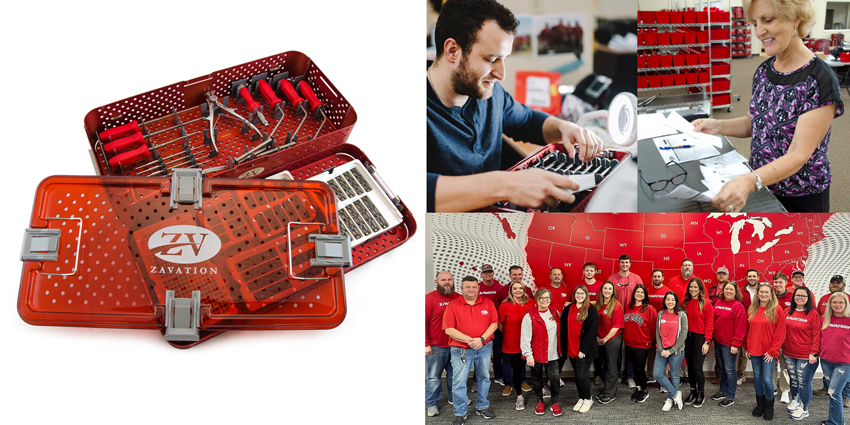
Zavation Medical Products, LLC, based in Flowood, Mississippi, a town of just 10,000 people a few miles outside of Jackson, Mississippi, is one of the fastest-growing private companies in America, according to Inc. magazine.
Zavation Medical Named an Inc. Fastest-Growing Company
1 min read Premium comments
Secondary#medicaldevicemanufacturers#zavation
The prestigious ranking provides a data-driven look at the most successful companies within the economy’s most dynamic segment—its independent, entrepreneurial businesses.
The Inc. 5000 class of 2024 represents companies that have driven rapid revenue growth while navigating inflationary pressure, the rising costs of capital, and seemingly intractable hiring challenges. Over the last three years, the 2024 class of growth companies created an astonishing 874,458 jobs.
“Zavation is honored to be included in the prestigious Inc. 5000 list, and we see this as a testament to our commitment to providing high-quality medical products and exceptional service to our customers,” notes the company. “This milestone inspires us to continue pushing the boundaries of what’s possible in our industry and to pursue excellence in everything we do.”
OTW asked CEO Jeffrey Johnson how Zavation has grown so fast and well over the last few years. He explained, “Our growth comes down to leveraging our core principles in everything we do, continuing to manufacture breakthrough products, maximizing our manufacturing capabilities, and exceeding our customers’ expectations.”
As for how they “exceed customer expectations,” Johnson said, “It starts with listening to our customers—understanding what their specific needs are and delivering the right spinal solutions to address their individual needs. Additionally, it’s building a strong culture within the organization that the expectation is to go above and beyond in delivering exceptional service for our customers.”
“Zavation Medical Products, LLC is dedicated to unparalleled patient care through innovative spinal solutions, vertically integrated manufacturing, and world-class customer service.”
Author
React:
Discussion
This is a fascinating development. In my practice we've seen similar outcomes with the revised protocol. The key differentiator seems to be patient selection criteria. Has anyone else noticed the correlation with BMI thresholds?
Great point. I'd push back slightly on the conclusion, the sample size in the cited study is too small to draw population-level inferences. That said, the directional signal is compelling and worth a larger RCT.
We implemented a similar approach last year. Early results are promising but we're still gathering 12-month follow-up data. Happy to share our protocol if anyone is interested.
Join the conversation
Orthopedic professionals are discussing this. Sign in and upgrade to read every comment and add your voice.