
Shelton, Connecticut-based Spine Wave, Inc. has big news about its device’s tiny features.
Spine Wave Launches Exceed w/Advanced Surface Technology
2 min read Premium comments
Secondary#exceedbiplanarexpandableinterbodydevice#spinewave#ticellnanoadvancedsurfacetechnology
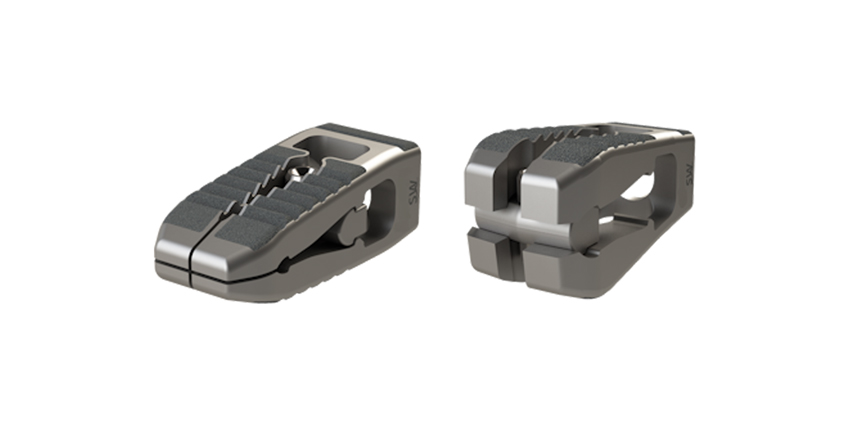
The Exceed® Biplanar Expandable Interbody Device, Spine Wave’s latest innovation, features TiCell® Nano Advanced Surface Technology. The new device is intended for transforaminal (TLIF) and posterior (PLIF) lumbar interbody fusion.
“We are thrilled to debut our biplanar expandable device with advanced surface technology and best-in-class bone grafting,” said Laine Mashburn, executive VP of Global Marketing and Business Development, to OTW.
“For years we have worked toward a surface that can emulate topographical features within osteoclastic resorption pits using laser technology. The pandemic had slowed the pipeline a bit, but now our vision has come to fruition.”
With Oscar Wilde’s quote in mind—”Imitation is the sincerest form of flattery”—the Spine Wave team set about seeking biomimicry, the design and production of materials, structures, and systems that are modeled after biological entities and processes.
Scott McLean, B.S.M.E., VP of Research and Development at Spine Wave, explained to OTW, “We were fortunate that Dr. Barbara Boyan, professor and executive director of the Institute for Engineering and Medicine, Virginia Commonwealth University College of Engineering, had laid the groundwork on biomimicry, demonstrating how mesenchymal cells differentiate into osteoblasts when the bone surface is demineralized by an osteoblast.”
“We could see that PEEK use was declining so we thought that surface technology was an important area to explore. Titanium was on the rise and more companies were investigating biomimetic strategies for implants. Dr. Boyan had a growing body of evidence that the nanoscale and submicron features promote cell signaling. Few technologies exist to produce features at the nanoscale and submicron levels—especially in a repeatable manner.”
And what are cells seeing as they migrate? Ridges that look exactly like osteoclast resorption pits, says Dr. Boyan.
“We came across the femtosecond laser as a potential tool,” stated Scott McLean to OTW. “This has been studied worldwide for its ability to produce submicron and nanoscale features; this laser is clean (no chemicals), can be applied to both machined and 3D printed substrates, is accurate, versatile and repeatable.”
“The nanosecond laser is used initially and is somewhat aggressive (like a chisel), whereas the femtosecond laser is more of a scalpel for the fine detail. First, we use the nanosecond laser to create a tactile microporous structure that provides a high friction interface between the endplate of the implant and the vertebral endplate. Then we use the femtosecond laser to produce submicron and nanoscale features which mimic the topography at the base of the osteoclast resorption pit (where collagen fibers and fibrils are present).”
Four Key Points of Differentiation and Benefit
According to Spine Wave, the new system delivers several key surgical benefits including:
- Durability—the surface is designed to withstand the rigors of implantation and biomechanical loading without fracturing or delaminating.
- Tactilely rough surface which delivers friction so that the position of the implant is maintained, and the correction of the patient is maintained without retropulsion.
- Porosity, which provides an interlock between the bony anatomy and the implant to combat implant migration and retropulsion.
- Economy of manufacturing.
According to Spine Wave, the all-titanium implant features simple and easy to use instruments and a biplanar taper for easier insertion. The implant expands in both cephalad to caudal and medial to lateral planes to maximize endplate to implant surface apposition and provide a wide-open space for grafting and radiographic visibility.
Finally, the system also integrates with Spine Wave’s GraftMag Graft Delivery System for fast, easy, and voluminous post-expansion grafting.
For more information: https://spinewave.com/exceed-biplanar-expandable-interbody-device.html
Author
React:
Discussion
This is a fascinating development. In my practice we've seen similar outcomes with the revised protocol. The key differentiator seems to be patient selection criteria. Has anyone else noticed the correlation with BMI thresholds?
Great point. I'd push back slightly on the conclusion, the sample size in the cited study is too small to draw population-level inferences. That said, the directional signal is compelling and worth a larger RCT.
We implemented a similar approach last year. Early results are promising but we're still gathering 12-month follow-up data. Happy to share our protocol if anyone is interested.
Join the conversation
Orthopedic professionals are discussing this. Sign in and upgrade to read every comment and add your voice.