
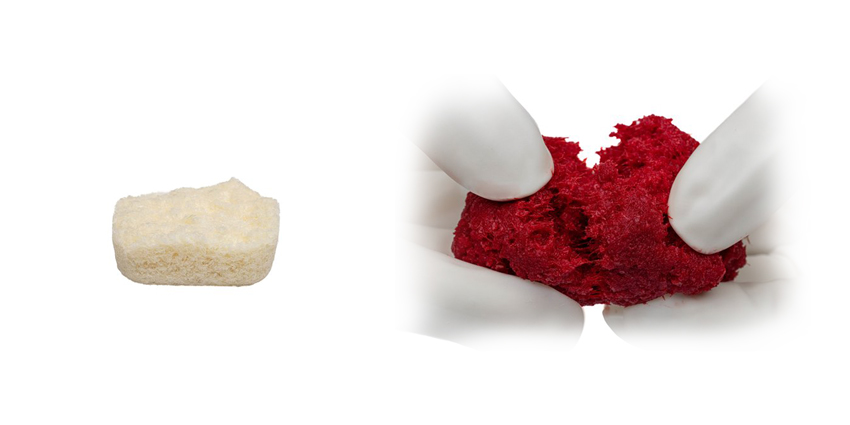
Virginia Beach, Virginia-based LifeNet Health, a regenerative medicine company, has launched PliaFX Pak, a versatile bone allograft developed in collaboration with Johnson & Johnson MedTech (JNJ). This allograft is a combination of mineralized bone chips with precision-machined moldable demineralized fibers, a composition that becomes moldable when rehydrated without the need for a carrier.
LifeNet, J&J MedTech Introduce New Bone Allograft
2 min read Premium comments
Secondary#allograft#hightibialosteotomy#pilafxfibers#j&jmedtech
LifeNet and JNJ have been business partners for many years and according to Rich Rice, VP, Orthopedics & CMF at LifeNet Health, it’s been an outstanding partnership. “Our alliance partnership with J&J MedTech reflects their confidence in our ability to deliver the highest standards of safety, consistency, and efficacy in allograft solutions. Their expertise in advanced medical technologies combined with our cutting-edge biologics makes for an outstanding partnership to bring innovative solutions to orthopedics.”
“We had the privilege of collaborating with numerous key opinion leaders during development,” commented Rice to OTW. “The voice of customers from these handling labs helped us find the right ratio to ensure both the desired biologic properties and ideal handling characteristics.”
“The ability of our material to become moldable upon rehydration without the need for a carrier is indeed a significant innovation. This allows for greater flexibility and ease of application in orthopedic procedures: simply put, the graft stays in where you want it, and it can be rehydrated with the fluid of choice, including antibiotics. While there are other materials that exhibit moldability, the unique aspect of PliaFX fibers is performance, consistency, and reliability without the dependency on a carrier.”
Microfiber Hooks?
“The microfiber hooks in PliaFX fibers are a highly distinctive feature,” added Rice. They allow for better cellular adhesion, leading to more extensive integration as the fibers interconnect with surrounding tissues, promoting support cellular proliferation and bone formation. While other products may offer contact points, the precision-milled fibers in PliaFX are optimized to maximize tissue engagement and support.”
“I want to underscore that our work with J&J MedTech and our innovations are driven by a deep respect for the source of our allografts,” said Rice to OTW.
“Each allograft represents a generous donation from families who, despite their grief, choose to give the gift of life to improve the lives of others. By honoring that gift, we have had the opportunity to distribute over 11 million allografts with zero incidences of disease transmission.”
“In fact, this year we are celebrating 20 years with our patented Allowash XG Sterilization Technology, which effectively addresses bioburden by virtually eliminating bacterial and viral risks while maintaining the clinical effectiveness of our allografts.
“Our work is not just about advancing technology; it’s about upholding a legacy of trust, safety, and giving healing every advantage.”
Author
React:
Discussion
This is a fascinating development. In my practice we've seen similar outcomes with the revised protocol. The key differentiator seems to be patient selection criteria. Has anyone else noticed the correlation with BMI thresholds?
Great point. I'd push back slightly on the conclusion, the sample size in the cited study is too small to draw population-level inferences. That said, the directional signal is compelling and worth a larger RCT.
We implemented a similar approach last year. Early results are promising but we're still gathering 12-month follow-up data. Happy to share our protocol if anyone is interested.
Join the conversation
Orthopedic professionals are discussing this. Sign in and upgrade to read every comment and add your voice.