
Negative online reviews of individual spine surgeons. Not only not helpful, but misleading.
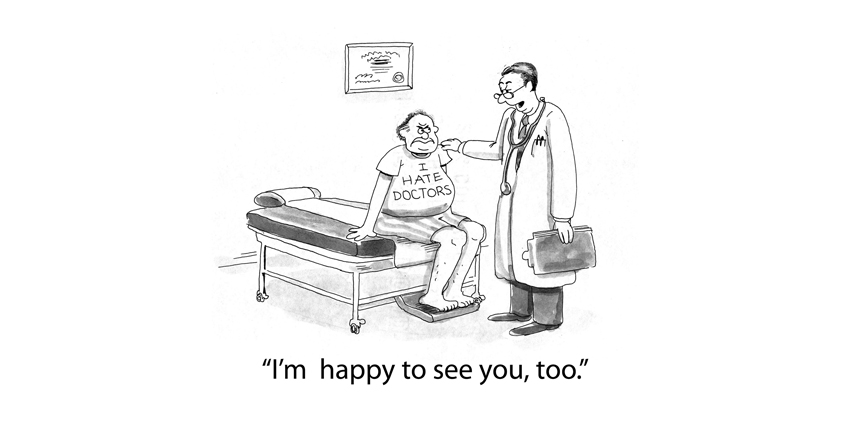
Study: It All Comes Down to Bedside Manner?
2 min read Premium comments
#spinesurgerySecondary#bedsidemanner#negativeonlinereview#surgeonreviews
A team from the Department of Orthopaedic Surgery at the University of Pittsburgh Medical Center set out to assess negative reviews of spine surgeons in the U.S., comparing surgical versus nonsurgical reviewers. Their work, “Characterizing Negative Online Reviews of Spine Surgeons,” appears in the June 1, 2024, edition of Spine.
“Many of us physicians share the frustration that we are reviewed unfairly on-line,” said co-author Joon Y. Lee, M.D., the Orland Bethel Endowed Professor at the University of Pittsburgh School of Medicine, to OTW.
“Unlike typical businesses, physicians as individuals cannot reasonably defend some very negative and personal online comments. Due to the sensitivity of our interactions with the patients, it is often difficult to rebut or describe in detail the nature of the patient interaction that led to the negative review.”
“We wanted to quantitatively and qualitatively analyze the reasons for negative online reviews for spine surgeons to the best of our ability. We wanted to understand the nature of interactions and reasons that would typically lead to the comments.”
After acquiring a list of fellowship-trained orthopedic spine surgeons from the American Academy of Orthopaedic Surgeons website., the researchers evaluated 16,695 online reviews, including 1,690 one-star reviews (10.1%). Of this group, 64.7% were written by nonsurgical patients and 35.3% by surgical patients. Nonclinical and clinical comments constituted 54.9% and 45.1% of reviews, respectively.
Surgeons in the South had more “bedside manner” comments (43.3%), while Northeast surgeons had more “poor surgical outcome” remarks compared with all other geographic regions (14.4%). Practicing in the South and Northeast were independent predictors of having complaints about “bedside manner” and “poor surgical outcome,” respectively.
“The most interesting result is that the non-surgical interactions were the most common reason for negative reviews. Most common category of complaint was for the ‘bedside manner’ of the surgeon.”
“Many uncontrollable factors by the individual surgeons (i.e., how the office staff treated the patient, wait time due to over booking, etc.) were also part of the reasons for negative reviews. Negative reviews due to surgical complications were much less than non-surgical issues. We did not explore this specifically in our article, but the positive reviews tended to be for surgical results.”
When OTW asked what might interfere with surgeons having a better bedside manner, Dr. Lee responded, “I think the reasons vary. It can be both patient and surgeon factors involved. We all have experienced increasing workload within our respective specialty. For surgeons, we work in an incredibly stressful environment in and out of the OR.”
“I think that we all have the tendency to trivialize non-surgical issues that our patients may experience, which can lead to the perception that the surgeon has a bad bedside manner (ignoring issues, etc.). Also, the studies will not reveal patient related factors, such as personality conflicts between patients and surgeons, difficult/overly demanding patients, etc. Afterall, surgeons are also human, and sometimes we are held to higher standards of patience.”
“This study allows us to reflect on how we can modify our interactions with our patients, particularly around non-surgical issues. An interesting relationship we should explore is the correlation between reasons/frequencies of negative reviews and rate of malpractice litigation for a given practice. Difficult but a relevant topic/study.”
Author
React:
Discussion
This is a fascinating development. In my practice we've seen similar outcomes with the revised protocol. The key differentiator seems to be patient selection criteria. Has anyone else noticed the correlation with BMI thresholds?
Great point. I'd push back slightly on the conclusion, the sample size in the cited study is too small to draw population-level inferences. That said, the directional signal is compelling and worth a larger RCT.
We implemented a similar approach last year. Early results are promising but we're still gathering 12-month follow-up data. Happy to share our protocol if anyone is interested.
Join the conversation
Orthopedic professionals are discussing this. Sign in and upgrade to read every comment and add your voice.