
The FDA has approved (by way of the more rigorous and time-consuming premarket application (PMA) path) a noninvasive bone growth stimulator.
FDA Approves Noninvasive Bone Growth Stimulator
2 min read Premium comments
Secondary#biomet#spinalpak#xstimspinfusionstimulator
According to the summary of safety and effectiveness, the noninvasive bone growth stimulator is indicated as an “adjunct electrical treatment to primary lumbar spinal fusion surgery for one or two levels.” Additionally, the device is for “prescription use only and is intended for single patient use in adult patients only.”
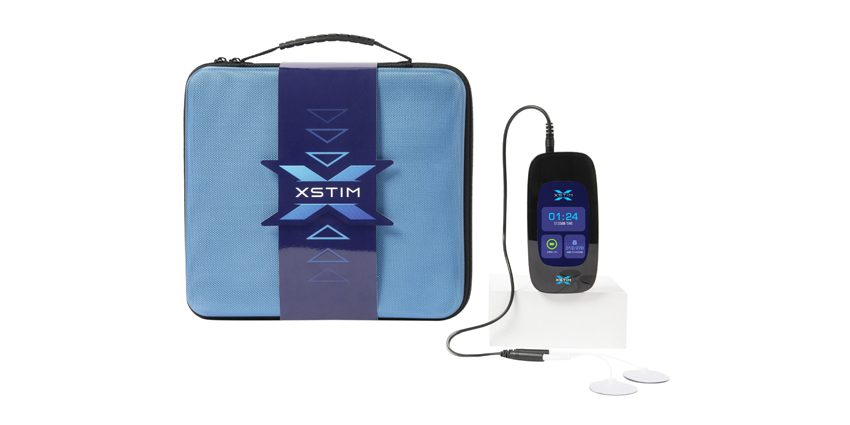
The device is a “small, portable, wearable, noninvasive capacitively coupled (CC) bone growth stimulator.” It “delivers a 60 kHz symmetric sine wave signal to the patient electrodes which are placed 2-3 inches on either side of the surgery site.”
The device consists of the “signal generating control unit (controller) and belt clip, a rechargeable lithium-ion battery pack and charging unit, lead wires (controller cables) and cutaneous hydrogel electrodes, optional electrode covers (e.g., shower covers for use with electrodes only when showering), and a carry case.” It promotes “bone healing by passing a specific current between the patient electrodes, which generates a low-energy electrical field at the fusion site.”
The device is the Xstim™ Spine Fusion Stimulator. Xstim, Inc., based in Irving, Texas, is a medical technology company focused on bone growth stimulation solutions. Xstim submitted the PMA application. According to the company’s press release, the Xstim Spine Fusion Stimulator should be commercially available in the second quarter of this year.
In the application, Xstim provided a series of nonclinical comparison studies of the Xstim Spine Fusion Stimulator and the SpinalPak®. Biomet’s SpinalPak is a bone growth stimulator that was previously approved with the same indications for use.
Per the summary of safety and effectiveness, “the purpose of these nonclinical signal characterization tests was to establish sufficient similarity of the two BGS [bone growth stimulator] devices such that FDA could apply Section 216 of the Food and Drug Modernization Act (FDAMA), i.e., the ‘six-year rule,’ to assess the safety and effectiveness profiles of the Xstim Spine Fusion Stimulator.” The FDA found that based on the comparative testing results, the Xstim is “sufficiently similar to SpinalPak, such that the ‘six-year rule’ can be applied to assess the safety and effectiveness profiles of the Xstim device.”
Adam Bruggerman, M.D. said, “Bone healing following spinal fusion surgery is paramount to successful patient outcomes. The availability of non-invasive bone growth stimulation options like Xstim provides my patients with an invaluable advantage.
Dr. Bruggerman continued, “Its sleek design ensures simple therapy management without the hassle of downloading and managing extra apps.”
Author
React:
Discussion
This is a fascinating development. In my practice we've seen similar outcomes with the revised protocol. The key differentiator seems to be patient selection criteria. Has anyone else noticed the correlation with BMI thresholds?
Great point. I'd push back slightly on the conclusion, the sample size in the cited study is too small to draw population-level inferences. That said, the directional signal is compelling and worth a larger RCT.
We implemented a similar approach last year. Early results are promising but we're still gathering 12-month follow-up data. Happy to share our protocol if anyone is interested.
Join the conversation
Orthopedic professionals are discussing this. Sign in and upgrade to read every comment and add your voice.