
Netherlands-based SLAM Orthopedic has effectively raised a seed investment of €2 million.
€2M Raised for Fracture Treatment Sensor
2 min read Premium comments
Secondary#adepth#slamorthopedic
SLAM Orthopedic is a medical device company dedicated to developing advanced sensor systems for fracture care by surgeons. Rising Star Venture Partners led the funding round and was joined by informal investors and the Zeeuws Participatie Fonds.
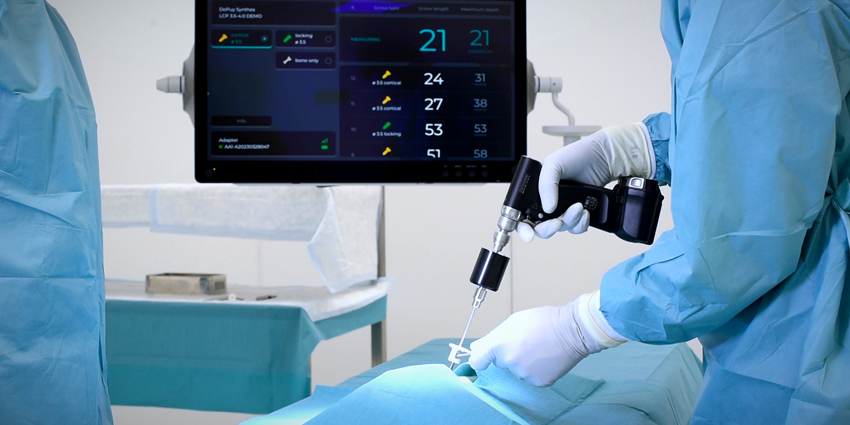
SLAM Orthopedic will use the funds to complete product development of ADEPTH®. ADEPTH, per the company website, is an “automated screw length measurement system for use during surgical treatment of fractures.” Surgeons treating fracture patients can use the add-on sensor to measure and identify the required implant size.
OTW spoke with SLAM Orthopedic Co-founder and CEO Just Schornagel about the use of the funds. Schornagel told OTW, “We’ll use the funds to grow our team, finalize development of the device (make it resterilizable in the autoclave, finish the user interface), then also perform new wet-lab studies to validate performance and CE-certification as a Class IIa device under the MDR (FDA will follow in 2026).”
Schornagel continued, “The funds will then also be used to set up a production line and start sales with the first hospitals that signed up for our pilot program (14 so far).”
SLAM Orthopedic is already working with the department of trauma surgery of ErasmusMC to validate the ADEPTH system in a first-in-human clinical trial. Per the press release, SLAM Orthopedic plans to bring the ADEPTH system to the European market mid-2025.
OTW also spoke with Schornagel about what makes SLAM Orthopedic’s technology different from competitor technology. Schornagel explained to OTW, “What makes our technology stand out is that the sensor device is compatible with existing drill machines and drill bits (with the AO Quick Connect). This means surgeons can keep working with their current instruments and hospitals don’t have to purchase new equipment.”
Schornagel continued, “What is also unique is that we can perform the measurement fully contactless (using lasers and force transducers). This means that surgeons still have 100% of their tactile feedback that they rely on to understand their position in the body. No calibration is necessary before you start drilling. You just pick up the drill, the sensor automatically detects this and switches to on mode and after you retrieve the drill automatically displays the implant length.”
Schornagel continued, “All of the above means that our system is designed to be easily integrated in a surgeon’s current workflow. Having a surgeon co-founder, but also involving a lot of experienced trauma and orthopedic surgeons in early stages of the development process were fundamental to end up with—what we believe is a user-friendly product.”
Author
React:
Discussion
This is a fascinating development. In my practice we've seen similar outcomes with the revised protocol. The key differentiator seems to be patient selection criteria. Has anyone else noticed the correlation with BMI thresholds?
Great point. I'd push back slightly on the conclusion, the sample size in the cited study is too small to draw population-level inferences. That said, the directional signal is compelling and worth a larger RCT.
We implemented a similar approach last year. Early results are promising but we're still gathering 12-month follow-up data. Happy to share our protocol if anyone is interested.
Join the conversation
Orthopedic professionals are discussing this. Sign in and upgrade to read every comment and add your voice.